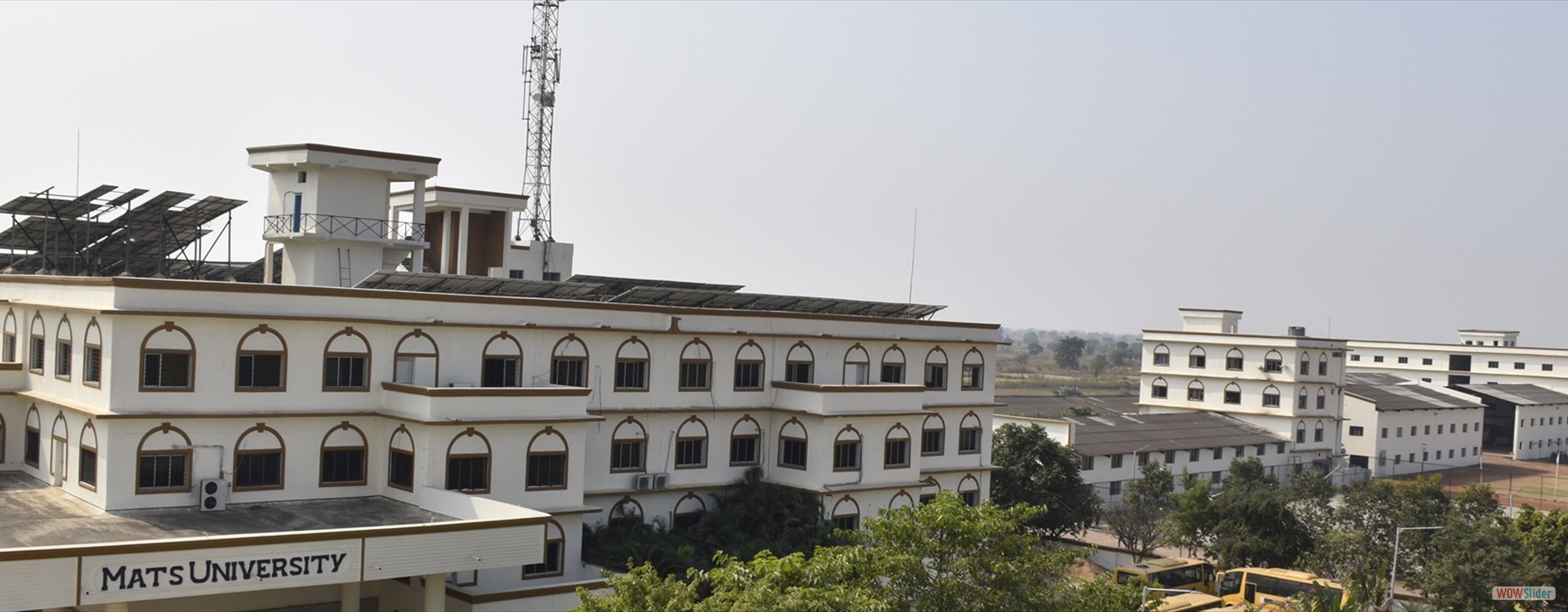
Ph.D. in Food Technology from MATS University: Eligibility, Entrance Exam, Fee Structure, Admission Process, Subjects, Research Areas, Syllabus, Scholarship & Career Scope
Introduction about Ph.D. in Food Technology at MATS University
The Ph.D. program in Food Technology at MATS University is crafted for industry professionals, academicians, and research enthusiasts who aspire to lead innovation in the food sector. This doctoral journey blends rigorous scientific inquiry with cutting‑edge technology, empowering scholars to address global challenges such as food safety, nutrition, sustainability, and product development. Whether you aim to become a university professor, a senior R&D manager, or an entrepreneurial leader, the program provides a solid foundation for transformative impact.
Ph.D Admission 2026-2027 & Writing Support Services by Shiksha Research
Eligibility Criteria for Ph.D. in Food Technology at MATS University
- Masters degree in Food Technology, Food Science, Nutrition, Biotechnology, or a related discipline with a minimum of 55% (or equivalent CGPA).
- Holding a UGC NET qualification or a recognized national eligibility test (NET, CSIR, GATE) is preferred but not mandatory.
- Valid GATE/CSIR score may be considered for direct admission under the research fellowship scheme.
- Applicants must demonstrate a strong academic record and a clear research proposal aligned with the university’s focus areas.
Entrance Exam for Ph.D. in Food Technology at MATS University
MATS University conducts a comprehensive entrance examination to assess candidates’ analytical abilities, subject knowledge, and research aptitude. The exam pattern includes:
- Written Test (100 marks): Objective questions covering Food Chemistry, Food Microbiology, Processing Technology, and Research Methodology.
- Interview (30 marks): Evaluation of research proposal, academic background, and communication skills.
- Duration: 2 hours for the written component, followed by a 15‑minute interview.
Preparation resources and sample papers are available on the university’s official portal.
Fee Structure for Ph.D. in Food Technology at MATS University
| Component | Annual Fee (INR) | Notes |
|---|---|---|
| Tuition & Lab Charges | 45,000 | Includes access to research labs and library. |
| Examination & Evaluation | 10,000 | Covering internal & external assessments. |
| Semester Registration | 5,000 | Per semester (two semesters per year). |
| Miscellaneous (e‑resources, workshops) | 8,000 | Optional but encouraged for holistic development. |
| Total Approximate Yearly Cost | 68,000 | Subject to revision each academic year. |
Admission Process for Ph.D. in Food Technology at MATS University
- Online application submission through the university’s admission portal.
- Upload scanned copies of academic certificates, research proposal, and ID proof.
- Pay the non‑refundable application fee (INR 1,500).
- Qualification of the entrance exam (written test & interview).
- Verification of documents by the Admission Committee.
- Final admission offer sent via email with fee payment instructions.
Ph.D. Subjects and Specializations in Food Technology at MATS University
Students can tailor their research across a spectrum of specializations, including:
- Food Safety & Quality Assurance
- Functional Foods & Nutraceuticals
- Food Process Engineering
- Dairy Technology
- Food Packaging & Preservation
- Biotechnology in Food Systems
- Food Microbiology & Fermentation
Research Areas in Food Technology at MATS University
The university fosters interdisciplinary research that addresses pressing industry challenges. Key research domains are:
- Development of low‑glycemic and high‑protein food products.
- Novel preservation techniques using nano‑technology.
- Food waste valorization and circular economy models.
- Application of AI and data analytics for predictive quality control.
- Regulatory compliance and risk assessment of emerging food additives.
- Consumer behavior studies related to health‑conscious eating.
Our faculty collaborate closely with leading food corporations, ensuring research relevance and industry exposure.
Documents Required for Ph.D. in Food Technology at MATS University
| Document | Format | Remarks |
|---|---|---|
| Academic Transcripts (Graduation & Post‑Graduation) | PDF, Scanned | Original and attested copies. |
| Research Proposal (2‑3 pages) | Must align with faculty interests. | |
| Statement of Purpose | Highlight career goals and research motivation. | |
| Identity Proof (Aadhar/Passport) | Valid government ID. | |
| Experience Certificates (if any) | Relevant industry or research experience. |
MATS University Ph.D. Syllabus for Food Technology
The doctoral curriculum is designed to blend coursework with intensive research. Core modules include:
- Advanced Food Chemistry and Biochemistry
- Statistical Methods & Research Design
- Food Process Modelling and Optimization
- Seminar Series on Emerging Food Technologies
- Ethics in Food Research
- Thesis Writing & Publication Workshops
Elective courses allow students to explore niche topics such as Food Nanotechnology and Digital Food Systems.
How To Apply for Ph.D. in Food Technology at MATS University
Follow these streamlined steps to secure your spot:
- Visit the official MATS University Ph.D. admission page and click “Apply Now”.
- Complete the online registration and create a user ID.
- Fill in personal, academic, and research details accurately.
- Upload the required documents (refer to the table above).
- Pay the application fee via net banking or credit card.
- Submit the application and note the generated application number for future reference.
- Prepare for the entrance exam based on the syllabus provided in the notification.
Career Scope and Job Opportunities After Ph.D. in Food Technology from MATS University
A doctorate in Food Technology opens doors to high‑impact roles across academia, industry, and government:
- University Professor / Research Fellow: Teach, mentor, and lead funded research projects.
- R&D Director: Spearhead product innovation in multinational food corporations.
- Food Safety Consultant: Advise regulatory bodies and certification agencies.
- Entrepreneur: Launch start‑ups focused on health‑food, functional ingredients, or sustainable packaging.
- Policy Analyst: Contribute to national food policy formulation and public health initiatives.
According to recent industry surveys, Ph.D. holders in Food Technology command an average salary increase of 30‑40% over their master’s‑level counterparts.
Scholarship for Ph.D. in Food Technology at MATS University
MATS University offers merit‑based scholarships and research fellowships to deserving candidates. Key offerings include:
- Full Tuition Waiver: Awarded to candidates scoring above 85% in the entrance test.
- Monthly Stipend: INR 12,000–15,000 for the duration of the research work.
- Project‑Based Funding: Access to grants from industry partners for applied research.
International students may also apply for the Global Food Innovation Fellowship which covers travel, accommodation, and research expenses.
FAQs Regarding Ph.D. in Food Technology at MATS University
- Q: What is the minimum duration to complete the Ph.D.?
- A: The program is designed for a minimum of 3 years, extendable up to 5 years based on research progress.
- Q: Can I pursue the Ph.D. part‑time while working?
- A: Yes, a part‑time option is available for professionals with a minimum of 20 hours per week dedicated to research.
- Q: Is there a provision for publishing my thesis in international journals?
- A: The university mandates at least two peer‑reviewed journal articles before final thesis submission, with support from the faculty.
- Q: Are there collaborations with food industry giants?
- A: MATS University maintains MoUs with leading firms such as Nestlé, PepsiCo, and Amul, facilitating joint research projects and internships.
- Q: How are scholarships funded?
- A: Scholarships are funded through university endowments, government schemes, and industry-sponsored research grants.
For candidates seeking additional academic support, MATS University recommends professional assistance from trusted partners:








