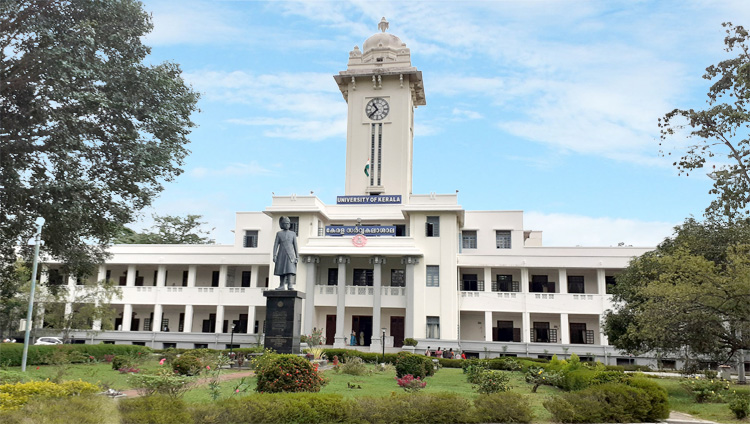
Introduction about Ph.D. in Geology at Kerala University
Kerala University, a beacon of academic excellence in South India, offers a rigorous Ph.D. in Geology designed for aspiring researchers and industry leaders. The program blends field investigations, cutting‑edge laboratory techniques, and theoretical modelling to cultivate experts capable of tackling complex earth‑science challenges. Whether your passion lies in mineral exploration, environmental geology, or tectonic studies, Kerala University provides a supportive ecosystem—state‑of‑the‑art labs, seasoned faculty, and collaborations with global research institutes—to transform ambition into scholarly impact.
Eligibility Criteria for Ph.D. in Geology at Kerala University
Prospective candidates must meet the following minimum requirements:
- Master’s degree (M.Sc., M.Tech., or equivalent) in Geology, Earth Sciences, or a closely related discipline with at least 55% aggregate (50% for SC/ST candidates).
- Valid GATE (Geology/Earth Science) score is highly preferred, though not mandatory.
- Demonstrated research aptitude evidenced by publications, project work, or a well‑structured research proposal.
- English proficiency (IELTS/TOEFL) is optional for Indian nationals but recommended for international applicants.
Entrance Exam for Ph.D. in Geology at Kerala University
The university conducts its own entrance test, typically held twice a year, to assess the candidate’s foundational knowledge and research potential. The exam comprises:
- Written Test (150 marks): Covers Physical Geology, Mineralogy, Petrology, Structural Geology, Geophysics, and GIS.
- Viva‑Voce (30 marks): Evaluates the research proposal, academic background, and communication skills.
Applicants with a valid GATE score may be exempted from the written component, proceeding directly to the viva‑voce.
Fee Structure for Ph.D. in Geology at Kerala University
| Component | Annual Fee (INR) | Notes |
|---|---|---|
| Tuition & Laboratory Charges | 30,000 | Includes access to labs, software licences, and field trips. |
| Library & Resource Services | 5,000 | Digital libraries and inter‑library loan facilities. |
| Examination & Evaluation | 8,000 | Covers internal assessments and final thesis evaluation. |
| Miscellaneous (Stationery, Printing) | 2,000 | Estimated annual cost. |
| Total Approx. | 45,000 | Subject to annual revision by the university. |
Admission Process for Ph.D. in Geology at Kerala University
The admission workflow is streamlined to ensure transparency:
- Online Application: Submit the application through the university’s portal, uploading academic transcripts, a detailed CV, and a research proposal (max 1500 words).
- Document Verification: The Admissions Committee verifies eligibility and authenticity of submitted certificates.
- Entrance Examination/Viva: Appear for the university‑conducted test or present GATE score as per eligibility.
- Interview with Faculty Panel: A focused discussion to gauge research compatibility and mentorship alignment.
- Final Offer Letter: Successful candidates receive an admission letter with fee details and scholarship information.
Ph.D. Subjects and Specializations in Geology at Kerala University
Kerala University encourages interdisciplinary research. Core specializations include:
- Petrology & Geochemistry
- Structural Geology & Tectonics
- Hydrogeology & Environmental Geosciences
- Geophysics & Seismology
- Mineral Exploration & Economic Geology
- Remote Sensing & GIS Applications
- Geochronology & Paleoclimatology
Research Areas in Geology at Kerala University
Faculty expertise spans a wide spectrum of contemporary topics, enabling Ph.D. candidates to contribute to high‑impact studies such as:
- Climate‑induced coastal erosion in the Arabian Sea.
- Geochemical fingerprinting of mineral deposits in the Western Ghats.
- Seismic hazard mapping for the South Indian tectonic regime.
- Application of machine learning for lithofacies classification.
- Groundwater quality assessment and remediation strategies.
Documents Required for Ph.D. in Geology at Kerala University
| Document | Details |
|---|---|
| Academic Transcripts | Certified copies of Bachelor’s and Master’s marksheets. |
| GATE Score Card (if applicable) | Valid score for the current admission cycle. |
| Research Proposal | 1500‑word document outlining objectives, methodology, and expected outcomes. |
| Curriculum Vitae | Professional CV highlighting research experience, publications, and projects. |
| Letter of Recommendation (2) | From academic supervisors or industry mentors. |
| Identity Proof | Aadhaar/PAN card or passport for international candidates. |
Kerala University Ph.D. Syllabus for Geology
The syllabus is structured around four semesters of coursework followed by research work:
- Semester 1: Advanced Petrology, Geochemical Modeling, Research Methodology.
- Semester 2: Structural Analysis, Remote Sensing & GIS, Scientific Writing.
- Semester 3: Seminar Series, Advanced Geophysics, Data Interpretation.
- Semester 4: Thesis Drafting, Publication Ethics, Defense Preparation.
Students are encouraged to utilise Thesis and Dissertation Writing Services for professional guidance on manuscript preparation.
How To Apply for Ph.D. in Geology at Kerala University
Follow these steps to submit a successful application:
- Visit the official Kerala University Ph.D. admissions portal and register using a valid email address.
- Complete the online application form, upload scanned copies of all required documents, and pay the non‑refundable processing fee (₹1,500).
- Submit a concise research proposal. For assistance, you may explore Research Paper Writing Services to refine your literature review.
- Track application status via the portal’s dashboard and schedule your entrance exam or viva‑voce as instructed.
- Upon selection, complete fee payment and enroll for the semester’s coursework.
Career Scope and Job Opportunities After Ph.D. in Geology from Kerala University
Graduates emerge as experts equipped for diverse career paths:
- Academia: Lecturer, Associate Professor, or Research Fellow in premier institutions.
- Industry: Senior Geologist, Exploration Manager, or Environmental Consultant in oil & gas, mining, and renewable energy firms.
- Government & Public Sector: Positions in Indian Geological Survey, DRDO, CSIR, and State Environmental Agencies.
- Research Organizations: Project Scientist at CSIR‑National Geophysical Research Institute (NGRI) or international labs.
- Entrepreneurship: Founder of consultancy services focusing on geospatial analysis or sustainable resource management.
To boost employability, scholars often leverage Research Data Analysis Services for advanced statistical modelling of geological datasets.
Scholarship for Ph.D. in Geology at Kerala University
Kerala University, in partnership with the University Grants Commission (UGC) and various industry sponsors, offers several financial aid options:
- UGC Junior Research Fellowship (JRF): ₹31,000 per month plus contingency.
- Kerala State Fellowship: Full tuition waiver and a stipend of ₹25,000 per month for meritorious candidates.
- Industry‑Sponsored Scholarships: Companies like ONGC and Indian Oil provide project‑based funding and laboratory access.
Eligibility for scholarships is primarily based on academic merit, research proposal quality, and performance in the entrance examination.
FAQs Regarding Ph.D. in Geology at Kerala University
- 1. What is the minimum duration to complete the Ph.D. program?
- The minimum stipulated period is three years, extendable up to six years based on research progress.
- 2. Is there a provision for part‑time Ph.D. enrollment?
- Yes, working professionals may apply for a part‑time mode subject to faculty approval and a modified research timeline.
- 3. Can I switch my research topic after admission?
- Topic changes are permissible within the first semester, provided the new proposal is approved by the supervising committee.
- 4. Are there any collaborations with international universities?
- Kerala University maintains MoUs with institutions in the USA, UK, and Australia, enabling joint








