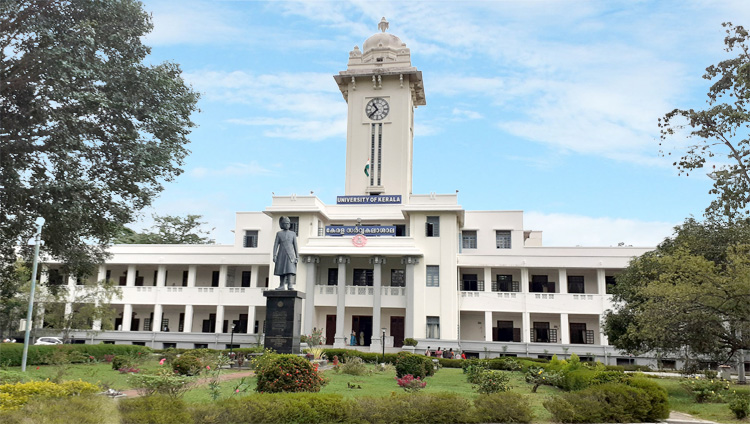
Ph.D. in German from Kerala University: Eligibility, Entrance Exam, Fee Structure, Admission Process, Subjects, Research Areas, Syllabus, Scholarship & Career Scope
Introduction about Ph.D. in German at Kerala University
The Doctor of Philosophy (Ph.D.) in German at Kerala University is a premier research programme designed for scholars who aspire to deepen their expertise in German language, literature, culture, and linguistics. Recognised for its rigorous curriculum, distinguished faculty, and vibrant research community, the programme equips professionals with analytical, pedagogical, and interdisciplinary skills that are highly valued in academia, translation, international relations, and global business.
Ph.D Admission 2026-2027 & Writing Support Services by Shiksha Research
Eligibility Criteria for Ph.D. in German at Kerala University
- A Master’s degree (or equivalent) in German, Linguistics, Literature, or a related discipline from a recognised university.
- Minimum aggregate of 55% (or CGPA 6.0 on a 10‑point scale) in the qualifying postgraduate programme.
- Clearance of any pending dues or disciplinary actions from the previous institution.
- Proficiency in English (IELTS/TOEFL scores may be required for international candidates).
- Research proposal aligned with the faculty interests at Kerala University.
Entrance Exam for Ph.D. in German at Kerala University
Kerala University conducts a two‑stage entrance assessment:
- Written Test – 90 minutes, comprising:
- Research Methodology & Statistics
- German Language & Literature (essay, translation, critical analysis)
- General Aptitude & Logical Reasoning
- Interview / Viva‑voce – Evaluation of the candidate’s research proposal, academic background, and alignment with ongoing projects.
Candidates who have already qualified for UGC/CSIR NET or equivalent are exempted from the written component.
Fee Structure for Ph.D. in German at Kerala University
| Category | Amount (INR) | Notes |
|---|---|---|
| Application Fee (Online) | 1,500 | Non‑refundable, payable at the time of submission. |
| Annual Tuition & Lab Charges | 12,000 | Payable at the beginning of each academic year. |
| Examination & Evaluation Fee | 3,000 | Charged per semester for internal assessments. |
| Library & Resource Centre Membership | 800 | Includes access to digital archives and inter‑library loan. |
| Miscellaneous (Printing, Stationery) | 1,200 | Estimated per year. |
| Total Approx. Annual Cost | 18,500 |
Admission Process for Ph.D. in German at Kerala University
- Online Application – Fill the web‑form on the university portal and upload scanned copies of certificates, passport‑size photograph, and research proposal.
- Document Verification – The admissions office validates the authenticity of the submitted documents.
- Entrance Examination – Eligible candidates are invited to appear for the written test (or exempted based on qualifying exams).
- Interview & Proposal Review – Shortlisted candidates meet the faculty panel for a detailed discussion.
- Final Selection & Admission Letter – Successful applicants receive a formal offer letter with enrolment instructions.
- Fee Payment & Registration – Pay the stipulated fees and complete the registration formalities.
Ph.D. Subjects and Specializations in German at Kerala University
The programme offers a flexible structure allowing candidates to focus on one or more of the following specializations:
- German Literature (Classical & Contemporary)
- German Linguistics & Phonetics
- Translation Studies & Comparative Literature
- German Film, Media & Cultural Studies
- German as a Foreign Language (GFL) Pedagogy
- Interdisciplinary Studies (German & History, Philosophy, Sociology)
Research Areas in German at Kerala University
Faculty members are engaged in cutting‑edge research across a spectrum of topics. Prospective Ph.D. scholars can explore:
- Post‑colonial perspectives in German literature.
- Digital humanities: Corpus linguistics of German texts.
- Translation strategies for technical and legal documents.
- German cinema’s influence on South Indian visual culture.
- Multilingual education models for teaching German in Indian schools.
- Comparative studies of German and Malayalam folklore.
Documents Required for Ph.D. in German at Kerala University
| Document | Format | Remarks |
|---|---|---|
| Completed Application Form | PDF (online) | Signed digitally. |
| Mark Sheets & Certificates (Post‑Graduation) | Scanned PDF | Originals to be produced on campus. |
| Research Proposal (max 2,500 words) | Must include objectives, methodology, and bibliography. | |
| Curriculum Vitae (Updated) | Highlight publications, conferences, and language proficiency. | |
| Proof of Identity (Aadhaar/Passport) | Government‑issued ID only. | |
| Proof of English Proficiency (if applicable) | IELTS/TOEFL score report. |
Kerala University Ph.D. Syllabus for German
The syllabus is structured into three phases – Coursework, Comprehensive Examination, and Dissertation.
- Coursework (Year 1)
- Advanced German Grammar & Stylistics
- Research Methodology in Humanities
- Digital Tools for Textual Analysis
- Seminar: Contemporary German Literary Trends
- Comprehensive Examination (End of Year 2)
- Written Paper – Critical Review of Literature
- Oral Viva – Presentation of research design
- Dissertation (Years 3‑5)
- Original research under the guidance of a supervisor.
- Periodic progress reports and publications in peer‑reviewed journals.
- Final defense before an external examination board.
How To Apply for Ph.D. in German at Kerala University
Follow these step‑by‑step instructions to submit a successful application:
- Visit the official Kerala University Post‑Graduate Admissions portal and create an account.
- Complete the online application form and upload the required documents (see the Documents Required table).
- Pay the non‑refundable application fee via net banking or UPI.
- Submit your research proposal; optionally, engage a faculty member for preliminary feedback.
- Keep an eye on the email notifications for entrance exam schedules or interview invitations.
- After selection, follow the admission letter instructions to pay the annual tuition and register for the semester.
Career Scope and Job Opportunities After Ph.D. in German from Kerala University
Graduates of the Ph.D. programme can pursue diverse career pathways:
- Academic Positions – Assistant/Associate Professor, Lecturer, Research Fellow in Indian and foreign universities.
- Research & Consultancy – Language policy projects, cultural diplomacy, and EU‑India collaboration initiatives.
- Translation & Localization – Senior translator, localization manager for multinational corporations.
- Publishing & Editing – Editorial roles in academic journals, publishing houses, and digital content platforms.
- Government & International Organizations – Roles in the Ministry of External Affairs, UNESCO, EU Delegations.
- Corporate Training – Designing German language curricula for corporate clients.
Scholarship for Ph.D. in German at Kerala University
Kerala University, along with several external bodies, offers merit‑based financial assistance:
- University Research Fellowship (URF) – INR 10,000 per month for the first two years.
- UGC‑CSIR JRF (Junior Research Fellowship) – Awarded based on national eligibility test scores.
- German Academic Exchange Service (DAAD) Scholarships – Fully funded for selected candidates with collaborative projects.
- State Government Stipends – INR 6,000 per month for candidates from economically weaker sections.
Applicants are encouraged to explore these options early and submit the relevant application forms alongside their Ph.D. proposal.
FAQs Regarding Ph.D. in German at Kerala University
- 1. Can I pursue the Ph.D. part‑time while working?
- Yes. Kerala University allows part‑time enrolment for professionals, provided they meet the minimum attendance and progress requirements.
- 2. Is a teaching assistantship mandatory?
- Teaching assistance is optional but highly recommended as it provides pedagogical experience and a modest stipend.
- 3. How long does it take to complete the doctorate?
- The minimum duration is three years, with a maximum of five years as per UGC regulations.
- 4. Do I need to know any other languages besides German and English?
- While not mandatory, proficiency in a third language (e.g., French, Spanish) can enhance research opportunities and scholarship prospects.
- 5. What is the role of Editing and Proofreading Services in my Ph.D. journey?
- Professional editing ensures your dissertation








