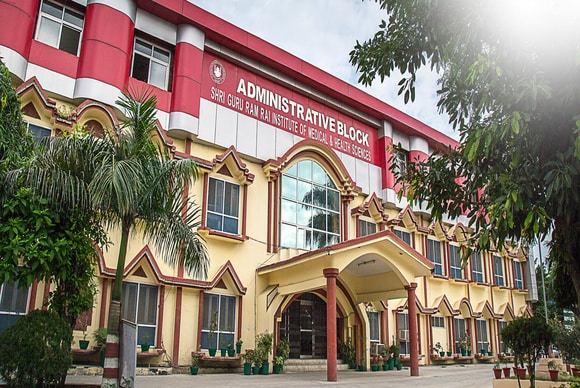
Ph.D. in History from Shri Guru Ram Rai University: Eligibility, Entrance Exam, Fee Structure, Admission Process, Subjects, Research Areas, Syllabus, Scholarship & Career Scope
Introduction about Ph.D. in History at Shri Guru Ram Rai University
Shri Guru Ram Rai University (SGRU) has emerged as a beacon for advanced historical scholarship in India. The Ph.D. in History program blends rigorous methodological training with expansive thematic coverage, empowering scholars to unravel the intricate tapestry of regional, national, and global narratives. With a faculty comprising renowned historians, access to digitized archives, and a vibrant research community, SGRU offers an inspiring environment for professionals seeking to elevate their academic credentials and contribute original research to the field of history.
Eligibility Criteria for Ph.D. in History at Shri Guru Ram Rai University
Prospective candidates must demonstrate strong academic foundations and research aptitude. The general eligibility requirements are:
- A master’s degree in History or a closely related discipline from a recognized university with a minimum of 55% aggregate (or 5.5 CGPA on a 10‑point scale).
- Candidates possessing a NET, SLET, or UGC JRF qualification are exempted from the entrance examination.
- For candidates with a Master’s degree in another humanities subject, a qualifying interview focusing on historical research methodology is mandatory.
- International applicants must submit a certified equivalence certificate for their prior qualifications.
Professional experience in heritage management, museum curation, or academic publishing can strengthen the application, aligning with the university’s emphasis on interdisciplinary expertise.
Entrance Exam for Ph.D. in History at Shri Guru Ram Rai University
The entrance assessment evaluates both subject mastery and research potential. The exam structure includes:
- Written Test (100 marks): Comprising essay questions, source analysis, historiography, and research design.
- Viva‑Voce (20 marks): Candidates present a research proposal and respond to faculty queries.
Applicants who have cleared national level eligibility tests such as UGC NET or CSIR JRF are automatically considered for admission, bypassing the written component. The university releases a detailed syllabus and past papers on its official portal to aid preparation.
Fee Structure for Ph.D. in History at Shri Guru Ram Rai University
| Fee Component | Indian Residents (INR) | International Residents (USD) |
|---|---|---|
| Application Processing Fee | ₹2,500 | — |
| Admission & Registration Fee | ₹12,000 | $250 |
| Annual Tuition Fee (per annum) | ₹30,000 | $600 |
| Laboratory & Fieldwork Charges | ₹5,000 (average) | $100 (average) |
| Library & Digital Resource Subscription | ₹3,000 | $70 |
| Total Approximate Cost (3‑Year Program) | ₹147,500 | $2,200 |
Note: SGRU offers merit‑based fee waivers and scholarships (see the “Scholarship” section) that can reduce the financial burden considerably.
Admission Process for Ph.D. in History at Shri Guru Ram Rai University
The admission workflow is streamlined to ensure transparency:
- Online Application: Submit the application form through the university’s portal, attach scanned documents, and pay the processing fee.
- Document Verification: The admissions office validates academic transcripts, entrance test scores, and identity proof.
- Entrance Examination / Interview: Eligible candidates appear for the written test, followed by a viva‑voce.
- Provisional Admission Letter: Issued to candidates who clear the test and interview.
- Final Admission & Registration: Submit original certificates, pay the registration fee, and complete enrollment.
Throughout the process, applicants can seek guidance from the university’s PhD Admission Assistance service, which offers personalized counseling and application review.
Ph.D. Subjects and Specializations in History at Shri Guru Ram Rai University
SGRU encourages scholars to pursue niche specializations that align with contemporary research demands. Key areas include:
- Ancient Indian Civilizations
- Medieval South Asian Polities
- Colonial and Post‑Colonial Studies
- World History and Globalisation
- Public History, Heritage Conservation, and Museum Studies
- Digital History and Archival Sciences
- Economic and Social History of the Indian Subcontinent
Students may also design interdisciplinary projects that intersect with anthropology, political science, or cultural studies, reflecting the university’s flexible curriculum.
Research Areas in History at Shri Guru Ram Rai University
Research at SGRU is driven by the following thematic streams:
- Indus Valley Civilization & Early Urbanism: Excavation data analysis, urban planning, and trade networks.
- Islamic Dynasties of North India: Sultanate administration, cultural syncretism, and architectural heritage.
- British Colonial Policies and Indigenous Resistance: Land revenue systems, nationalist movements, and gendered narratives.
- Transnational Migration and Diaspora Studies: Labor migration, cultural diffusion, and identity formation.
- Environmental History: Climate impacts on agrarian societies and ecological transformations.
- Digital Archival Projects: Creation of searchable databases for rare manuscripts and epigraphic records.
Faculty mentors support students through funded research grants, collaborative workshops, and international conference participation.
Documents Required for Ph.D. in History at Shri Guru Ram Rai University
| Document | Details |
|---|---|
| Completed Application Form | Online submission with a recent passport‑size photograph. |
| Academic Transcripts | Certified copies of Bachelor’s and Master’s mark sheets. |
| Proof of Entrance Exam Qualification | UGC NET / SLET / JRF scorecard (if applicable). |
| Research Proposal | 1500‑word outline describing objectives, methodology, and bibliography. |
| Curriculum Vitae (CV) | Highlighting academic achievements, publications, and professional experience. |
| Identity Proof | Aadhar card / Passport / PAN card copy. |
| Letter of Recommendation (2) | From academic supervisors or senior professionals. |
Shri Guru Ram Rai University Ph.D. Syllabus for History
The syllabus is structured into three phases, each designed to develop scholarly depth and research competence:
- Phase I – Core Coursework (6 months): Historiography, Research Methods, Digital Tools for History, and Regional Studies.
- Phase II – Specialized Modules (12 months): Choose two electives from the list of specializations, complete a literature review, and present a seminar paper.
- Phase III – Dissertation (24 months): Conduct original research, submit progress reports, defend the thesis, and publish at least one article in a peer‑reviewed journal.
Students are encouraged to utilize the university’s Editing and Proofreading Services to refine their dissertation drafts and meet publication standards.
How To Apply for Ph.D. in History at Shri Guru Ram Rai University
Follow these step‑by‑step instructions to submit a successful application:
- Visit the official SGRU admissions portal and create a new user account.
- Fill in personal and academic details, then upload scanned copies of all required documents.
- Pay the non‑refundable processing fee via net banking or credit card.
- Schedule the entrance exam (if applicable) and download the admit card.
- Attend the written test and subsequent viva‑voce on the allocated dates.
- Upon successful clearance, download the provisional admission letter and complete the final registration by submitting original certificates at the campus office.
For assistance with topic refinement, consider the university’s PhD Topic Selection and Proposal Assistance service, which helps craft a compelling research proposal aligned with faculty expertise.
Career Scope and Job Opportunities After Ph.D. in History from Shri Guru Ram Rai University
A doctoral degree in History opens diverse career trajectories across academia, research, and industry:
- Academic Positions: Lecturer, Assistant Professor, Associate Professor, and eventually Professor in universities and colleges.
- Research Fellowships: Positions at national institutes such as the Indian Council of Historical Research (ICHR), Indian Institute of Advanced Study (IIAS), and international think‑tanks.
- Heritage & Museum Sector: Curator, Conservation Specialist, and Heritage Manager in national museums, UNESCO projects, and cultural NGOs.
- Publishing & Media: Editorial roles for academic journals, documentary scripting, and content creation for educational








