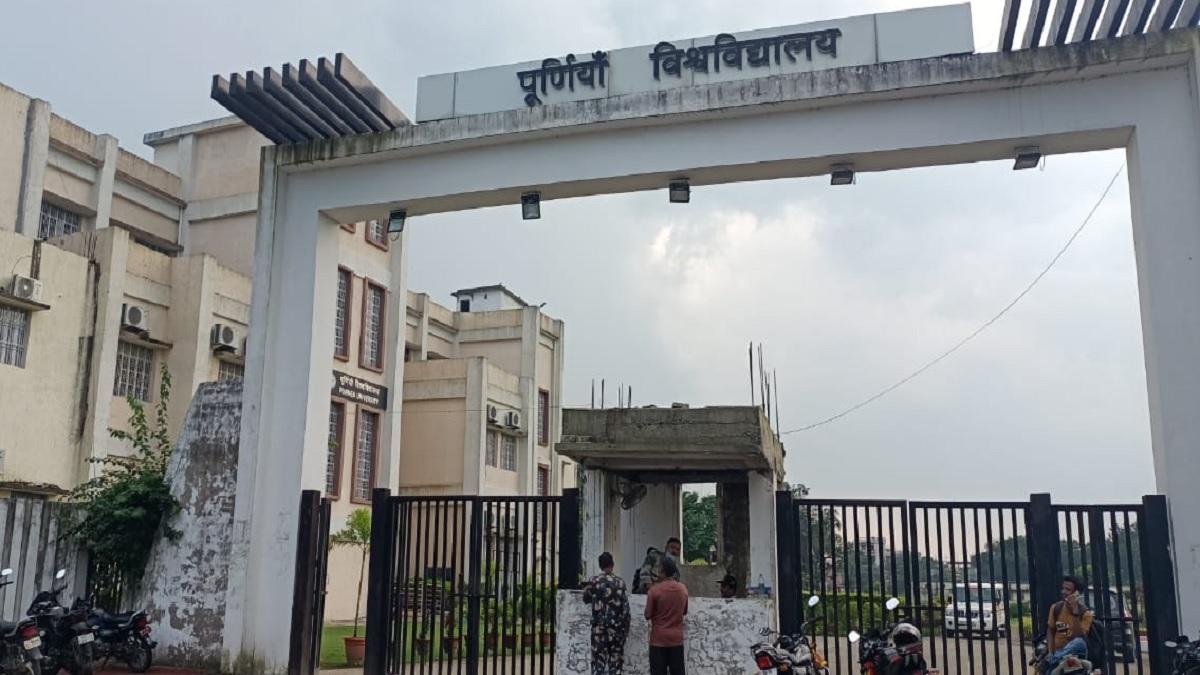
Ph.D. in Home Science at Purnea University
The Doctor of Philosophy (Ph.D.) in Home Science at Purnea University is designed for professionals who aspire to lead research, policy formulation, and academic excellence in the multidisciplinary realm of home economics. The program blends theoretical rigor with practical investigations, empowering scholars to address contemporary challenges such as nutrition security, family welfare, textile innovation, and sustainable resource management. With state‑of‑the‑art laboratories, collaborative projects, and exposure to community‑based research, graduates emerge as thought leaders capable of influencing national and global agendas.
Eligibility Criteria for Ph.D. in Home Science at Purnea University
Prospective candidates must possess a Master’s degree in Home Science or a closely related discipline (e.g., Nutrition, Textile, Human Development) with a minimum of 55% aggregate (or an equivalent CGPA of 5.5/10). Candidates who hold a Master’s degree in a different but relevant field may apply provided they have demonstrated research exposure through publications or project work. Candidates who have cleared the National Eligibility Test (NET) or University Grants Commission (UGC) Junior Research Fellowship (JRF) are exempted from the university entrance examination. Editing and Proofreading Services can help polish academic documents to meet eligibility standards.
Entrance Exam for Ph.D. in Home Science at Purnea University
The entrance test evaluates candidates on research aptitude, subject‑specific knowledge, and analytical abilities. It consists of three sections: (1) General Aptitude, (2) Core Home Science concepts, and (3) Research Methodology. The exam is conducted in offline mode once a year, typically in June. Candidates who have qualified NET/UGC‑JRF are directly eligible for the interview stage without appearing for the university test. Preparation materials, mock papers, and coaching resources are widely available through the university’s library portal.
Fee Structure for Ph.D. in Home Science at Purnea University
| Fee Component | Amount (INR) | Frequency |
|---|---|---|
| Application & Registration Fee | 2,000 | One‑time |
| Annual Tuition Fee | 15,000 | Per Year |
| Laboratory & Resource Charges | 5,000 | Per Year |
| Thesis Submission & Examination Fee | 8,000 | One‑time |
| Total Approximate Cost (4 Years) | 90,000 | — |
Fee remission is available for candidates who secure merit-based scholarships or are beneficiaries of the university’s research grants. Financial planning tools are provided on the official website to help applicants estimate their total investment.
Admission Process for Ph.D. in Home Science at Purnea University
The admission workflow comprises five key steps:
- Online application submission through the university portal.
- Upload of scanned copies of academic certificates, mark sheets, and identity proof.
- Payment of the non‑refundable application fee.
- Qualifying the entrance examination (or presenting NET/UGC‑JRF score).
- Personal interview and research proposal evaluation by the department’s screening committee.
For guidance through this intricate process, consider availing PhD Admission Assistance, which offers step‑by‑step support from document preparation to interview coaching.
Ph.D. Subjects and Specializations in Home Science at Purnea University
The doctoral program offers the following specializations, each aligned with emerging industry and societal needs:
- Food & Nutrition Science
- Textile & Apparel Technology
- Human Development & Family Studies
- Home Management & Extension Education
- Community Nutrition & Public Health
- Consumer Science & Resource Management
Students may tailor their research focus by integrating interdisciplinary modules, such as environmental sustainability, gender studies, or digital health, thereby enhancing employability across sectors.
Research Areas in Home Science at Purnea University
Current research initiatives encompass:
- Functional food development and nutraceuticals.
- Smart textile innovations for healthcare.
- Early childhood development interventions.
- Gender‑responsive family welfare policies.
- Community‑based nutrition surveillance.
- Eco‑friendly resource utilization in household settings.
Researchers are encouraged to publish their findings in peer‑reviewed journals. Research Publication Support is available to assist with manuscript preparation, journal selection, and the submission process.
Documents Required for Ph.D. in Home Science at Purnea University
| Document | Details |
|---|---|
| Application Form (online) | Completed and submitted via the university portal. |
| Academic Transcripts | Original and self‑attested copies of Master’s degree and any other relevant qualifications. |
| NET/UGC‑JRF Scorecard (if applicable) | Certified copy of the qualifying score. |
| Research Proposal | 2‑3 page outline of intended research, objectives, methodology, and expected outcomes. |
| Identity Proof | Aadhaar card, passport, or driving license. |
| Passport‑size Photographs | Four recent color photographs. |
Purnea University Ph.D. Syllabus for Home Science
The structured syllabus spans four semesters, each comprising core modules, electives, and research work:
- Semester 1: Research Methodology, Statistics for Social Sciences, Foundations of Home Science.
- Semester 2: Advanced Topics in Nutrition, Textile Science, Human Development Theory.
- Semester 3: Elective‑Based Specialized Courses, Fieldwork Practicum, Publication Ethics.
- Semester 4: Thesis Writing, Defense Preparation, Knowledge Transfer Workshops.
Students may also undertake interdisciplinary electives from allied departments such as Public Health, Rural Development, or Environmental Sciences to broaden their scholarly perspective.
How To Apply for Ph.D. in Home Science at Purnea University
Follow these steps to submit a successful application:
- Visit the official university website and navigate to the “Ph.D. Admissions” section.
- Register using a valid email address and create a secure password.
- Fill in personal, academic, and contact details accurately.
- Upload the required scanned documents (as listed above) in PDF format.
- Pay the application fee through the integrated payment gateway.
- Submit the completed form and note the generated application ID for future reference.
- Monitor the email for admit card issuance, exam dates, and interview schedules.
For a seamless experience, candidates can also explore PhD Topic Selection and Proposal Assistance, which helps craft compelling research proposals that align with faculty expertise.
Career Scope and Job Opportunities After Ph.D. in Home Science from Purnea University
Graduates with a doctoral degree in Home Science enjoy diverse career pathways, including:
- University faculty and research positions (Assistant Professor, Associate Professor, Dean).
- Senior roles in governmental agencies such as the Ministry of Women & Child Development, National Institute of Nutrition.
- Leadership positions in NGOs focusing on community nutrition, child welfare, and women empowerment.
- R&D management in food processing, textile innovation, and consumer goods corporations.
- Policy analysis and consultancy for international bodies like WHO, FAO, and UNDP.
- Entrepreneurship in health tech, sustainable home solutions, and educational technology.
The interdisciplinary skill set—combining scientific research, project management, and social insight—makes Ph.D. holders highly








