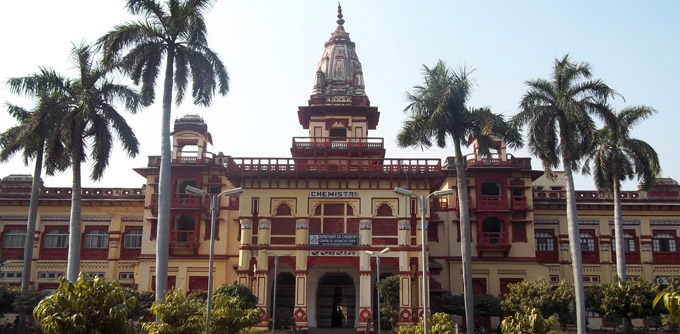
Introduction about Ph.D. in Horticulture at Banaras Hindu University
Banaras Hindu University (BHU), often referred to as the 'Capital of Knowledge,' stands as a beacon of academic excellence and research innovation in India. Pursuing a Ph.D. in Horticulture at this prestigious institution is not just an academic milestone; it is a transformative journey for professionals who aspire to redefine the future of sustainable agriculture and plant science. The Institute of Agricultural Sciences at BHU offers a robust research environment where traditional wisdom meets modern technological advancements. Horticulture, being a vital branch of agriculture, focuses on the cultivation of fruits, vegetables, flowers, and ornamental plants, playing a crucial role in global food security and economic stability.
For professionals looking to deepen their expertise, a doctorate from BHU provides access to world-class laboratories, extensive experimental farms, and a community of distinguished scholars. The program is designed to inspire researchers to tackle pressing challenges such as climate change, biodiversity loss, and nutritional security through innovative horticultural practices. Navigating the complexities of high-level research requires precision, and many scholars seek professional PhD Admission Assistance to ensure they begin their journey at BHU on the right foot.
Ph.D Admission 2026-2027 & Writing Support Services by Shiksha Research
Eligibility Criteria for Ph.D. in Horticulture at Banaras Hindu University
The Department of Horticulture at BHU maintains high standards for doctoral candidates to ensure the quality and rigor of research output. Professionals aiming for this program must meet the following eligibility prerequisites:
- Educational Qualification: Candidates must hold a Master?s degree (M.Sc. Ag. in Horticulture or related fields) from a recognized university or an institution equivalent to BHU.
- Minimum Marks: A minimum of 55% marks or an equivalent OGPA (Overall Grade Point Average) is typically required at the postgraduate level. For those in the reserved categories, a relaxation is provided as per University and Government of India norms.
- Subject Consistency: The applicant's previous academic background should align with Horticulture or its specialized branches like Pomology, Olericulture, or Floriculture.
- Professional Experience: While not mandatory, candidates with professional experience in agricultural research, policy-making, or industry leadership are highly encouraged to apply, as they contribute valuable practical perspectives to the academic community.
Entrance Exam for Ph.D. in Horticulture at Banaras Hindu University
Admission to the Ph.D. program is primarily conducted through the Research Entrance Test (RET) organized by the university. The exam is designed to test the candidate?s aptitude for research and their depth of knowledge in horticulture. The RET consists of two parts:
The first part focuses on general research methodology and subject-specific questions at the postgraduate level. The second part involves a descriptive assessment of the candidate's research proposal and academic potential. Candidates who have cleared national-level examinations like the ICAR-JRF/SRF, UGC-NET, or CSIR-NET are often exempt from the written test but must still appear for the counseling and interview process. To stand out in this competitive landscape, developing a unique research focus is key, and seeking PhD Topic Selection and Proposal Assistance can significantly enhance the quality of your application.
Fee Structure for Ph.D. in Horticulture at Banaras Hindu University
BHU is known for providing high-quality education at a highly subsidized and affordable rate compared to other global institutions. The fee structure is designed to support long-term research without placing an undue financial burden on the scholars.
| Fee Category | Approximate Amount (Annual/One-time) | Details |
|---|---|---|
| Admission Fee | INR 2,000 - 5,000 | One-time fee at the start of the program. |
| Tuition Fee | INR 10,000 - 15,000 | Annual fee for academic resources and facilities. |
| Laboratory & Research Fee | INR 5,000 - 8,000 | Covers usage of high-end equipment and chemicals. |
| Library & Welfare Fund | INR 3,000 - 4,000 | Access to digital and physical libraries. |
| Examination & Thesis Evaluation | INR 5,000 - 10,000 | Payable during thesis submission. |
Note: The fees mentioned are indicative and subject to change based on university notifications.
Admission Process for Ph.D. in Horticulture at Banaras Hindu University
The admission process at BHU is a multi-step journey that ensures only the most dedicated and capable researchers are selected. The steps typically include:
- Online Application: Candidates must register through the official BHU entrance portal and fill out the form with accurate academic details.
- Entrance Testing (RET): Participation in the RET exam or verification of fellowship status (NET/JRF).
- Interview/Presentation: Shortlisted candidates are invited to the department to present their research interests before the Departmental Research Committee (DRC).
- Seat Allotment: Based on the combined score of the entrance test, interview, and academic record, seats are allocated.
- Document Verification: Final verification of certificates and payment of fees to secure the seat.
Ph.D. Subjects and Specializations in Horticulture at Banaras Hindu University
Horticulture at BHU is not a monolithic subject but a vibrant field with several specialized branches. Throughout the Ph.D. journey, scholars can focus on:
- Fruit Science (Pomology): Advanced studies in tropical, sub-tropical, and temperate fruit production and management.
- Vegetable Science (Olericulture): Research into crop improvement, hybrid seed production, and organic farming of vegetable crops.
- Floriculture and Landscaping: Focusing on commercial flower production, value addition, and aesthetic garden design.
- Post-Harvest Technology: Reducing post-harvest losses, improving shelf-life, and processing horticultural produce.
- Plantation Crops, Spices, and Medicinal Plants: Exploring the therapeutic and industrial potential of diverse plant species.
Research Areas in Horticulture at Banaras Hindu University
Research at BHU is focused on solving real-world agricultural problems. The university encourages interdisciplinary research that merges horticulture with biotechnology and environmental science. Key research areas include:
- Genetic Engineering and Crop Improvement: Developing climate-resilient and pest-resistant varieties of horticultural crops.
- Precision Farming: Using IoT and AI to optimize resource usage in horticulture.
- Sustainable and Organic Horticulture: Developing bio-fertilizers and eco-friendly pest management systems.
- Nutraceutical Research: Investigating the health benefits and bioactive compounds in horticultural plants.
Innovative research often leads to commercial applications. Scholars are encouraged to look into Patent Filing and Support Services to protect their original inventions and contribute to the nation's intellectual property.
Documents Required for Ph.D. in Horticulture at Banaras Hindu University
To ensure a smooth admission process, candidates should have the following documents ready for submission:
- High School and Intermediate Certificates (Proof of Age).
- Bachelor's and Master's Degree Marksheets and Certificates.
- Valid Scorecard of RET/NET/JRF.
- Transfer Certificate and Migration Certificate.
- Caste Certificate (if applicable).
- Character Certificate from the last attended institution.
- No Objection Certificate (NOC) for employed professionals.
- Passport-sized photographs and Identity Proof (Aadhar/Voter ID).
Banaras Hindu University Ph.D. Syllabus for Horticulture
The Ph.D. curriculum at BHU is split into coursework and the actual research period. The coursework is mandatory and designed to equip scholars with the tools necessary for high-level academic writing and analysis.
Ph.D. Coursework Syllabus:
- Research Methodology: Fundamentals of scientific investigation, experimental design, and statistical analysis.
- Advanced Horticulture Trends: Study of global advancements in horticultural techniques and biotechnology.
- Computer Applications: Use of software like SPSS and R for data interpretation.
- Professional Communication: Training in technical writing for journals. Many students utilize Editing and Proofreading Services to polish their final thesis and ensure it meets international standards.
How To Apply for Ph.D. in Horticulture at Banaras Hindu University
Applying to BHU requires a systematic approach. Follow these steps to complete your application:
- Visit the official BHU Entrance Exam portal (bhuonline.in).
- Select the "Research Entrance Test (RET)" link.
- Register with an active email ID and mobile number.
- Fill out the application form with personal and academic details.
- Upload scanned copies of required documents and signatures.
- Pay the application fee via online payment gateways.
- Download and print the final application form for future reference.
Career Scope and Job Opportunities After Ph.D. in Horticulture from Banaras Hindu University
A Ph.D. from BHU opens doors to prestigious careers in both the public and private sectors. Graduates are seen as experts who can lead teams and drive innovation.
- Academician: Professors and Scientists in Agricultural Universities and ICAR institutes.
- Research Scientist: Leading R&D wings of seed companies, fertilizer industries, and food processing units.
- Horticultural Consultant: Advising large-scale commercial farms and landscape architecture firms.
- Public Sector Roles: Quality control officers, agricultural officers, and policy advisors in government departments.
To establish a global reputation, publishing your findings in high-impact journals is vital. Utilizing Research Publication Support can help scholars navigate the peer-review process and gain international visibility.
Scholarship for Ph.D. in Horticulture at Banaras Hindu University
Financial support is a crucial aspect of doctoral research. BHU offers numerous scholarship opportunities:
- UGC-JRF/SRF: Substantial monthly stipend for candidates who have cleared the Junior Research Fellowship exam.
- ICAR Fellowship: Dedicated funding for agricultural and horticultural researchers.
- Institutional Fellowships: BHU provides 'BHU-RET Fellowships' for a limited number of non-NET candidates based on merit.
- External Funding: Opportunities through DST-INSPIRE, CSIR, and various private foundations working in sustainable development.
FAQs Regarding Ph.D. in Horticulture at Banaras Hindu University
1. What is the duration of the Ph.D. program in Horticulture at BHU?
The program typically lasts between 3 to 5 years, depending on the progress of the research and thesis submission.
2. Can working professionals apply for the Ph.D. program?
Yes, professionals can apply, provided they obtain an NOC from their employer and comply with the mandatory coursework residency requirements.
3. Is there an age limit for applying to the Ph.D. program?
Generally, there is no strict upper age limit for the Ph.D. program at BHU, though age limits may apply for specific external scholarships.
4. Does BHU provide hostel facilities for research scholars?
Yes, BHU offers dedicated hostel accommodation for research scholars, though availability depends on the waiting list and vacancy.
5. Are there alternative pathways for mid-career professionals to gain doctoral recognition?
Experienced professionals who have made significant contributions to the field of horticulture but cannot commit to full-time research may want to explore Honorary Doctorate Programs as an alternative form of professional recognition.
In conclusion, a Ph.D. in Horticulture from Banaras Hindu University is a prestigious endeavor that equips you with the authority and expertise to lead the agricultural revolution. With its rich heritage and modern research outlook, BHU remains the premier destination for serious horticultural scholars.








