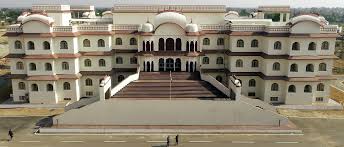
Ph.D. in Human Rights from Pandit Deendayal Upadhyaya Shekhawati University: Eligibility, Entrance Exam, Fee Structure, Admission Process, Subjects, Research Areas, Syllabus, Scholarship & Career Scope
Introduction about Ph.D. in Human Rights at Pandit Deendayal Upadhyaya Shekhawati University
The Doctor of Philosophy (Ph.D.) in Human Rights offered by Pandit Deendayal Upadhyaya Shekhawati University is a research‑intensive programme designed for scholars who aspire to become thought‑leaders in the field of human rights law, policy, and advocacy. The curriculum blends theoretical foundations with empirical research, fostering critical thinking, interdisciplinary collaboration, and a deep commitment to social justice. Graduates emerge equipped to influence national and international policy, lead academic departments, and drive transformative change in civil society.
Ph.D Admission 2026-2027 & Writing Support Services by Shiksha Research
Eligibility Criteria for Ph.D. in Human Rights at Pandit Deendayal Upadhyaya Shekhawati University
- A Master’s degree (M.A., M.Sc., M.Com., M.Phil., etc.) in Human Rights, Law, Social Sciences, or a related discipline with a minimum of 55% aggregate (or 5.0 CGPA on a 10‑point scale).
- Applicants with a valid National Eligibility Test (NET) or UGC-CSIR qualification are exempted from the university‑level entrance examination.
- Age limit: No upper age restriction; however, candidates should demonstrate the ability to complete the research within the stipulated period (typically 3‑5 years).
- Proficiency in English (IELTS/TOEFL not mandatory for Indian nationals, but recommended for international scholars).
Entrance Exam for Ph.D. in Human Rights at Pandit Deendayal Upadhyaya Shekhawati University
The university conducts a written entrance test followed by a personal interview. The written component assesses:
- Research methodology and statistics.
- Core concepts of human rights, international law, and ethics.
- Analytical writing and critical reasoning.
Successful candidates are required to submit a detailed research proposal during the interview. For NET qualified candidates, the interview alone may be sufficient.
Fee Structure for Ph.D. in Human Rights at Pandit Deendayal Upadhyaya Shekhawati University
| Category | Annual Fee (INR) | Notes |
|---|---|---|
| General Category (Self‑Financed) | 45,000 | Includes tuition, library, and lab charges. |
| SC/ST/PWD (Reserved) | 30,000 | Fee concession as per university policy. |
| Scholarship Recipients | 0 | Full waiver for students awarded central or state scholarships. |
| Other Charges | 5,000 | Annual examination & registration fees. |
Admission Process for Ph.D. in Human Rights at Pandit Deendayal Upadhyaya Shekhawati University
- Online Application: Fill the application form on the university’s official portal and upload scanned copies of academic certificates, photograph, and signature.
- Payment of Application Fee: Pay the non‑refundable fee (₹1,500 for General, ₹750 for SC/ST).
- Screening: The admission committee reviews eligibility and NET/CSIR scores.
- Entrance Test & Interview: Qualifying candidates are invited for the written test and subsequent interview.
- Admission Offer: Successful candidates receive a formal admission letter and are required to submit the fee receipt.
- Enrollment: Complete enrollment by submitting original documents and signing the research agreement.
Ph.D. Subjects and Specializations in Human Rights at Pandit Deendayal Upadhyaya Shekhawati University
Students can tailor their research across a wide spectrum of specializations, including:
- International Human Rights Law
- Gender and Women’s Rights
- Children’s Rights and Protection
- Minority & Indigenous Rights
- Human Rights and Development Policy
- Transnational Advocacy Networks
- Human Rights and Technology
Research Areas in Human Rights at Pandit Deendayal Upadhyaya Shekhawati University
The university’s research centres collaborate with NGOs, think‑tanks, and governmental bodies. Prominent research themes include:
- Impact of Climate Change on Displaced Communities
- Legal Frameworks for Combating Human Trafficking
- Digital Privacy and the Right to Information
- Comparative Study of Constitutional Remedies for Human Rights Violations
- Human Rights Education in Rural Schools
Documents Required for Ph.D. in Human Rights at Pandit Deendayal Upadhyaya Shekhawati University
| Document | Details |
|---|---|
| Academic Transcripts | Original mark sheets of Bachelor and Master degrees. |
| NET/CSIR Score Card | If applicable; otherwise, entrance test result. |
| Research Proposal | 2‑3 page synopsis outlining objectives, methodology, and literature review. |
| Identity Proof | Aadhaar, Passport, or Voter ID. |
| Experience Certificates | Relevant professional or academic experience (optional but advantageous). |
Pandit Deendayal Upadhyaya Shekhawati University Ph.D. Syllabus for Human Rights
The syllabus is divided into core modules and research components:
- Research Methodology & Statistics – Qualitative & quantitative techniques, data analysis, ethical considerations.
- Foundations of Human Rights Law – International covenants, regional systems, Indian Constitution.
- Contemporary Issues – Migration, climate justice, digital rights.
- Thesis Work – Original research, fieldwork, publication in peer‑reviewed journals.
Students are encouraged to utilize professional support services such as Thesis and Dissertation Writing Services to enhance the quality of their dissertation.
How To Apply for Ph.D. in Human Rights at Pandit Deendayal Upadhyaya Shekhawati University
Follow these steps to submit a successful application:
- Visit the official university website and navigate to the “Admissions – Ph.D.” portal.
- Register using a valid email address and create a secure password.
- Complete the online form, ensuring accurate entry of academic details and contact information.
- Upload required documents in PDF format (max 2 MB each).
- Pay the application fee via NetBanking, UPI, or credit/debit card.
- Submit the form and note the application reference number for future correspondence.
Career Scope and Job Opportunities After Ph.D. in Human Rights from Pandit Deendayal Upadhyaya Shekhawati University
Graduates enjoy a wide array of career pathways:
- Academic Positions: Assistant Professor, Associate Professor, or Research Fellow in law schools and social science departments.
- Policy & Advocacy: Analyst or senior advisor for UN agencies, NGOs, think‑tanks, and government ministries.
- Legal Practice: Specialized counsel in human rights litigation, public interest law, and international tribunals.
- Research & Consultancy: Project manager for grant‑funded research, data analyst for human rights statistics (Research Data Analysis Services).
- Publishing & Media: Author of scholarly articles, editor for human rights journals, or media commentator.
Scholarship for Ph.D. in Human Rights at Pandit Deendayal Upadhyaya Shekhawati University
Multiple financial assistance options are available:
- University Merit Scholarship: Covers tuition and a monthly stipend for top 10% of applicants.
- National Fellowship (UGC‑JRF, CSIR‑NET): Provides a stipend of ₹31,000 per month for 2 years.
- External Grants: Funding from the Ministry of Human Resource Development, Commonwealth Scholarships, and private foundations.
FAQs Regarding Ph.D. in Human Rights at Pandit Deendayal Upadhyaya Shekhawati University
- Q1: Can I pursue the Ph.D. part‑time while working?
- Yes. The university offers a flexible part‑time mode for working professionals, provided they meet the minimum attendance requirement for seminars and workshops.
- Q2: How long does it take to complete the Ph.D.?
- The standard duration is 3 years for full‑time and 5 years for part‑time candidates, subject to satisfactory progress.
- Q3: Is there a provision for publishing my research in international journals?
- Absolutely. The university has tie‑ups with several indexed journals and encourages students to publish their findings. Services like Research Paper Writing Services can assist with manuscript preparation.
- Q4: What support is available for data collection and analysis?
- Students can access








