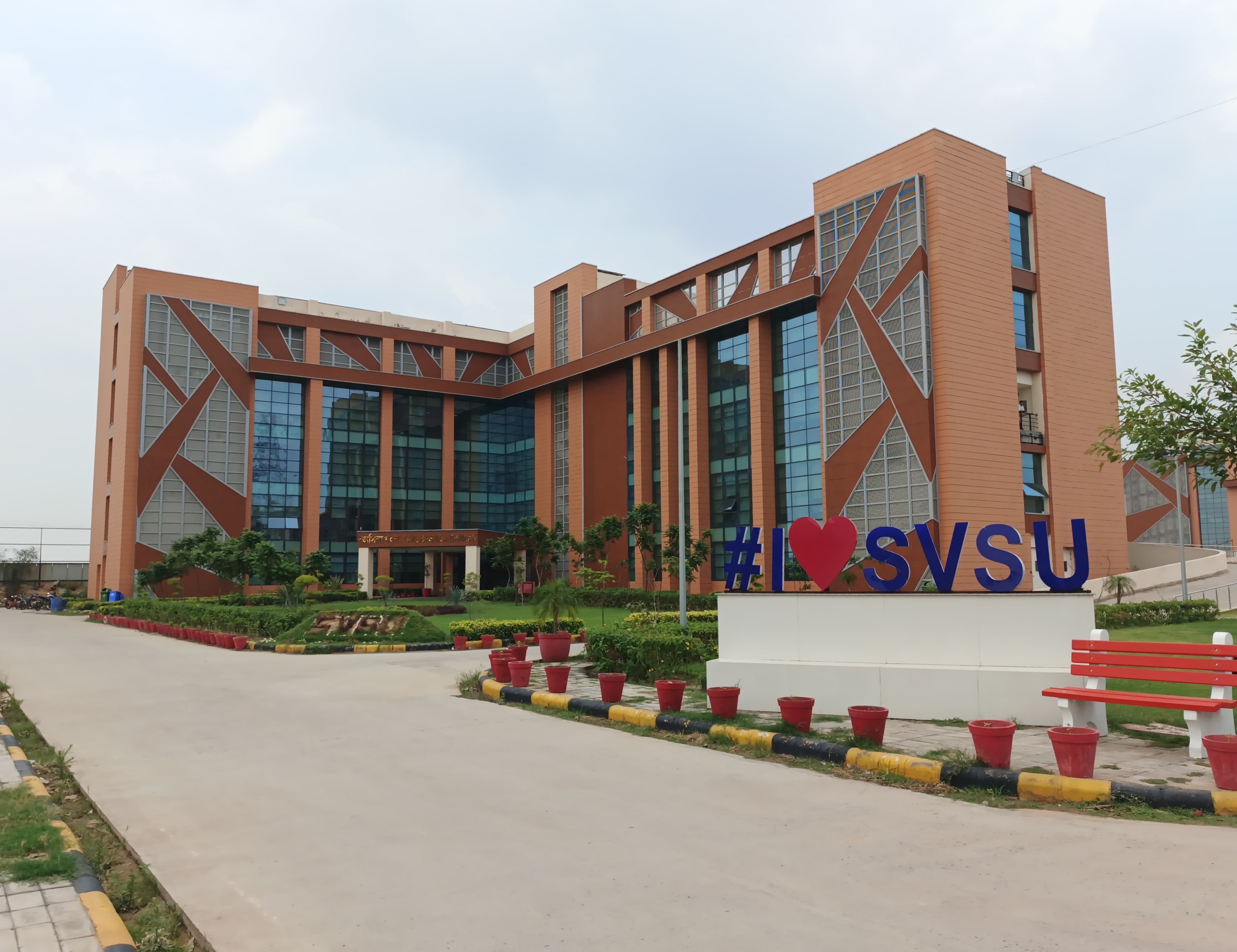
Ph.D. in Industrial Engineering from Shri Vishwakarma Skill University
Introduction about Ph.D. in Industrial Engineering at Shri Vishwakarma Skill University
The Ph.D. in Industrial Engineering at Shri Vishwakarma Skill University is designed for engineers and researchers who aspire to lead transformative projects in manufacturing, supply‑chain optimization, and systems engineering. The program blends rigorous theoretical frameworks with real‑world industry collaborations, enabling candidates to contribute pioneering solutions that enhance productivity, sustainability, and competitiveness across sectors.
Eligibility Criteria for Ph.D. in Industrial Engineering at Shri Vishwakarma Skill University
Prospective scholars must meet the following baseline requirements:
- Master’s degree (M.E., M.Tech, or equivalent) in Industrial Engineering, Manufacturing Engineering, Operations Research, or a closely related discipline.
- Minimum 55% aggregate marks (or CGPA equivalent) in the qualifying postgraduate program.
- Valid GATE score (optional but preferred) or a university‑conducted entrance test.
- Demonstrated research aptitude through published papers, conference presentations, or a well‑crafted research proposal.
Entrance Exam for Ph.D. in Industrial Engineering at Shri Vishwakarma Skill University
The university conducts a comprehensive entrance examination that evaluates:
- Core knowledge in Industrial Engineering fundamentals.
- Quantitative and analytical skills, including statistics, linear programming, and simulation.
- Research methodology and academic writing proficiency.
- Interview performance assessing motivation, research interests, and alignment with faculty expertise.
Fee Structure for Ph.D. in Industrial Engineering at Shri Vishwakarma Skill University
| Fee Component | Amount (INR) | Notes |
|---|---|---|
| Admission & Registration Fee | 15,000 | One‑time payment |
| Annual Tuition Fee (per semester) | 45,000 | Payable at the start of each semester |
| Laboratory & Project Charges | 10,000 | Depends on research scope |
| Library & Digital Resources | 5,000 | Inclusive of e‑journal subscriptions |
| Contingency & Miscellaneous | 5,000 | Travel, certifications, etc. |
| Total Approximate Cost (3‑Year Program) | 3,00,000 – 3,50,000 | Subject to revisions each academic year |
Admission Process for Ph.D. in Industrial Engineering at Shri Vishwakarma Skill University
The admission workflow follows a structured pathway:
- Online Application: Fill the web‑based form, upload academic transcripts, a research proposal, and two academic references.
- Document Verification: University officials verify eligibility and authenticity of submitted records.
- Entrance Examination: Sit for the written test (or submit a valid GATE score).
- Personal Interview: Shortlisted candidates appear before a panel of subject experts.
- Final Selection & Offer Letter: Successful candidates receive a formal admission letter and fee payment schedule.
Ph.D. Subjects and Specializations in Industrial Engineering at Shri Vishwakarma Skill University
While the overarching degree is a Ph.D. in Industrial Engineering, candidates can focus on one of the following specializations:
- Manufacturing Systems & Automation
- Supply Chain Analytics
- Human Factors & Ergonomics
- Quality Engineering & Six Sigma
- Operations Research & Decision Sciences
- Industrial Sustainability & Green Manufacturing
Research Areas in Industrial Engineering at Shri Vishwakarma Skill University
The university’s research clusters align with industry trends and government initiatives such as Make in India and Digital India. Key research domains include:
- Smart Factory & Industry 4.0 integration.
- Advanced logistics and last‑mile delivery optimization.
- Data‑driven predictive maintenance.
- Human‑machine collaboration and workplace safety.
- Sustainable resource management and circular economy models.
Students often collaborate with the university’s Thesis and Dissertation Writing Services to refine their research manuscripts and meet international publication standards.
Documents Required for Ph.D. in Industrial Engineering at Shri Vishwakarma Skill University
| Document | Format | Remarks |
|---|---|---|
| Application Form (online) | PDF/Online | Completed with accurate personal details |
| Academic Transcripts & Degree Certificates | Scanned PDF (certified) | All semesters/years |
| Research Proposal (2,000–3,000 words) | Word/ PDF | Clearly state objectives, methodology, and expected outcomes |
| Two Letters of Recommendation | PDF (official letterhead) | From academicians or industry supervisors |
| GATE Scorecard (optional) | If applicable, for test‑waiver consideration | |
| Proof of Identity (Aadhaar/Passport) | Government‑issued ID |
Shri Vishwakarma Skill University Ph.D. Syllabus for Industrial Engineering
The curriculum balances coursework, research, and teaching responsibilities:
- Core Courses (Year 1): Advanced Operations Research, Research Methodology, Statistical Quality Control, and Industrial Engineering Ethics.
- Elective Modules (Year 1‑2): Topics chosen per specialization – e.g., Digital Twins, Lean Six Sigma, Sustainable Manufacturing, or Human‑Centric Design.
- Comprehensive Exams: Conducted at the end of Year 1 to assess mastery of core concepts.
- Thesis Work (Year 2‑3): Original research, data collection, analysis, and dissertation writing. Students often employ the university’s Research Data Analysis Services for sophisticated statistical modeling.
- Teaching Assistantship: Optional role to gain pedagogical experience.
How To Apply for Ph.D. in Industrial Engineering at Shri Vishwakarma Skill University
Follow these steps for a smooth application:
- Visit the official university portal and register an account.
- Complete the online application form and upload the required documents.
- Pay the non‑refundable application fee via net banking or UPI.
- Schedule the entrance examination (or upload the GATE score).
- Prepare for the interview by reviewing faculty research interests and aligning your proposal accordingly.
- Upon receiving the admission offer, confirm your seat by paying the first semester tuition.
Career Scope and Job Opportunities After Ph.D. in Industrial Engineering from Shri Vishwakarma Skill University
Graduates command a strategic advantage in both academia and industry. Typical career pathways include:
- Assistant/Associate Professor or Research Scientist at premier institutes.
- Senior Operations Manager, Supply Chain Director, or Process Innovation Lead in multinational corporations.
- Consultant for global consulting firms (e.g., McKinsey, BCG) focusing on operational excellence.
- Entrepreneur launching startups in analytics, robotics, or sustainability solutions.
- Policy Advisor for government bodies shaping industrial policies and standards.
Scholarship for Ph.D. in Industrial Engineering at Shri Vishwakarma Skill University
The university offers merit‑based scholarships and research grants to support talented scholars. Eligibility hinges on academic performance (minimum 75% aggregate) and the relevance of the research proposal to funded projects. Additionally, candidates may apply for external fellowships such as the CSIR‑NET Ph.D. Fellowship or the UGC‑JRF.
FAQs Regarding Ph.D. in Industrial Engineering at Shri Vishwakarma Skill University
- Q: Is work experience required for admission?
- A: While not mandatory, relevant industry experience strengthens the application and may waive certain entrance requirements.
- Q: How long does the Ph.D. program typically take?
- A: The standard duration is three years for full‑time candidates, with a possible extension up to five years.
- Q: Can I pursue the Ph.D. part‑time while working?
- A








