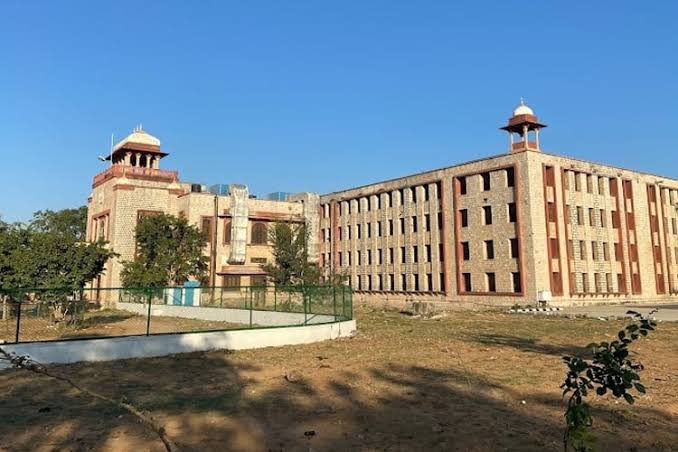
Ph.D. in Inorganic Chemistry from Rajasthan University: Eligibility, Entrance Exam, Fee Structure, Admission Process, Subjects, Research Areas, Syllabus, Scholarship & Career Scope
Introduction about Ph.D. in Inorganic Chemistry at Rajasthan University
Rajasthan University stands as a beacon of scientific excellence in North India, offering a rigorous Ph.D. program in Inorganic Chemistry that blends theoretical mastery with cutting?edge laboratory research. The doctoral journey is designed for professionals who aspire to push the frontiers of coordination chemistry, solid?state materials, catalysis, and bio?inorganic applications. With state?of?the?art instrumentation, interdisciplinary collaborations, and a faculty roster that includes internationally recognized scholars, Rajasthan University provides an inspiring environment where curiosity transforms into impactful scientific contributions.
The curriculum emphasizes analytical techniques, advanced synthesis pathways, and computational modeling, ensuring that graduates emerge as leaders in academia, industry, and research institutions worldwide. Whether you aim to develop novel inorganic catalysts for sustainable energy or investigate the therapeutic potential of metal complexes, this program equips you with the expertise and professional network required to excel.
Eligibility Criteria for Ph.D. in Inorganic Chemistry at Rajasthan University
Prospective candidates must meet the following minimum requirements:
- A Master?s degree (M.Sc., M.Tech., or equivalent) in Chemistry, Chemical Engineering, Materials Science, or a closely related discipline with at least 55% aggregate (or 5.5 CGPA on a 10?point scale).
- For candidates holding a B.E./B.Tech. in Chemical Engineering or Materials Engineering, a minimum of 60% is required.
- Valid GATE (Graduate Aptitude Test in Engineering) or CSIR?NET scores are preferred but not mandatory; the university also accepts its own entrance examination scores.
- English language proficiency (minimum IELTS 6.0 or TOEFL iBT 70) for candidates whose previous education was not in English.
- Applicants must possess a strong academic record in inorganic chemistry subjects, such as coordination chemistry, solid?state chemistry, and organometallic synthesis.
Entrance Exam for Ph.D. in Inorganic Chemistry at Rajasthan University
The university conducts a two?stage entrance assessment:
- Written Test: A 90?minute objective?type examination covering core inorganic chemistry concepts, analytical techniques, and research methodology.
- Interview & Viva?Voce: Candidates who clear the written test are invited for a personal interview, where they discuss their research proposal, academic background, and motivation.
International candidates may substitute the written test with a valid CSIR?NET or GATE score. The selection process emphasizes research potential, analytical thinking, and alignment with the university?s research themes.
Fee Structure for Ph.D. in Inorganic Chemistry at Rajasthan University
The fee structure is categorized into tuition, laboratory usage, and ancillary charges. All fees are payable in Indian Rupees (INR) and are subject to revision each academic year.
| Fee Component | Annual Amount (INR) | Notes |
|---|---|---|
| Tuition Fee | ? 30,000 | Applicable for all Indian residents |
| Laboratory & Instrumentation Charge | ? 20,000 | Includes use of NMR, XRD, and ICP?MS facilities |
| Library & Digital Resources | ? 5,000 | Access to journals, e?books, and databases |
| Annual Examination Fee | ? 3,000 | Seminar and thesis submission costs |
| Miscellaneous (Student Services) | ? 2,000 | Student welfare and counseling |
| Total Approximate Annual Cost | ? 60,000 | Excluding scholarships and waivers |
Full?time Ph.D. candidates may also be eligible for stipends, research grants, or teaching assistantships that offset these costs substantially.
Admission Process for Ph.D. in Inorganic Chemistry at Rajasthan University
The admission workflow comprises six pivotal stages:
- Online Application: Submit the digital form via the university portal along with scanned copies of academic certificates.
- Application Fee Payment: A non?refundable fee of ? 2,000 is required to process the application.
- Document Verification: The admissions office reviews eligibility documents and GATE/CSIR?NET scores.
- Entrance Examination: Eligible candidates are invited to sit for the written test.
- Interview & Viva?Voce: Shortlisted candidates present their research proposal before a faculty panel.
- Final Offer Letter: Successful applicants receive an official admission letter with enrollment instructions and scholarship details.
All steps are time?bound, and candidates are encouraged to monitor the university?s official website for important dates.
Ph.D. Subjects and Specializations in Inorganic Chemistry at Rajasthan University
While the overarching discipline is inorganic chemistry, the program offers distinct specialization tracks that enable focused research:
- Coordination Chemistry & Molecular Design
- Solid?State Materials & Nanostructures
- Catalysis and Green Chemistry
- Bio?Inorganic Chemistry
- Computational Inorganic Chemistry
- Electrochemical Energy Materials
Students can select a primary specialization and optionally pursue interdisciplinary electives in physics, materials engineering, or bio?technology.
Research Areas in Inorganic Chemistry at Rajasthan University
The university?s research ecosystem is anchored around five high?impact domains:
- Design of Functional Metal?Organic Frameworks (MOFs): Tailoring pore architecture for gas storage, catalysis, and drug delivery.
- Advanced Catalytic Systems: Development of earth?abundant transition?metal catalysts for sustainable chemical transformations.
- Inorganic Materials for Energy Conversion: Synthesis of photocatalysts, electrocatalysts, and battery electrodes.
- Metal?Based Therapeutics: Exploration of metallodrugs targeting cancer and antimicrobial pathways.
- Computational Modelling of Inorganic Complexes: Quantum?chemical simulations to predict reactivity and electronic properties.
Collaborative projects with the Department of Physics, Center for Nanotechnology, and national laboratories provide Ph.D. scholars with access to multidisciplinary expertise and funding.
For research support, candidates may consider external professional services such as Thesis and Dissertation Writing Services for manuscript preparation, Research Data Analysis Services for statistical validation, Research Paper Writing Services for journal submissions, and Questionnaire Design and Development for survey?based studies.
Documents Required for Ph.D. in Inorganic Chemistry at Rajasthan University
| Document | Format | Remarks |
|---|---|---|
| Academic Transcripts (M.Sc./M.Tech.) | PDF (Scanned) | Original and attested copies |
| GATE/CSIR?NET Score Card | Valid for the current admission cycle | |
| Research Proposal (2?3 pages) | Include objectives, methodology, and expected outcomes | |
| Curriculum Vitae | Highlight publications, conferences, and internships | |
| Proof of Identity (Aadhaar/Passport) | Government?issued ID | |
| English Proficiency Certificate (if applicable) | IELTS/TOEFL only if previous degree not in English |
Rajasthan University Ph.D. Syllabus for Inorganic Chemistry
The doctoral syllabus blends core coursework with research milestones:
- Advanced Inorganic Synthesis (3 credits)
- Physical Techniques in Inorganic Chemistry (3 credits)
- Computational Chemistry and Modelling (2 credits)
- Seminar on Contemporary Inorganic Research (1 credit)
- Teaching Assistantship / Lab Rotation (1 credit)
- Comprehensive Qualifying Examination (mandatory)
- Thesis Publication and Defense (final requirement)
Students must complete a minimum








