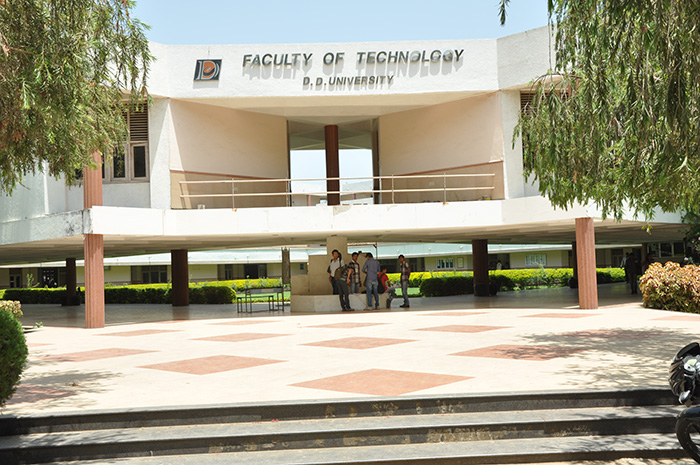
Introduction about Ph.D. in Instrumentation Engineering at Dharmsinh Desai University
The Ph.D. Instrumentation Engineering program at Dharmsinh Desai University is designed for professionals who aspire to lead cutting‑edge research and innovation in measurement, control, and automation technologies. This doctoral course blends rigorous theoretical foundations with practical industry collaborations, preparing scholars for academic, R&D, and high‑impact leadership roles.
Eligibility Criteria for Ph.D. in Instrumentation Engineering at Dharmsinh Desai University
Applicants must hold a Master’s degree (M.E., M.Tech., or M.Sc.) in Instrumentation Engineering or a closely related discipline with a minimum of 55% aggregate (or equivalent CGPA). Candidates who have cleared the National Eligibility Test (NET), GATE, or UGC‑CSIR are given priority. A valid GATE score in Electrical Engineering (EE) or Electronics & Communication Engineering (ECE) is also acceptable. Final year students may apply conditionally, pending completion of the degree.
Entrance Exam for Ph.D. in Instrumentation Engineering at Dharmsinh Desai University
The university conducts its own entrance examination comprising a written test (objective & descriptive) and a personal interview. The written test assesses core concepts in sensors, signal processing, control systems, and advanced instrumentation. Candidates with a qualifying NET/GATE score may be exempted from the written test but will still undergo a viva‑voce to evaluate research aptitude.
Fee Structure for Ph.D. in Instrumentation Engineering at Dharmsinh Desai University
| Component | Annual Fee (INR) | Notes |
|---|---|---|
| Tuition & Examination Fees | 45,000 | Applicable for the entire duration of the program |
| Laboratory & Project Charges | 12,000 | Includes access to advanced instrumentation labs |
| Library & Resource Fees | 3,000 | Unlimited digital and physical resources |
| Miscellaneous (Student Welfare) | 5,000 | Sports, cultural activities, and health services |
| Total Approximate Cost (per year) | 65,000 |
Admission Process for Ph.D. in Instrumentation Engineering at Dharmsinh Desai University
- Online application submission through the university portal.
- Upload scanned copies of academic transcripts, GATE/NET scorecard, and a research proposal.
- Pay the non‑refundable application fee (₹1,500).
- Appear for the entrance test (if applicable) and interview.
- Receive the admission offer letter upon successful evaluation.
- Complete enrollment by submitting the fee receipt and required documents.
Ph.D. Subjects and Specializations in Instrumentation Engineering at Dharmsinh Desai University
The doctoral program offers the following specializations, allowing scholars to focus on niche research domains:
- Smart Sensors and IoT Integration
- Advanced Process Control & Automation
- Biomedical Instrumentation
- Industrial Robotics and Mechatronics
- Signal Processing for Embedded Systems
- Precision Metrology and Calibration Techniques
Research Areas in Instrumentation Engineering at Dharmsinh Desai University
Faculty and industry partners guide research in high‑impact fields such as:
- Nanomaterial‑based sensors for environmental monitoring
- Artificial Intelligence driven control architectures
- Energy harvesting and self‑powered instrumentation
- Real‑time data acquisition for smart factories
- Wireless sensor networks for healthcare applications
- High‑precision instrumentation for aerospace testing
Documents Required for Ph.D. in Instrumentation Engineering at Dharmsinh Desai University
| Document | Format | Remarks |
|---|---|---|
| Academic Transcripts (Post‑Graduation) | PDF (Scanned) | Official seal required |
| Graduation Certificate | PDF (Scanned) | Original copy for verification |
| GATE/NET Score Card | Valid for 3 years | |
| Research Proposal (2,000 words) | DOCX or PDF | Should outline objectives, methodology, and expected outcomes |
| Curriculum Vitae | Highlight publications, projects, and professional experience | |
| Letter of Recommendation (2) | From academic or industry supervisors |
Dharmsinh Desai University Ph.D. Syllabus for Instrumentation Engineering
The syllabus is structured into three phases: Core Coursework, Comprehensive Exams, and Dissertation Research.
- Core Coursework (Year 1): Advanced Control Theory, Signal Processing, Sensor Technologies, Research Methodology, and Ethics in Engineering.
- Comprehensive Exams (End of Year 2): Written and oral tests covering all core subjects.
- Dissertation Research (Year 3‑5): Original research project, periodic progress reviews, and final thesis submission.
How To Apply for Ph.D. in Instrumentation Engineering at Dharmsinh Desai University
Visit the official university portal, navigate to the “Admissions” section, select “Ph.D. – Instrumentation Engineering,” and follow the step‑by‑step guide. Ensure your research proposal aligns with the university’s ongoing projects to increase acceptance chances.
Career Scope and Job Opportunities After Ph.D. in Instrumentation Engineering from Dharmsinh Desai University
Graduates enjoy a broad spectrum of career pathways:
- Assistant/Associate Professor in premier engineering colleges.
- Senior Research Scientist in R&D labs of automotive, aerospace, and biomedical firms.
- Project Lead for government-funded instrumentation projects (DRDO, ISRO, etc.).
- Chief Technology Officer (CTO) or Head of Innovation in start‑ups focusing on IoT and AI‑enabled sensors.
- Consultant for industry‑academia collaboration programs.
Average salary ranges from INR 12‑20 lakhs for academia to INR 20‑35 lakhs for industry leadership roles.
Scholarship for Ph.D. in Instrumentation Engineering at Dharmsinh Desai University
The university offers merit‑based scholarships covering up to 100% of tuition fees for candidates with a GATE/NET rank within the top 200. Additionally, the Research Data Analysis Services and Thesis and Dissertation Writing Services are available to assist scholars in publishing their findings, though these are external professional services.
FAQs Regarding Ph.D. in Instrumentation Engineering at Dharmsinh Desai University
- What is the minimum duration to complete the Ph.D. program?
- The minimum tenure is three years, subject to successful completion of coursework, exams, and dissertation.
- Can I pursue the Ph.D. part‑time while working?
- Yes, the university offers a part‑time mode with flexible class schedules for working professionals.
- Is publishing a research paper mandatory?
- At least two papers in reputable international journals or conferences are required before thesis submission.
- Do I need to pay the full tuition upfront?
- No, fees are payable annually; scholarships and assistantships can offset the cost.
- Are there collaborative projects with industry?
- Yes, the university has MOUs with leading firms, providing access to state‑of‑the‑art labs and real‑world project exposure.








