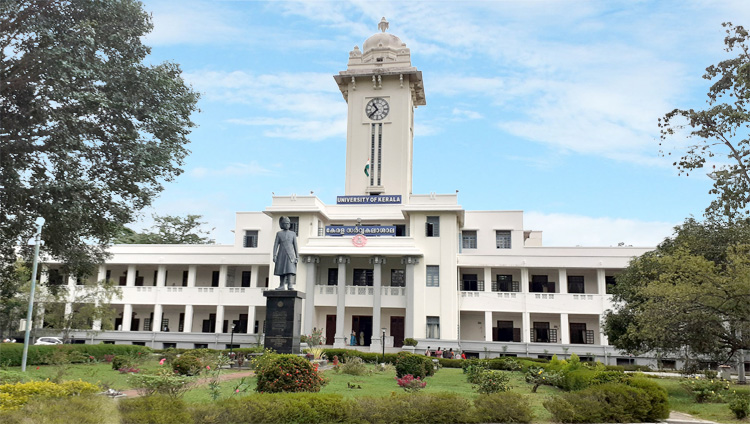
Ph.D. in Islamic Studies from Kerala University
Introduction about Ph.D. in Islamic Studies at Kerala University
The Doctor of Philosophy in Islamic Studies offered by Kerala University is a distinguished research programme that blends classical Islamic scholarship with contemporary interdisciplinary approaches. Designed for seasoned professionals, academicians, and researchers, the course cultivates critical thinking, advanced methodology, and a deep understanding of Islamic heritage, law, theology, and modern societal challenges. Graduates emerge as thought leaders equipped to contribute to academia, policy making, cultural institutions, and international consultancy.
Eligibility Criteria for Ph.D. in Islamic Studies at Kerala University
- Master’s degree (M.A./M.Com./M.Sc.) in Islamic Studies, Arabic, History, Philosophy, or a related discipline with a minimum of 55% aggregate (or equivalent CGPA).
- For candidates with a first-class postgraduate degree, the minimum aggregate can be relaxed to 50%.
- Valid GATE/UGC-NET score in relevant subjects (optional but advantageous).
- Candidates must have completed their postgraduate degree within the last 5 years; extensions are considered on a case‑by‑case basis.
- Proficiency in English and Arabic (reading, writing, and comprehension) is essential.
Entrance Exam for Ph.D. in Islamic Studies at Kerala University
The university conducts a written entrance test followed by a personal interview. The test assesses:
- Fundamental concepts of Islamic theology, law (Sharia), and history.
- Research methodology, including qualitative and quantitative techniques.
- Critical analysis of contemporary issues affecting the Muslim world.
Preparation resources, including past question papers, are available on the university’s official portal.
Fee Structure for Ph.D. in Islamic Studies at Kerala University
| Category | Annual Fee (INR) | Remarks |
|---|---|---|
| Tuition & Examination | 12,000 | Includes seminars and workshops |
| Library & Resource Access | 2,500 | Access to digital archives and rare manuscripts |
| Technology & Lab Charges | 1,500 | Data analysis software licences |
| Miscellaneous (Student Welfare) | 1,000 | Sports, medical, and counseling services |
| Total per Year | 17,000 |
Note: Scholarships, assistantships, and research grants can offset up to 80% of the total cost.
Admission Process for Ph.D. in Islamic Studies at Kerala University
- Online Application: Submit the application form through the university’s PhD Admission Assistance portal.
- Document Upload: Upload scanned copies of academic transcripts, degree certificates, and identity proof.
- Entrance Examination: Appear for the written test and subsequent interview.
- Selection Committee Review: The Academic Council evaluates performance, research proposal, and suitability.
- Offer Letter & Fee Payment: Successful candidates receive an admission offer, followed by fee payment within 15 days.
- Enrollment & Orientation: Attend the mandatory orientation program and register for the research supervision schedule.
Ph.D. Subjects and Specializations in Islamic Studies at Kerala University
- Islamic Theology (Kalam) and Philosophy
- Comparative Jurisprudence (Fiqh) and Modern Legal Systems
- Islamic History and Civilisations
- Arabic Linguistics and Literary Studies
- Socio‑Economic Development in Muslim Societies
- Contemporary Issues: Gender, Media, and Politics in Islam
Research Areas in Islamic Studies at Kerala University
Faculty members guide research across a spectrum of themes, such as:
- Interpretative methodologies of the Qur’an and Hadith.
- Islamic finance and ethical banking practices.
- Interfaith dialogue and comparative religion.
- Digital preservation of Islamic manuscripts.
- Human rights perspectives within Sharia law.
- Impact of globalization on Muslim identity.
Documents Required for Ph.D. in Islamic Studies at Kerala University
| Document | Format | Remarks |
|---|---|---|
| Completed Application Form | Online submission only | |
| Postgraduate Mark Sheets & Degree Certificate | Scanned JPEG/PDF | Originals to be produced on campus |
| Research Proposal (max 2,500 words) | Must include objectives, methodology, and bibliography | |
| Curriculum Vitae (Academic) | Highlight publications and conference presentations | |
| Identity Proof (Aadhaar / Passport) | Valid government‑issued ID | |
| English & Arabic Language Proficiency Certificates | IELTS/TOEFL and Arabic language test scores |
Kerala University Ph.D. Syllabus for Islamic Studies
The syllabus is structured into two phases:
- Coursework (Year 1–2): Advanced seminars on Qur’anic exegesis, Hadith sciences, research methodology, and contemporary Islamic thought.
- Dissertation (Year 3–5): Original research under the guidance of a supervisory panel, culminating in a defendable thesis.
How To Apply for Ph.D. in Islamic Studies at Kerala University
- Visit the PhD Topic Selection and Proposal Assistance page to craft a compelling research proposal.
- Create an account on the university admission portal and fill in personal and academic details.
- Upload all required documents (refer to the “Documents Required” table).
- Pay the non‑refundable application fee (INR 1,000) via net banking.
- Schedule your entrance test and keep track of the result announcements.
- If selected, accept the offer and complete the enrollment formalities.
Career Scope and Job Opportunities After Ph.D. in Islamic Studies from Kerala University
Doctoral graduates enjoy diverse career pathways, including:
- University professor or lecturer in Islamic studies, Middle Eastern studies, or religious studies.
- Research Fellow at think‑tanks, policy institutes, and international NGOs.
- Senior analyst or consultant for governmental bodies on religious affairs.
- Editor or chief reviewer for scholarly journals and publishing houses.
- Director of cultural heritage projects focusing on manuscript preservation.
- Independent author, speaker, and media commentator on contemporary Islamic issues.
Scholarship for Ph.D. in Islamic Studies at Kerala University
Kerala University, in collaboration with the UGC, offers a range of financial aids:
- UGC NET Fellowship: Full tuition waiver and monthly stipend of INR 31,000.
- Kerala State Scholarship for Doctoral Candidates: Covers tuition, research travel, and a research grant of INR 50,000 per annum.
- Merit‑Based Assistantships: Teaching or research assistant positions that provide salary and professional exposure.
Applicants are encouraged to explore the Research Publication Support service for guidance on publishing and securing additional grants.
FAQs Regarding Ph.D. in Islamic Studies at Kerala University
- Q: How long does it take to complete the Ph.D.?
- A: The standard duration is 5 years, with a minimum of 3 years for the dissertation phase.
- Q: Can I pursue the programme part‑time?
- A: Yes, a part‑time option is available for working professionals, extending the total period to 7 years.
- Q: Is prior teaching experience required?
- A: No, but teaching assistantships are offered to eligible candidates during the coursework phase.
- Q: Are there any language prerequisites?
- A: Proficiency in English is mandatory; Arabic knowledge is strongly recommended but can be supplemented through university language labs.
- Q: What are the opportunities for interdisciplinary research?
- A: The university encourages collaborations with departments of Sociology, Economics, Law, and Computer Science for projects such as digital humanities and Islamic finance.








