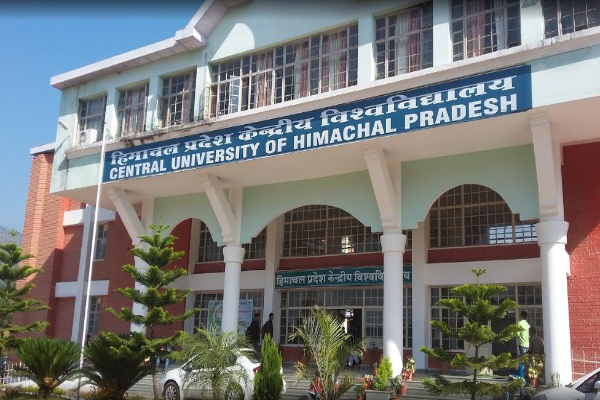
Ph.D. in Journalism and Mass Communication from Central University of Himachal Pradesh: Eligibility, Entrance Exam, Fee Structure, Admission Process, Subjects, Research Areas, Syllabus, Scholarship & Career Scope
Introduction about Ph.D. in Journalism and Mass Communication at Central University of Himachal Pradesh
The Ph.D. in Journalism and Mass Communication at Central University of Himachal Pradesh (CUHP) is designed for seasoned professionals, academicians, and media practitioners who aspire to lead scholarly research that shapes the future of communication studies. Nestled in the serene foothills of the Himalayas, CUHP offers a vibrant research ecosystem, state‑of‑the‑art facilities, and mentorship from distinguished scholars. This program empowers candidates to explore critical issues such as digital media transformation, media ethics, media policy, and audience analysis, fostering a blend of theoretical rigor and practical relevance.
Ph.D Admission 2026-2027 & Writing Support Services by Shiksha Research
Eligibility Criteria for Ph.D. in Journalism and Mass Communication at Central University of Himachal Pradesh
Prospective candidates must satisfy one of the following academic conditions:
- Master’s degree in Journalism, Mass Communication, Media Studies, or a closely related discipline with a minimum of 55% aggregate (or 5.5 CGPA on a 10‑point scale).
- Post‑Graduate Diploma in Journalism or Media Management with equivalent merit.
- National Eligibility Test (NET) or Senior Research Fellowship (SRF) qualification in any relevant subject is considered a direct entry without additional entrance test.
- Foreign candidates should possess a recognized Master’s degree with an equivalent grading system.
Entrance Exam for Ph.D. in Journalism and Mass Communication at Central University of Himachal Pradesh
CUHP conducts a two‑stage selection process:
- Written Test: Objective and descriptive questions covering research methodology, communication theory, contemporary media issues, and quantitative/qualitative analysis techniques.
- Interview & Presentation: Shortlisted candidates present a research proposal and defend it before a panel of experts.
Candidates who have cleared NET/SRF are exempted from the written test but must appear for the interview.
Fee Structure for Ph.D. in Journalism and Mass Communication at Central University of Himachal Pradesh
| Fee Component | Indian Residents (INR) | Foreign Residents (USD) |
|---|---|---|
| Admission & Registration Fee | ₹ 2,500 | $ 40 |
| Annual Tuition Fee (per annum) | ₹ 25,000 | $ 400 |
| Laboratory & Resource Charges | ₹ 3,000 | $ 50 |
| Library & Digital Access | ₹ 1,500 | $ 25 |
| Miscellaneous (Printing, Stationery) | ₹ 2,000 | $ 30 |
| Total (Approx.) | ₹ 34,000 per year | $ 545 per year |
Admission Process for Ph.D. in Journalism and Mass Communication at Central University of Himachal Pradesh
The admission cycle follows a structured timeline:
- Online Application: Fill the application form on the university portal, upload scanned documents, and pay the application fee.
- Eligibility Verification: The academic committee reviews qualifications and NET/SRF scores.
- Entrance Examination: Eligible candidates are invited to sit for the written test.
- Interview & Research Proposal: Shortlisted candidates present their proposal and undergo an interview.
- Final Selection & Offer Letter: Successful candidates receive an admission letter and details for enrollment.
Ph.D. Subjects and Specializations in Journalism and Mass Communication at Central University of Himachal Pradesh
While the overarching discipline is Journalism and Mass Communication, students can specialize in:
- Digital Media & New Media Studies
- Media Policy, Law & Ethics
- Communication Research Methods
- Public Relations & Corporate Communication
- Broadcast Journalism & Television Studies
- Media Management & Entrepreneurship
- Audience & Media Effects
Research Areas in Journalism and Mass Communication at Central University of Himachal Pradesh
The university encourages interdisciplinary research that addresses contemporary challenges. Key research domains include:
- Impact of Artificial Intelligence on News Production
- Fake News Detection and Media Literacy
- Social Media Analytics and Sentiment Mining
- Gender Representation in Indian Media
- Rural Media Outreach and Development Communication
- Regulation of OTT Platforms and Digital Content
- Environmental Communication & Climate Change Narratives
Documents Required for Ph.D. in Journalism and Mass Communication at Central University of Himachal Pradesh
| Document | Details |
|---|---|
| Application Form | Completed online form with transaction receipt |
| Academic Transcripts | Mark sheets of all semesters (10+2, UG, PG) |
| Degree Certificates | Original and scanned copies of Master's degree |
| NET/SRF Scorecard | If applicable, latest valid scorecard |
| Research Proposal | Brief (1500‑2000 words) outlining research objectives and methodology |
| Curriculum Vitae | Professional and academic achievements, publications |
| Two Reference Letters | From academicians or senior professionals familiar with the candidate’s work |
| Photo ID Proof | Aadhaar, Passport or Driving License |
Central University of Himachal Pradesh Ph.D. Syllabus for Journalism and Mass Communication
The Ph.D. curriculum is modular and research‑oriented. Core modules include:
- Research Methodology in Communication (Qualitative & Quantitative)
- Advanced Theories of Media & Communication
- Statistical Techniques for Media Research
- Ethics and Regulation of Media
- Dissertation Writing & Defense
Elective courses are chosen based on the specialization, e.g., Digital Storytelling, Media Economics, or Risk Communication. Students are also encouraged to attend workshops, seminars, and conferences to broaden their scholarly perspective.
How To Apply for Ph.D. in Journalism and Mass Communication at Central University of Himachal Pradesh
Follow these steps to submit a successful application:
- Visit the official CUHP admissions portal and register with a valid email address.
- Complete the online application form, providing personal, academic, and professional details.
- Upload scanned copies of all required documents (as listed in the Documents Required section).
- Pay the non‑refundable application fee via credit/debit card or net banking.
- Submit the research proposal in PDF format (max 2,500 words).
- Monitor your email for the admit card for the written test and subsequent interview schedule.
Career Scope and Job Opportunities After Ph.D. in Journalism and Mass Communication from Central University of Himachal Pradesh
A doctorate in this field opens doors to high‑impact roles:
- Senior Academic Positions – Associate Professor, Professor, Department Head
- Research Fellowships – CSIR, ICMR, Ministry of Information & Broadcasting
- Policy Analyst – Media policy think‑tanks, NGOs, government bodies
- Chief Editor / News Director – Leading newspapers, TV channels, digital news portals
- Strategic Communication Manager – Corporates, multinational firms, public sector undertakings
- Content Strategist / Data‑Driven Journalist – Media analytics firms, OTT platforms
- Consultant – Media law firms, crisis communication agencies
The blend of research expertise and industry insight makes graduates highly sought after in academia, research institutions, and the evolving media industry.
Scholarship for Ph.D. in Journalism and Mass Communication at Central University of Himachal Pradesh
CUHP offers several financial assistance schemes to meritorious candidates:
- University Fellowships – Up to ₹ 12,000 per month for the entire duration of the program.
- UGC‑JRF and UGC‑SRF – Central government‑funded scholarships for qualified candidates.
- State Government Stipends – For residents of Himachal Pradesh, subject to eligibility.
- Project‑Based Funding – Candidates can secure research grants from funded projects.
Applicants can also explore external funding through Thesis and Dissertation Writing Services that sometimes provide subsidized assistance for scholarship applications.
FAQs Regarding Ph.D. in Journalism and Mass Communication at Central University of Himachal Pradesh
- 1. What is the minimum duration of the Ph.D. program?
- The program is minimum three years, extendable up to five years based on research progress.
- 2. Can I pursue the Ph.D. part‑time while working?
- Yes, CUHP permits part‑time enrollment for working professionals, subject to agreement on supervision and attendance.
- 3. Is there a provision for foreign scholars?
- International candidates are welcomed; they must meet the same academic standards and obtain a Student Visa.
- 4. How many publications are required before submission of the thesis?
- At least two refereed journal articles or one book chapter are recommended, though not mandatory.
- 5. Does the university provide any assistance for data analysis?
- Yes, students can avail Research Data Analysis Services through the university’s research support cell.








