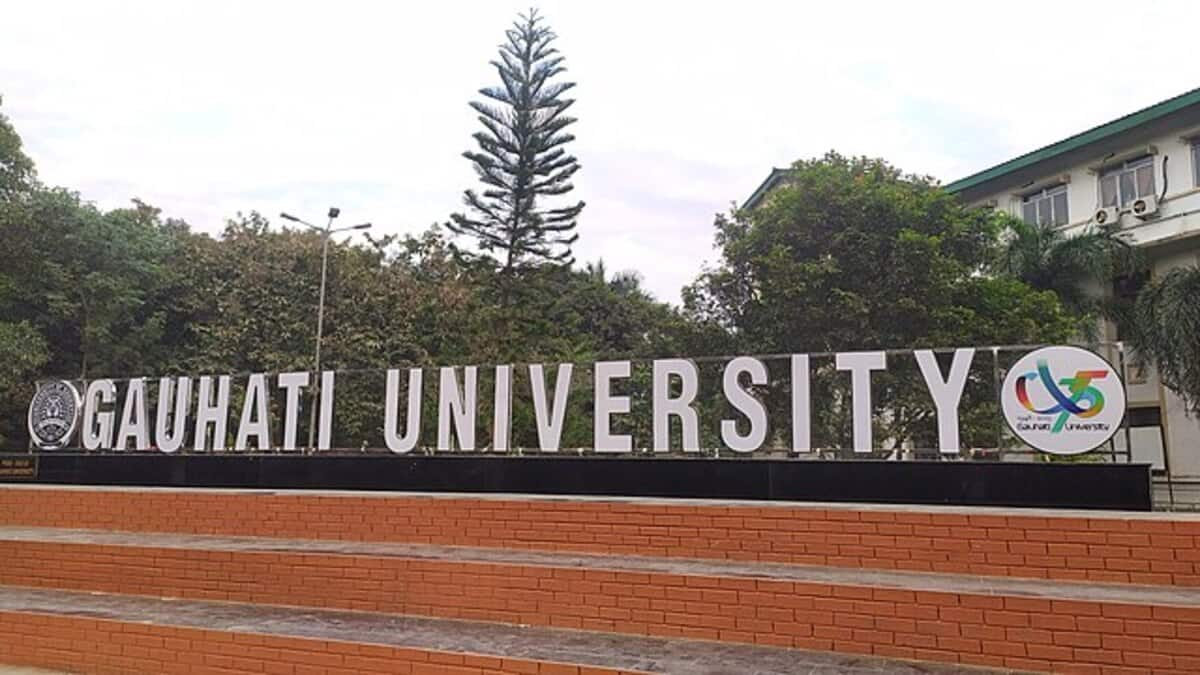
Ph.D. in Journalism and Mass Communication from Gauhati University: Eligibility, Entrance Exam, Fee Structure, Admission Process, Subjects, Research Areas, Syllabus, Scholarship & Career Scope
Introduction about Ph.D. in Journalism and Mass Communication at Gauhati University
The Doctorate in Journalism and Mass Communication at Gauhati University is designed for seasoned media professionals, academicians, and researchers who aspire to shape the future of information dissemination, digital media trends, and public discourse. The program blends rigorous theoretical frameworks with cutting‑edge research methodologies, empowering candidates to investigate the dynamic interplay between media, society, and technology. By fostering analytical depth and innovative thinking, Gauhati University positions its Ph.D. scholars at the forefront of media scholarship, ready to influence policy, lead editorial teams, and contribute to scholarly discourse worldwide.
Ph.D Admission 2026-2027 & Writing Support Services by Shiksha Research
Eligibility Criteria for Ph.D. in Journalism and Mass Communication at Gauhati University
Prospective candidates must satisfy the following academic prerequisites:
- Holding a Master’s degree (or equivalent) in Journalism, Mass Communication, Media Studies, or a closely related discipline with a minimum aggregate of 55% (or 5.0 on a 10‑point scale).
- Alternatively, candidates with a recognized research qualification (M.Phil.) in a relevant field are eligible.
- Non‑resident Indians (NRIs) and foreign nationals must submit equivalence certificates from the Association of Indian Universities (AIU).
- Applicants should have a strong command of English, demonstrated through prior academic work or standardized test scores.
Entrance Exam for Ph.D. in Journalism and Mass Communication at Gauhati University
Gauhati University conducts a two‑stage selection process:
- Written Test: A 2‑hour examination assessing research aptitude, subject knowledge, and analytical skills. The syllabus includes research design, media theory, quantitative & qualitative methods, and current trends in journalism.
- Interview & Presentation: Shortlisted candidates present a research proposal and undergo a viva‑voce to evaluate their readiness for doctoral research.
Preparation resources such as Editing and Proofreading Services can enhance the clarity and impact of your research proposal, ensuring a polished presentation.
Fee Structure for Ph.D. in Journalism and Mass Communication at Gauhati University
| Component | Annual Fee (INR) | Notes |
|---|---|---|
| Admission & Registration | 5,000 | One‑time payment upon enrollment |
| Tuition & Lab Charges | 12,000 | Inclusive of access to media labs and software |
| Library & Resource Fees | 2,500 | Provides unlimited access to digital archives |
| Examination & Evaluation | 3,000 | Applicable each semester |
| Miscellaneous (Printing, Stationery) | 1,500 | Estimated per year |
| Total Approximate Annual Cost | 24,000 |
Students may offset costs through university‑offered scholarships, research grants, or external funding bodies.
Admission Process for Ph.D. in Journalism and Mass Communication at Gauhati University
The admission journey is streamlined into the following steps:
- Online application submission via the university portal.
- Upload of academic transcripts, research proposal, and two reference letters.
- Payment of the non‑refundable application fee.
- Appearing for the written entrance test (if applicable).
- Successful candidates attend the interview and present their proposal.
- Final selection is announced; admitted students receive an Offer Letter.
- Enrollment and fee payment complete the process.
For personalized guidance, consider PhD Admission Assistance services that can navigate you through each stage with confidence.
Ph.D. Subjects and Specializations in Journalism and Mass Communication at Gauhati University
The doctoral program offers a range of specializations to align with emerging industry demands:
- Digital Media & New Media Studies
- Media Ethics & Policy
- Broadcast Journalism
- Public Relations & Corporate Communication
- Media Management & Entrepreneurship
- Communication Research Methods
Research Areas in Journalism and Mass Communication at Gauhati University
Faculty expertise and institutional resources support diverse research domains, including:
- Impact of Social Media on Democratic Processes
- Fake News Detection and Fact‑Checking Mechanisms
- Audience Reception Studies in Multilingual Settings
- Media Representation of Marginalized Communities
- Data‑Driven Journalism and Visualization
- Policy Analysis of Media Regulations in the North‑East Region
To refine your research focus, you can leverage PhD Topic Selection and Proposal Assistance services that help identify high‑impact topics aligned with global trends.
Documents Required for Ph.D. in Journalism and Mass Communication at Gauhati University
| Document | Details |
|---|---|
| Completed Application Form | Online submission with digital signature |
| Academic Transcripts | Original certificates and mark sheets (M.A./M.Phil.) |
| Research Proposal | 1500‑2000 words outlining objectives, methodology, and expected contribution |
| Two Academic References | Letters from professors or senior researchers |
| Proof of Identity | Aadhaar card, passport, or voter ID |
| Photographs | Recent passport‑size (2) |
Gauhati University Ph.D. Syllabus for Journalism and Mass Communication
The syllabus is structured over three years, divided into coursework, comprehensive examinations, and dissertation phases:
- Year 1 – Core Courses: Research Methodology, Media Theory, Statistics for Social Sciences, Ethics in Journalism.
- Year 2 – Electives & Comprehensive Exam: Choose two electives from the specialization list, followed by a written comprehensive test.
- Year 3 – Dissertation: Conduct original research, submit progress reports, and defend the thesis before a university panel.
How To Apply for Ph.D. in Journalism and Mass Communication at Gauhati University
Follow this concise roadmap:
- Visit the official Gauhati University website and navigate to the “Ph.D. Admissions” section.
- Register using a valid email address and create a secure password.
- Complete the application form, ensuring all fields are accurately filled.
- Upload scanned copies of the required documents (see the Documents Required table).
- Pay the application fee via net banking, credit/debit card, or UPI.
- Submit the application and note the generated application ID for future correspondence.
- Prepare for and attend the entrance examination and subsequent interview as scheduled.
For those seeking a professional edge in proposal writing, the Research Publication Support service can aid in translating your findings into high‑impact journal articles.
Career Scope and Job Opportunities After Ph.D. in Journalism and Mass Communication from Gauhati University
Graduates emerge as thought leaders equipped to occupy senior roles such as:
- Professor / Senior Lecturer in Media & Communication Studies
- Chief Editor / News Director in leading news houses
- Media Policy Analyst for governmental and NGOs
- Digital Content Strategist for multinational corporations
- Research Fellow in think‑tanks and international research institutes
- Consultant for media law and ethics compliance
The blend of academic rigor and practical insight also opens avenues in entrepreneurship, where alumni launch innovative media startups or consulting firms.
Scholarship for Ph.D. in Journalism and Mass Communication at Gauhati University
Gauhati University, in collaboration with state and central agencies, offers the following financial aids:
- University Merit Scholarship: Covers up to 50% of tuition for candidates with a first‑class distinction.
- UGC‑NGO Fellowship: Provides a monthly stipend and contingency grant for research expenses.
- State Government Scholarship: Targeted at residents of Assam and North‑East India.
- External Grants: Opportunities through bodies such as the Indian Council of Social Science Research (ICSSR) and the Media Foundation.
Applicants can enhance their grant proposals with the help of Honorary Doctorate Programs that add prestige and broaden networking horizons.
FAQs Regarding Ph.D. in Journalism and Mass Communication at Gauhati University
- What is the minimum duration to complete the Ph.D. program?
- The standard period is three years, though extensions may be granted based on research progress and university regulations.
- Can working professionals enroll part‑time?
- Yes, the university offers a part‑time mode for qualified candidates who maintain professional commitments.
- Is there a provision for direct entry after a bachelor's degree?
- No, a master's degree (or equivalent) is mandatory for admission to the doctoral programme.
- How many publications are required before thesis submission?
- At least two peer‑reviewed articles in recognized journals are recommended, though not strictly compulsory.
- Are there opportunities for international collaboration?
- Gauhati University maintains MoUs with several overseas institutions, enabling joint research projects and exchange programmes.








