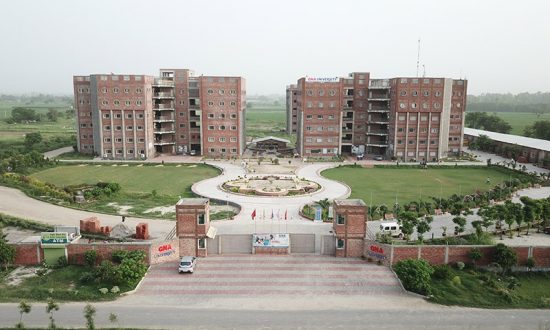
Ph.D. in Journalism And Mass Communication at GNA University
GNA University stands at the forefront of media education, offering a research‑intensive Ph.D. in Journalism And Mass Communication designed for seasoned professionals who aspire to shape the future of media, digital storytelling, and public discourse. With a curriculum that blends theoretical rigor and practical insight, the program empowers scholars to contribute original knowledge, influence policy, and lead innovation across traditional and emerging media platforms.
Eligibility Criteria for Ph.D. in Journalism And Mass Communication at GNA University
Prospective candidates must meet the following minimum requirements:
- Master’s degree in Journalism, Mass Communication, Media Studies or a closely related discipline with at least 55% aggregate (or equivalent CGPA).
- Valid GATE/UGC NET/JRF score, or a university‑conducted entrance test (if applicable).
- Professional experience of 2+ years in media houses, broadcasting, digital content creation, or research institutions is highly desirable.
- English language proficiency (IELTS/TOEFL) for non‑English medium graduates.
Entrance Exam for Ph.D. in Journalism And Mass Communication at GNA University
The university conducts a comprehensive entrance examination that evaluates:
- Research aptitude and analytical skills.
- Fundamental concepts of journalism, communication theory, and media law.
- Qualitative and quantitative research methodology.
- Written English proficiency.
Selected candidates are invited for a personal interview to discuss research interests and alignment with faculty expertise.
Fee Structure for Ph.D. in Journalism And Mass Communication at GNA University
| Component | Annual Fee (INR) | Notes |
|---|---|---|
| Tuition & Coursework | 75,000 | Includes access to digital libraries and e‑resources. |
| Research & Lab Charges | 30,000 | Data collection, software licenses, and fieldwork support. |
| Examination & Evaluation | 10,000 | Annual assessment and dissertation defense. |
| Miscellaneous (Sports, Health, etc.) | 5,000 | Campus facilities usage. |
| Total Approximate Cost per Year | 120,000 | Subject to revision each academic session. |
Admission Process for Ph.D. in Journalism And Mass Communication at GNA University
Follow these sequential steps to secure a seat:
- Complete the online application form on the university portal.
- Upload scanned copies of academic transcripts, entrance test scores, and a detailed resume.
- Pay the non‑refundable application fee (₹2,500).
- Appear for the entrance examination and interview as scheduled.
- Submit a research proposal (1,500–2,000 words) outlining objectives, methodology, and expected contributions.
- Receive the admission offer letter, then submit the acceptance fee within 7 days.
- Register for courses and begin your research journey.
Ph.D. Subjects and Specializations in Journalism And Mass Communication at GNA University
The doctoral program offers interdisciplinary specializations such as:
- Digital Media & Online Journalism
- Media Ethics and Law
- Communication Policy & Governance
- Strategic Public Relations & Corporate Communication
- Data Journalism & Visual Storytelling
- Media Audiences & Cultural Studies
Research Areas in Journalism And Mass Communication at GNA University
Faculty members supervise research in emerging fields, including:
- Artificial Intelligence in Newsrooms
- Fake News Detection and Fact‑Checking
- Social Media Influence on Public Opinion
- Digital News Economics and Monetization
- Media Representation of Marginalized Communities
- Impact of Mobile Journalism (MoJo) on Rural Reporting
Documents Required for Ph.D. in Journalism And Mass Communication at GNA University
| Document | Format | Remarks |
|---|---|---|
| Academic Transcripts (Master’s & Bachelor’s) | PDF (Scanned) | Attested copies only. |
| Entrance Exam Scorecard | GATE/UGC NET/JRF or university test. | |
| Research Proposal | DOCX/PDF | Maximum 2,000 words. |
| Curriculum Vitae | Highlight publications and media experience. | |
| Identity Proof (Aadhaar/Passport) | Valid government ID. |
GNA University Ph.D. Syllabus for Journalism And Mass Communication
The syllabus is divided into three major phases:
- Core Coursework (Year 1) – Research methodology, advanced communication theory, media law, and ethics.
- Specialization Modules (Year 2) – Choose from digital journalism, public relations, media economics, etc.
- Dissertation & Defense (Year 3‑4) – Original research, manuscript preparation, and viva‑voce.
All modules are designed to meet the standards set by the UGC Regulations for Doctoral Programs and are periodically updated to reflect industry trends.
How To Apply for Ph.D. in Journalism And Mass Communication at GNA University
Visit the official admissions portal, create a user profile, and follow the step‑by‑step instructions. Remember to double‑check file sizes (< 2 MB each) and ensure all documents are legible. Once the application is submitted, you will receive an acknowledgment email with a reference number for future correspondence.
Career Scope and Job Opportunities After Ph.D. in Journalism And Mass Communication from GNA University
Graduates unlock a spectrum of senior‑level roles, such as:
- Chief Editor or Managing Editor in national dailies and digital news platforms.
- Director of Communications in multinational corporations or NGOs.
- Research Fellow or Associate Professor in leading universities.
- Policy Analyst for media regulation bodies.
- Consultant for media strategy, crisis communication, and content innovation.
According to industry reports, the demand for doctorate‑qualified media strategists has risen by 18% over the past three years, underscoring the program’s relevance.
Scholarship for Ph.D. in Journalism And Mass Communication at GNA University
Merit‑based and need‑based scholarships are available, covering up to 50% of tuition fees. Additionally, research grants are offered to candidates whose proposals align with funded projects from government bodies or corporate partners. Applicants are encouraged to explore the following support services:
- Editing and Proofreading Services
- PhD Topic Selection and Proposal Assistance
- PhD Admission Assistance
- Honorary Doctorate Programs
- Research Publication Support
- Patent Filing and Support Services
FAQs Regarding Ph.D. in Journalism And Mass Communication at GNA University
- What is the minimum duration for completing the Ph.D.?
- The program is structured for a minimum of three years, with a maximum of six years allowed for completion.
- Can I pursue the Ph.D. part‑time while working?
- Yes. GNA University offers a flexible part‑time mode for working professionals, with evening and weekend classes.
- Is there any provision for publishing my dissertation as a book?
- Graduate scholars can collaborate with the university press to convert their dissertation into a monograph, subject to academic approval.
- Do I need to appear for a viva‑voce if my research is published in a peer‑reviewed journal?
- Yes. The viva‑voce is mandatory regardless of prior publications, as it assesses the candidate’s comprehensive understanding of the research.
- How are research supervisors allocated?
- Supervisors are matched based on your research proposal’s thematic focus and the faculty’s expertise. You may also propose a co‑supervisor.








