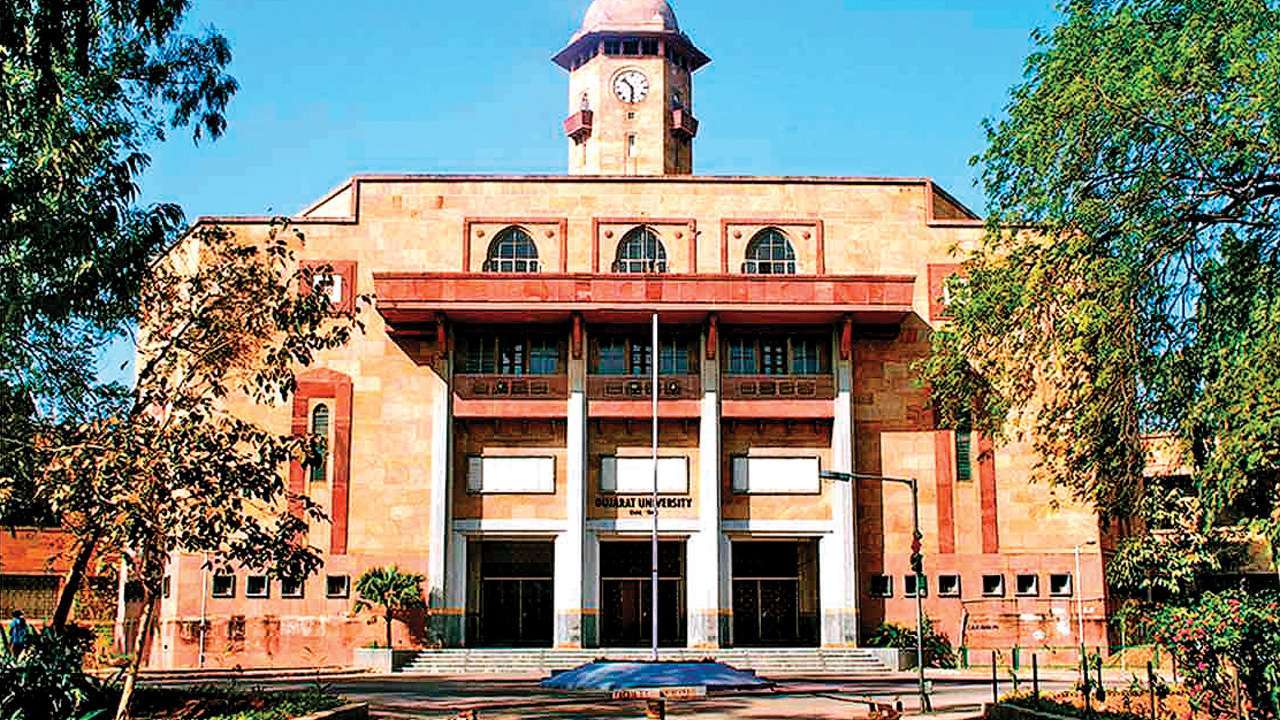
Ph.D. in Journalism and Mass Communication at Gujarat University – Your Complete Road‑Map
Introduction about Ph.D. in Journalism And Mass Communication at Gujarat University
Gujarat University, a pioneer in research excellence, offers a rigorous Ph.D. in Journalism and Mass Communication that blends theoretical depth with real‑world relevance. This doctorate empowers professionals to become thought‑leaders, policy influencers, and innovative scholars in a rapidly evolving media landscape. Whether you aim to dissect digital media ethics, explore audience analytics, or shape communication policy, Gujarat University provides a vibrant ecosystem of seasoned faculty, state‑of‑the‑art resources, and interdisciplinary collaboration.
Eligibility Criteria for Ph.D. in Journalism And Mass Communication at Gujarat University
- Master’s degree in Journalism, Mass Communication, Media Studies, or a related discipline with a minimum of 55% (50% for SC/ST/PH categories).
- Valid GATE/UGC‑NET score is preferred but not mandatory.
- Applicants must have a robust research proposal outlining objectives, methodology, and expected contribution.
- Minimum of two years of professional experience in media, publishing, or related fields adds a competitive edge.
Entrance Exam for Ph.D. in Journalism And Mass Communication at Gujarat University
Gujarat University conducts its own entrance test for candidates without a valid GATE/NET score. The exam evaluates:
- Core concepts of journalism theory and mass communication.
- Research methodology and statistics.
- Analytical writing and critical thinking.
The test is held twice a year (June and December) and is followed by a personal interview to assess research aptitude.
Fee Structure for Ph.D. in Journalism And Mass Communication at Gujarat University
| Component | Amount (INR) |
|---|---|
| Application Fee (online) | 1,500 |
| Entrance Exam Fee | 2,000 |
| Annual Tuition & Laboratory Charges | 18,000 |
| Library & Resource Centre Fee | 2,500 |
| Examination & Evaluation Charges (per semester) | 5,000 |
| Miscellaneous (printing, software licences, etc.) | 3,000 |
| Total Approx. (4‑year program) | 1,20,000 |
Scholarships, research fellowships, and teaching assistantships can substantially offset these costs.
Admission Process for Ph.D. in Journalism And Mass Communication at Gujarat University
- Complete the online application form on the university portal.
- Upload scanned copies of academic transcripts, degree certificates, and a detailed research proposal.
- Pay the non‑refundable application fee.
- If required, appear for the entrance examination and subsequent interview.
- Receive the provisional admission letter, followed by registration for the first semester.
- Submit the final set of documents (original certificates, proof of identity, etc.) to the Department of Journalism and Mass Communication.
Ph.D. Subjects and Specializations in Journalism And Mass Communication at Gujarat University
The doctoral program offers the following specializations:
- Digital Media & New Technologies
- Media Policy & Regulation
- Communication Research Methods
- Public Relations & Corporate Communication
- Advertising & Media Management
- Journalism Ethics & Professional Practice
Research Areas in Journalism And Mass Communication at Gujarat University
Faculty expertise and ongoing projects cover a wide spectrum, including:
- Impact of social media on political discourse.
- Fake news detection using AI algorithms.
- Audience reception studies in regional languages.
- Media framing of climate change.
- Television news production workflows in the digital age.
- Gender representation in Indian advertising.
Documents Required for Ph.D. in Journalism And Mass Communication at Gujarat University
| Document | Requirement |
|---|---|
| Academic Transcripts (10+2, Graduation, Post‑Graduation) | Certified copies |
| Research Proposal (max 2,000 words) | Signed by proposed supervisor |
| Proof of Identity (Aadhaar / Passport) | Scanned PDF |
| Experience Certificates (if applicable) | Letterhead format |
| GATE/UGC‑NET Scorecard (optional) | Original copy |
Gujarat University Ph.D. Syllabus for Journalism And Mass Communication
The syllabus is modular and research‑driven, comprising:
- Core Modules: Research Methodology, Advanced Media Theory, Quantitative & Qualitative Analysis.
- Elective Tracks: Digital Storytelling, Media Law, International Communication, Data Journalism.
- Seminars & Workshops: Guest lectures by industry veterans, hands‑on training with broadcasting labs.
- Thesis: Original research work submitted for defense in the final year.
How To Apply for Ph.D. in Journalism And Mass Communication at Gujarat University
Applying is straightforward:
- Visit the official Gujarat University admissions portal.
- Select “Ph.D. – Journalism & Mass Communication” from the program list.
- Complete the personal and academic sections, then upload the required documents.
- Pay the application fee via NetBanking, UPI, or credit/debit card.
- Submit the form and note the application reference number for future correspondence.
Career Scope and Job Opportunities After Ph.D. in Journalism And Mass Communication from Gujarat University
Graduates emerge as experts capable of shaping media ecosystems. Potential career paths include:
- Senior Research Fellow or Associate Professor in universities and research institutes.
- Policy Analyst or Media Consultant for government ministries and NGOs.
- Chief Editor, Digital Content Strategist, or Head of Communications in leading media houses.
- Independent media scholar with a prolific publication record.
- Leadership roles in media regulation bodies such as the News Broadcasting & Digital Standards Authority (NBDSA).
According to recent placement data, Ph.D. holders command an average salary increase of 30‑45% over their master’s counterparts.
Scholarship for Ph.D. in Journalism And Mass Communication at Gujarat University
Several funding avenues are available:
- Editing and Proofreading Services – support for manuscript polishing, often covered under university‑approved grants.
- UGC‑JRF (Junior Research Fellowship) and SRF (Senior Research Fellowship) awards.
- State Government scholarships for meritorious students from Gujarat.
- Industry‑sponsored fellowships from media conglomerates offering research stipends.
- International exchange scholarships for collaborative projects.
FAQs Regarding Ph.D. in Journalism And Mass Communication at Gujarat University
- What is the minimum duration of the Ph.D. program?
- The regular programme spans 4 years, with a possible extension of up to 2 additional years for research completion.
- Can a working professional enroll part‑time?
- Yes, Gujarat University offers a part‑time mode where candidates attend weekend seminars and submit progress reports quarterly.
- Is there a provision for publishing my thesis in a peer‑reviewed journal?
- Absolutely. The university encourages candidates to convert their thesis into journal articles, and the Research Publication Support service can assist throughout the process.
- Do I need to appear for a viva‑voce after submitting my thesis?
- Yes, the final defense involves a viva‑voce before a panel of three external examiners and one internal faculty member.
- Are there any language requirements?</








