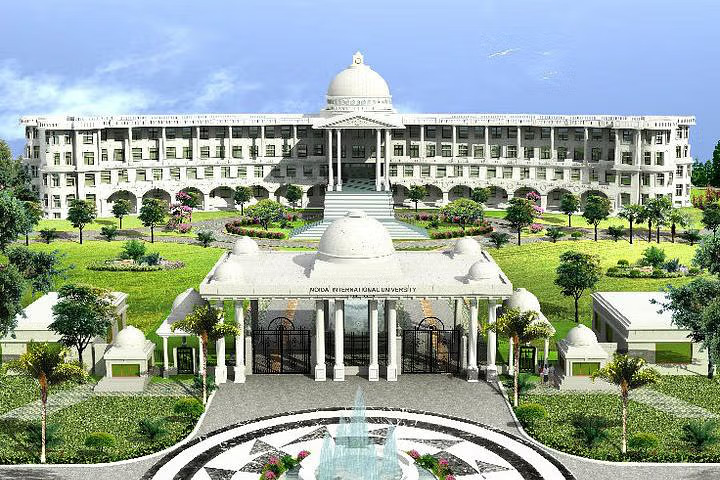
Ph.D. in Journalism And Mass Communication from Noida International University: Eligibility, Entrance Exam, Fee Structure, Admission Process, Subjects, Research Areas, Syllabus, Scholarship & Career Scope
Introduction about Ph.D. in Journalism And Mass Communication at Noida International University
The Doctorate in Journalism And Mass Communication offered by Noida International University (NIU) is a meticulously designed program that blends rigorous academic research with real‑world media practice. Tailored for seasoned professionals, academicians, and industry veterans, this Ph.D. empowers candidates to explore the evolving dynamics of news production, digital storytelling, media ethics, and audience analytics. The curriculum encourages critical thinking, interdisciplinary collaboration, and innovative methodologies that set the foundation for thought‑leadership in a rapidly changing communication landscape.
Eligibility Criteria for Ph.D. in Journalism And Mass Communication at Noida International University
Prospective candidates must meet the following baseline requirements:
- Hold a Master’s degree (M.A./M.Sc.) in Journalism, Mass Communication, Media Studies, or a related discipline with a minimum of 55% aggregate (50% for SC/ST/PWD candidates).
- For research scholars with a NET/JRF qualification, the minimum percentage requirement is waived.
- Valid GATE, UGC‑CSIR, or any other national level eligibility test score is considered an advantage but not mandatory.
- Candidates should possess a strong research aptitude, demonstrated through past publications, conference presentations, or professional projects.
Entrance Exam for Ph.D. in Journalism And Mass Communication at Noida International University
NIU conducts its own entrance assessment to evaluate research potential, subject knowledge, and analytical abilities. The exam comprises three sections:
- Research Aptitude & Methodology – 30 marks.
- Core Journalism & Mass Communication Concepts – 40 marks.
- General English & Reasoning – 30 marks.
The test is usually scheduled in the months of January and July. Candidates with a valid NET/JRF score are exempted from the written examination but must appear for a personal interview.
Fee Structure for Ph.D. in Journalism And Mass Communication at Noida International University
| Component | Amount (INR) |
|---|---|
| Application & Registration Fee | 2,500 |
| Entrance Examination Fee | 3,000 |
| Tuition Fee (per semester) | 25,000 |
| Laboratory / Media Lab Access (annual) | 6,000 |
| Research & Publication Support (optional) | 10,000 |
| Total Approximate Cost (4 years) | 2,30,000 – 2,50,000 |
All fees are subject to annual revision based on inflation and university policy. Scholarships, assistantships, and merit-based waivers can significantly reduce the financial burden.
Admission Process for Ph.D. in Journalism And Mass Communication at Noida International University
The admission journey is streamlined into five distinct stages:
- Online Application Submission – Fill out the digital form on the NIU portal, upload academic certificates, and pay the registration fee.
- Document Verification – The admissions team validates academic transcripts, NET/JRF certificates, and work experience letters.
- Entrance Examination – Eligible candidates appear for the university‑conducted test (or submit their NET/JRF score).
- Personal Interview & Research Proposal Review – Shortlisted aspirants discuss their research interests with the faculty panel.
- Final Admission Offer – Successful candidates receive an official admission letter and details about fee payment and enrollment.
Ph.D. Subjects and Specializations in Journalism And Mass Communication at Noida International University
NIU offers a flexible framework allowing candidates to tailor their doctorate around one of the following specializations:
- Digital Journalism & New Media
- Media Ethics & Law
- Communication Research Methods
- Audience & Media Psychology
- Strategic Communication & Public Relations
- Data‑Driven Storytelling & Visual Journalism
Research Areas in Journalism And Mass Communication at Noida International University
Faculty members and research centers at NIU are actively engaged in cutting‑edge projects. Current research themes include:
- Impact of AI and automation on newsrooms.
- Fake news detection and media literacy.
- Social media influence on political discourse.
- Mobile journalism (MoJo) in emerging markets.
- Gender representation in Indian mass media.
- Sustainable communication strategies for climate advocacy.
Students are encouraged to collaborate with industry partners, NGOs, and think‑tanks to enrich their investigative scope.
Documents Required for Ph.D. in Journalism And Mass Communication at Noida International University
| Document | Requirement |
|---|---|
| Completed Application Form | Online submission with electronic signature. |
| Academic Transcripts (10+2, Graduation, Post‑Graduation) | Original marksheets and a notarized copy. |
| NET / JRF Scorecard (if applicable) | Valid scorecard dated within the last 5 years. |
| Research Proposal (1,500‑2,000 words) | Outline of objectives, literature review, methodology. |
| Curriculum Vitae | Professional experience, publications, conferences. |
| Proof of Identity (Aadhaar / Passport) | Scanned copy of government‑issued ID. |
| Passport‑size Photographs | Recent color photographs (3). |
Noida International University Ph.D. Syllabus for Journalism And Mass Communication
The syllabus is organized into three progressive phases:
Phase 1 – Foundation (Year 1)
- Research Methodology in Media Studies
- Theories of Communication
- Advanced Writing and Reporting Techniques
- Statistical Tools for Media Research
Phase 2 – Specialization (Year 2‑3)
- Elective: Digital Storytelling & Data Visualization
- Elective: Media Law & Ethics
- Seminar: Contemporary Issues in Journalism
- Comprehensive Literature Review
Phase 3 – Dissertation (Year 4)
- Proposal Defense
- Data Collection & Analysis
- Writing & Submission of Thesis
- Viva‑voce Examination
How To Apply for Ph.D. in Journalism And Mass Communication at Noida International University
Follow these step‑by‑step instructions to submit a successful application:
- Visit the official NIU Ph.D. Admissions Portal and create a user account.
- Complete the online application form, ensuring every field is accurately filled.
- Upload scanned copies of required documents (see the Documents Required section).
- Pay the non‑refundable application fee via net banking or credit card.
- Schedule your entrance test date (or upload NET/JRF score).
- After selection, submit a detailed research proposal through the portal.
- Attend the personal interview (online/off‑line) as per the schedule communicated by the university.
- Upon clearance, accept the admission offer and pay the first semester tuition to commence registration.
For additional guidance, candidates may opt for professional assistance services such as PhD Admission Assistance or PhD Topic Selection and Proposal Assistance.
Career Scope and Job Opportunities After Ph.D. in Journalism And Mass Communication from Noida International University
A doctorate in Journalism & Mass Communication opens doors to diverse, high‑impact careers:
- Academic Positions – Associate Professor, Head of Department, Research Fellow.
- Media Leadership – Editorial Director, Newsroom Strategist, Chief Content Officer.
- Research & Policy – Media Analyst for think‑tanks, Government communication advisor, NGO advocacy specialist.
- Corporate Communications – Brand Storyteller, PR Consultant, Crisis Management Expert.
- Digital Entrepreneurship – Founder of digital news platforms, Content Innovation Labs.
According to recent industry surveys, Ph.D. holders in mass communication command an average salary ranging from INR 12 Lakhs to INR 25 Lakhs per annum, with senior roles exceeding INR 35 Lakhs.
Scholarship for Ph.D. in Journalism And Mass Communication at Noida International University
NIU offers a variety of merit‑based and need‑based scholarships:
- NIU Merit Scholarship – 50% tuition waiver for candidates scoring ≥70% in the entrance exam.
- UGC‑JRF








