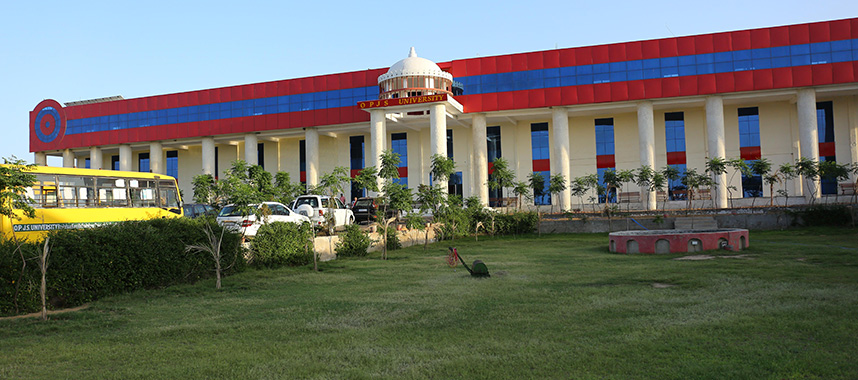
Ph.D. in Journalism And Mass Communication from OPJS University
Embarking on a Ph.D. in Journalism And Mass Communication at OPJS University opens doors to groundbreaking research, thought‑leadership, and influential careers in the media ecosystem. Designed for seasoned professionals, this doctoral program blends rigorous academic theory with real‑world practice, empowering you to shape the future of journalism, digital media, and communication policy.
Eligibility Criteria for Ph.D. in Journalism And Mass Communication at OPJS University
- Master’s degree (M.A./M.Sc.) in Journalism, Mass Communication, Media Studies, or a related field with a minimum of 55% aggregate (or CGPA 6.5/10).
- For candidates holding a UG+PG integrated degree, a minimum of 55% throughout the program is required.
- Valid GATE/UGC NET/CSIR NET scores are advantageous but not mandatory.
- Professional experience of at least 2 years in media, publishing, or communication research is preferred.
Entrance Exam for Ph.D. in Journalism And Mass Communication at OPJS University
OPJS University conducts its own entrance test, the OPJS Ph.D. Entrance Exam (OPJSEE). The exam comprises:
- Paper I – Research Aptitude & Methodology (60 marks)
- Paper II – Core Journalism & Mass Communication Concepts (40 marks)
- English Language Proficiency (30 marks)
Candidates with valid GATE/UGC NET scores are exempted from OPJSEE but must attend an interview.
Fee Structure for Ph.D. in Journalism And Mass Communication at OPJS University
| Component | Amount (INR) | Notes |
|---|---|---|
| Application Fee | ₹ 2,500 | Non‑refundable, payable online |
| Entrance Exam Fee | ₹ 3,000 | Waived for GATE/UGC NET qualifiers |
| Annual Tuition | ₹ 45,000 | Includes library, labs, and e‑resources |
| Research & Publication Fee | ₹ 15,000 | Covers conference participation & journal fees |
| Miscellaneous (Printing, Materials) | ₹ 5,000 | Estimated per year |
| Total (Approx.) | ₹ 70,500 per year |
Admission Process for Ph.D. in Journalism And Mass Communication at OPJS University
- Online Application: Submit the application form through the university portal.
- Document Upload: Upload eligibility certificates, mark sheets, and ID proof.
- Entrance Examination: Appear for OPJSEE or submit valid GATE/UGC NET scores.
- Interview & Proposal Review: Present a research proposal before the Faculty Committee.
- Final Admission Letter: Receive the offer letter upon successful clearance of all stages.
Ph.D. Subjects and Specializations in Journalism And Mass Communication at OPJS University
Students can choose from a range of cutting‑edge specializations, including:
- Digital Media & New Media Technologies
- Media Ethics & Law
- Political Communication & Public Policy
- Strategic Communication & Branding
- Media Management & Entrepreneurship
- International Journalism & Global News Flow
- Audience Analytics & Data‑Driven Storytelling
Research Areas in Journalism And Mass Communication at OPJS University
OPJS University encourages interdisciplinary research that addresses contemporary challenges. Prominent research themes include:
- Impact of AI on News Production and Ethics
- Fake News Detection and Fact‑Checking Mechanisms
- Media’s Role in Climate Change Communication
- Social Media Influencer Economics
- Digital Inclusion and Rural Media Access
- Media Policy Reforms in Emerging Democracies
- Cross‑cultural Narrative Structures in Global Journalism
Documents Required for Ph.D. in Journalism And Mass Communication at OPJS University
| Document | Details |
|---|---|
| Academic Transcripts | Certificates & mark sheets of all semesters (UG & PG) |
| Research Proposal | 1500‑word outline of intended research |
| Entrance Exam Scorecard | OPJSEE result or GATE/UGC NET scorecard |
| Curriculum Vitae | Professional experience, publications, and conferences |
| ID Proof | Aadhaar / Passport / Driving License |
| Recommendation Letters | Two academic or professional references |
OPJS University Ph.D. Syllabus for Journalism And Mass Communication
The syllabus is structured into three phases:
- Core Coursework (Year 1): Research Methodology, Advanced Media Theory, Statistics for Communication, Ethics in Journalism.
- Specialization Modules (Year 2): Choose two electives aligning with your focus area (e.g., Digital Storytelling, Media Law, Data Analytics).
- Dissertation Research (Year 3–4): Original research, fieldwork, data analysis, and thesis writing.
Throughout the program, candidates receive mentorship from faculty actively publishing in top‑tier journals.
How To Apply for Ph.D. in Journalism And Mass Communication at OPJS University
Follow these steps to submit a successful application:
- Visit the OPJS University admissions portal and click “Apply for Ph.D.”
- Create an account, fill in personal and academic details, and upload scanned copies of required documents.
- Pay the application fee securely via credit/debit card or net banking.
- Schedule your OPJSEE date or upload your GATE/UGC NET scorecard.
- After the exam, monitor your email for interview invitations and next‑step instructions.
Career Scope and Job Opportunities After Ph.D. in Journalism And Mass Communication from OPJS University
Graduates emerge as thought leaders equipped to occupy senior roles such as:
- Chief Editorial Officer / Editor‑in‑Chief
- Head of Research & Analytics at Media Houses
- Senior Policy Advisor – Ministry of Information & Broadcasting
- University Professor & Research Director
- Consultant – Media Strategy & Digital Transformation
- Founder – Independent Media Ventures & Start‑ups
- Lead Investigator – International Media NGOs
Additionally, alumni often collaborate with global partners on funded research projects, leveraging Research Paper Writing Services to amplify impact.
Scholarship for Ph.D. in Journalism And Mass Communication at OPJS University
OPJS University offers merit‑based scholarships covering up to 50% of tuition for candidates with:
- GPA ≥ 8.5/10 in postgraduate studies.
- Nationally recognised research awards.
- Socio‑economically disadvantaged backgrounds (subject to documents).
Selected scholars also receive a research grant that can be utilized for data collection, field trips, or availing specialized services such as Research Data Analysis Services and Questionnaire Design and Development.
FAQs Regarding Ph.D. in Journalism And Mass Communication at OPJS University
- What is the minimum duration of the Ph.D. program?
- Four years (full‑time) or six years (part‑time) including coursework and dissertation.
- Can I pursue the Ph.D. while working?
- Yes, OPJS offers a flexible part‑time mode with weekend seminars and online resources.
- Is there a language requirement?
- English proficiency is mandatory; a minimum TOEFL score of 80 or IELTS 6.5 is required for non‑native speakers.
- How are research supervisors assigned?
- Based on your research proposal, the faculty committee matches you with a supervisor whose expertise aligns with your interests.
- Are there opportunities for international collaboration?
- OPJS University has MoUs with several global universities, enabling joint research, exchange programs, and co‑authored publications.
- What support is available for thesis writing?
- Students receive access to Thesis and Dissertation Writing Services, dedicated writing labs, and regular peer‑review workshops.








