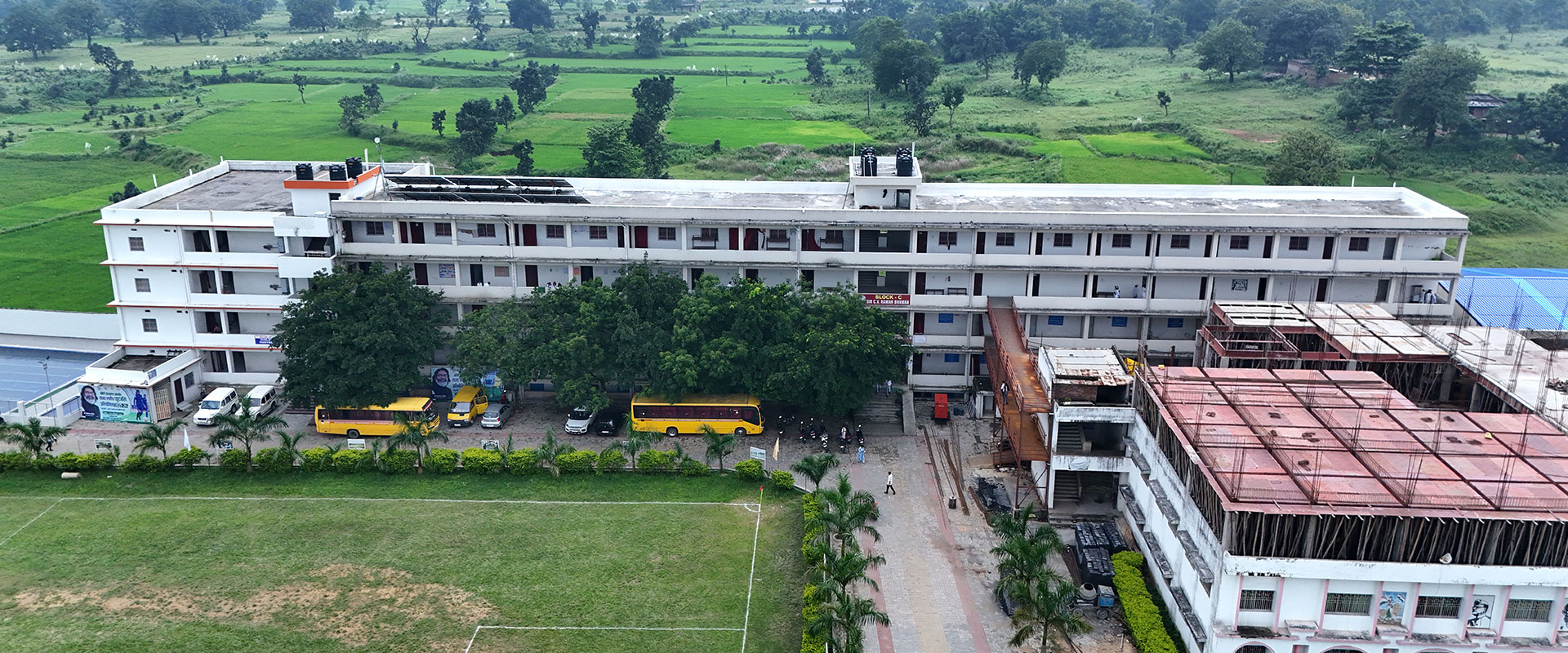
Ph.D. in Journalism And Mass Communication from Radha Govind University: Eligibility, Entrance Exam, Fee Structure, Admission Process, Subjects, Research Areas, Syllabus, Scholarship & Career Scope
The Doctor of Philosophy (Ph.D.) in Journalism and Mass Communication at Radha Govind University is designed for professionals who aspire to become thought leaders, researchers, and policy influencers in the evolving media landscape. This program blends rigorous academic research with real‑world media practice, equipping scholars with analytical tools to address contemporary challenges such as digital transformation, media ethics, audience analytics, and strategic communication. Whether you aim to teach at a university, lead research initiatives, or shape media policy, this doctorate offers a robust platform for intellectual growth and professional distinction.
Eligibility Criteria for Ph.D. in Journalism And Mass Communication at Radha Govind University
Prospective candidates must satisfy the following minimum requirements:
- Master’s degree in Journalism, Mass Communication, Media Studies, or a closely related discipline with at least 55% aggregate (or equivalent CGPA).
- Eligibility for NET/JRF, UGC-CSIR, or a university‑conducted Ph.D. entrance test.
- Professional experience of 2+ years in media, public relations, advertising, or related fields is highly preferred.
- Demonstrated research aptitude through published papers, conference presentations, or a strong research proposal.
Entrance Exam for Ph.D. in Journalism And Mass Communication at Radha Govind University
The university conducts a comprehensive Ph.D. entrance examination comprising two stages:
- Written Test (120 marks): Verbal ability, research methodology, media theory, quantitative & qualitative analysis, and subject‑specific questions.
- Interview & VIVA (30 marks): Assessment of research proposal feasibility, academic background, and communication skills.
Candidates who have cleared national-level exams such as NET/JRF are exempted from the written test but must appear for the interview.
Fee Structure for Ph.D. in Journalism And Mass Communication at Radha Govind University
Financial planning is crucial for doctoral candidates. Below is the detailed fee breakdown for the 2026‑27 academic session:
| Component | Amount (INR) | Notes |
|---|---|---|
| Application Fee | 1,500 | Non‑refundable, payable online |
| Enrollment Fee (one‑time) | 10,000 | Includes library & lab access |
| Annual Tuition & Examination Fee | 45,000 per year | Payable in two installments |
| Research Material & Software License | 5,000 (estimated) | Depends on research domain |
| Miscellaneous (printing, photocopy) | 2,500 per year | Approximate |
| Total Approximate Cost (3‑Year Programme) | ≈ 1,68,500 | Subject to revisions each academic year |
Admission Process for Ph.D. in Journalism And Mass Communication at Radha Govind University
The admission workflow is streamlined to ensure transparency:
- Online Application: Fill the official portal and upload scanned copies of academic certificates, experience letters, and research proposal.
- Payment of Application Fee: Complete the secure transaction using debit/credit card or net banking.
- Eligibility Verification: The Admissions Committee reviews academic qualifications and research credentials.
- Entrance Examination Scheduling: Eligible candidates receive an email with test date, venue, and admit card.
- Result Declaration & Interview Call: Shortlisted candidates are invited for an interview and VIVA.
- Final Offer Letter: Successful candidates receive an admission letter with enrollment instructions.
- Enrollment & Registration: Submit the enrollment fee and complete the registration formalities before the semester begins.
Ph.D. Subjects and Specializations in Journalism And Mass Communication at Radha Govind University
Research scholars can choose from a wide array of thematic specializations, including:
- Digital Media & New Media Technologies
- Media Ethics and Regulation
- Strategic Communication & Public Relations
- Audience Behaviour & Media Consumption Patterns
- Journalism Pedagogy and Media Education
- Political Communication and Policy Framing
- Health Communication and Risk Perception
- Media Management and Entrepreneurship
Research Areas in Journalism And Mass Communication at Radha Govind University
The university’s research ecosystem encourages interdisciplinary inquiry. Current focal areas include:
- Data‑Driven Journalism
- Exploring algorithms, data visualization, and investigative reporting using big data.
- Social Media Influence on Public Opinion
- Analyzing how platforms shape political discourse, brand perception, and civic engagement.
- Media Literacy in the Digital Age
- Designing frameworks for critical consumption of news and combating misinformation.
- Virtual Reality (VR) & Augmented Reality (AR) Storytelling
- Assessing immersive narratives and their impact on audience immersion.
- Regulatory Frameworks for Online Content
- Comparative studies of policy models across jurisdictions.
Documents Required for Ph.D. in Journalism And Mass Communication at Radha Govind University
Applicants must submit the following documents in PDF format (maximum 5 MB each):
| Document | Details |
|---|---|
| Application Form | Completed online form with unique application ID |
| Academic Transcripts | Mark sheets & certificates for Post‑Graduation (and Graduation) |
| Proof of NET/JRF/UGC Score (if applicable) | Official scorecard or rank list |
| Research Proposal (max 2,500 words) | Problem statement, objectives, methodology, and expected contribution |
| Curriculum Vitae | Professional experience, publications, conference presentations |
| Two Academic Reference Letters | From supervisors or senior academicians familiar with the candidate’s work |
| Passport‑size Photograph | Recent, on a white background |
Radha Govind University Ph.D. Syllabus for Journalism And Mass Communication
The syllabus is structured over three years and covers core and elective modules, research methodology, and dissertation work:
- Year 1 – Foundations
- Research Methodology in Media Studies
- Advanced Media Theories
- Quantitative & Qualitative Data Analysis
- Statistical Software (SPSS/R) Training
- Year 2 – Specialization
- Elective Courses (choose any two):
- Digital Communication Strategies
- Media Law & Policy
- Audience Research Techniques
- Content Creation & Storytelling in New Media
- Publication Seminar – Drafting journal articles
- Conference Presentation Workshop
- Elective Courses (choose any two):
- Year 3 – Dissertation
- Proposal Defense
- Data Collection & Analysis
- Writing & Submission of Thesis
- Final VIVA & Evaluation
How To Apply for Ph.D. in Journalism And Mass Communication at Radha Govind University
Follow these step‑by‑step instructions to submit a successful application:
- Visit the official Ph.D. portal and create a new user account.
- Fill in personal and academic details accurately.
- Upload scanned copies of all required documents (refer to the Documents Required table).
- Enter a concise research proposal (max 2,500 words) highlighting originality and feasibility.
- Pay the non‑refundable application fee using the integrated payment gateway.
- Submit the application and note the generated Application ID for future correspondence.
- Monitor your email for the admit card and subsequent interview schedule.
Career Scope and Job Opportunities After Ph.D. in Journalism And Mass Communication from Radha Govind University
Graduates emerge as high‑impact professionals capable of shaping media ecosystems. Common career pathways include:
- Academic Positions: Assistant/Associate Professor, Research Fellow, Department Head.
- Research Institutes & Think‑Tanks: Senior Research Analyst, Project Lead, Policy Advisor.
- Media & Communication Corporations: Chief Content Officer, Strategic Communication Director, Data‑Driven Journalism Lead.
- Government & NGOs:</








