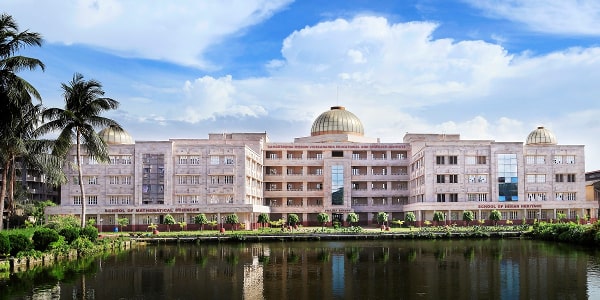
Ph.D. in Journalism And Mass Communication from Ravenshaw University
Introduction about Ph.D. in Journalism And Mass Communication at Ravenshaw University
Ravenshaw University, a historic institution nestled in the cultural heart of Odisha, offers a rigorous and research‑oriented Doctorate program in Journalism and Mass Communication. This Ph.D. program is designed for professionals who aspire to become thought leaders, academicians, policy analysts, and senior media strategists. The curriculum blends theoretical frameworks with practical insights, enabling scholars to influence the evolving landscape of digital media, public relations, and investigative journalism.
Students gain access to state‑of‑the‑art media labs, extensive archives, and mentorship from faculty members who have published in top‑tier journals. Whether you aim to shape media ethics, explore the impact of emerging technologies, or contribute to communication policy, Ravenshaw University provides the scholarly ecosystem needed for transformative research.
Ph.D Admission 2026-2027 & Writing Support Services by Shiksha Research
Eligibility Criteria for Ph.D. in Journalism And Mass Communication at Ravenshaw University
Prospective candidates must satisfy the following minimum requirements:
- Master’s degree in Journalism, Mass Communication, Media Studies, or a closely related discipline with a minimum of 55% aggregate (or equivalent CGPA).
- Alternatively, a Post‑Graduate Diploma in Journalism recognized by the University Grants Commission (UGC) with the same academic threshold.
- Valid score in a recognized entrance examination (e.g., UGC‑NET, CSIR‑NET, or the university’s own test).
- For candidates with a distinguished research record, the University may consider a direct Ph.D. entry based on a published research paper in a refereed journal.
Entrance Exam for Ph.D. in Journalism And Mass Communication at Ravenshaw University
The entrance test evaluates candidates on:
- Research methodology and statistical analysis.
- Advanced concepts in journalism theory, mass media ethics, and communication models.
- Analytical writing and critical thinking.
Applicants may also be required to present a research proposal outlining their intended study area, objectives, and methodology. The interview panel assesses the feasibility and originality of the proposal.
Fee Structure for Ph.D. in Journalism And Mass Communication at Ravenshaw University
| Category | Annual Fee (INR) | Notes |
|---|---|---|
| General Category | 15,000 | Includes tuition, library, and lab charges. |
| SC/ST/PWD | 10,000 | Reduced fee as per UGC guidelines. |
| International Students | 22,000 | Additional processing fee of 2,000 INR. |
| One‑Time Registration | 2,500 | Non‑refundable. |
The fee is payable annually before the commencement of each semester. Late payments may attract a penalty of 2% per month.
Admission Process for Ph.D. in Journalism And Mass Communication at Ravenshaw University
- Online application submission through the university’s admission portal.
- Upload scanned copies of academic transcripts, entrance test scores, and a detailed research proposal.
- Pay the non‑refundable registration fee.
- Appear for the entrance examination (or submit valid UGC‑NET/CSIR‑NET scores).
- Short‑list candidates are invited for an interview and proposal defence.
- Final admission letter issued upon successful interview and fee clearance.
Ph.D. Subjects and Specializations in Journalism And Mass Communication at Ravenshaw University
Students may choose from the following specializations, each supported by dedicated faculty expertise:
- Digital Media & New Media Studies
- Media Policy & Regulation
- Investigative Journalism & Reporting
- Communication Theory & Sociology
- Public Relations & Corporate Communication
- Entertainment Media Management
Research Areas in Journalism And Mass Communication at Ravenshaw University
Current research thrusts include:
- Impact of Artificial Intelligence on Newsroom Workflow.
- Fake News Detection and Media Literacy.
- Audience Engagement in Mobile‑First Environments.
- Policy Formulation for Media Freedom.
- Gender Representation in Indian Media.
- Sustainability Communication and Climate Change Reporting.
Documents Required for Ph.D. in Journalism And Mass Communication at Ravenshaw University
| Document | Format | Remarks |
|---|---|---|
| Academic Transcript (10+2, Graduation, Post‑Graduation) | PDF (max 2 MB) | Original & certified copies |
| Entrance Exam Score Card | UGC‑NET, CSIR‑NET or University test | |
| Research Proposal (1500‑2000 words) | DOCX or PDF | Include objectives, literature review, methodology |
| Curriculum Vitae | Professional and academic achievements | |
| Identity Proof (Aadhar / Passport) | Valid government ID | |
| Letter of Recommendation (2) | From academicians or industry experts |
Ravenshaw University Ph.D. Syllabus for Journalism And Mass Communication
The doctoral syllabus is structured over three phases:
- Coursework (Year 1) – Advanced modules in research methods, media ethics, quantitative & qualitative analysis, and a specialization‑specific elective.
- Comprehensive Examination (End of Year 1) – Written and oral tests to assess mastery of core concepts.
- Thesis Development (Years 2‑4) – Continuous supervision, periodic progress reviews, and a final defence before a panel of experts.
How To Apply for Ph.D. in Journalism And Mass Communication at Ravenshaw University
Follow these steps for a seamless application experience:
- Visit the official Ravenshaw University admission portal and create a new user profile.
- Fill in personal details, academic history, and upload the required documents.
- Submit a concise yet compelling research proposal reflecting current industry challenges.
- Pay the registration fee using the secure online payment gateway.
- Track application status through the portal dashboard and respond promptly to any additional information requests.
Career Scope and Job Opportunities After Ph.D. in Journalism And Mass Communication from Ravenshaw University
Graduates of the Ph.D. program are well‑positioned for high‑impact roles such as:
- University Professor or Research Fellow in media studies.
- Senior Analyst or Policy Advisor in governmental and non‑governmental organizations.
- Chief Editorial Officer or Content Strategy Director in leading news houses.
- Head of Communications or Public Affairs in multinational corporations.
- Independent consultant for media startups, offering expertise in digital transformation.
Many alumni also secure research grants from bodies like the Indian Council of Social Science Research (ICSSR) and the Ministry of Information & Broadcasting, further enhancing their scholarly profile.
Scholarship for Ph.D. in Journalism And Mass Communication at Ravenshaw University
Ravenshaw University offers a range of financial aids to deserving candidates:
- University Merit Scholarship – 50% tuition waiver for candidates with a CGPA of 8.0 or above.
- UGC‑JRF (Junior Research Fellowship) – Fully funded stipend for candidates clearing UGC‑NET.
- State Government Assistances – Additional monthly allowance for SC/ST/PWD students.
- Research Project Grants – Funding for fieldwork, data collection, and conference participation.
Applications for scholarships are evaluated concurrently with the admission process, ensuring that financial support is allocated promptly.
FAQs Regarding Ph.D. in Journalism And Mass Communication at Ravenshaw University
- What is the minimum duration to complete the Ph.D.?
- The program is designed for a minimum of three years, extendable up to five years based on research progress.
- Can I pursue the doctorate part‑time while working?
- Yes, Ravenshaw University provides a flexible part‑time option for working professionals, subject to approval by the department head.
- Is there a provision for joint supervision with industry experts?
- Absolutely. Candidates may request co‑supervision from recognized media professionals, pending departmental consent.
- Are publications mandatory before thesis submission?
- At least two research papers in peer‑reviewed journals are expected before the final defence, to demonstrate scholarly contribution.
- How does the university support conference participation?
- The university allocates an annual travel grant for national and international conferences, contingent upon acceptance of the paper.
Related Professional Services
For scholars seeking additional assistance, consider the following specialized services:
- <








