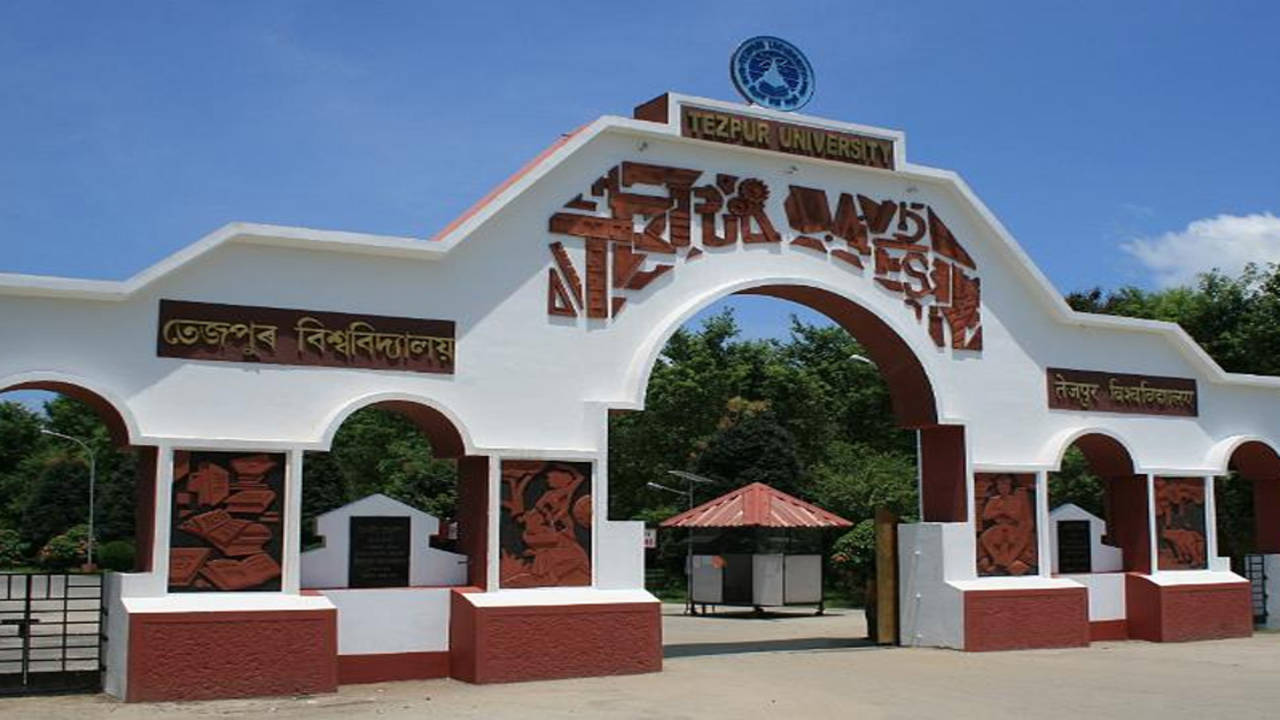
Ph.D. in Journalism And Mass Communication at Tezpur University
The Doctor of Philosophy (Ph.D.) program in Journalism and Mass Communication at Tezpur University is designed for aspiring scholars who wish to explore the dynamic interplay between media, society, and technology. With a robust research ecosystem, world?class faculty, and state?of?the?art facilities, the university empowers professionals to become thought leaders, innovators, and policy influencers in the rapidly evolving communication landscape.
Eligibility Criteria for Ph.D. in Journalism And Mass Communication at Tezpur University
Prospective candidates must satisfy the following minimum requirements:
- Master?s degree in Journalism, Mass Communication, Media Studies, or a related discipline with at least 55% aggregate (or a CGPA equivalent of 6.0 on a 10?point scale).
- For candidates with a Master?s in a non?related field, a minimum of 60% combined score in the qualifying exam and a research proposal approved by the department.
- Candidates appearing for the final semester of their Master?s program may apply conditionally, subject to submission of the final transcript.
- Valid GATE, UGC?NET, or CSIR?NET scores are considered a plus but not mandatory.
Entrance Exam for Ph.D. in Journalism And Mass Communication at Tezpur University
The university conducts an annual Ph.D. entrance examination that evaluates both theoretical knowledge and research aptitude. The exam comprises:
- Paper I ? Research Methodology & Statistics (30 marks)
- Paper II ? Core Subjects (Journalism Theory, Media Ethics, Digital Media, etc.) (70 marks)
Eligibility for the written test may also be secured through national level qualifiers (UGC?NET, GATE) where the candidate can directly appear for the interview round.
Fee Structure for Ph.D. in Journalism And Mass Communication at Tezpur University
| Category | Amount (INR) | Details |
|---|---|---|
| Application Fee | 1,500 | Non?refundable, payable online during the admission portal opening. |
| Entrance Examination Fee | 2,500 | Covers test centre logistics and evaluation. |
| Semester Tuition Fee | 7,500 per semester | Applicable for each of the 6 semesters (3 years). |
| Library & Lab Charges | 1,200 per semester | Access to digital archives, software, and media labs. |
| Annual Student Activity Fee | 2,000 per year | Participation in workshops, seminars and conferences. |
Admission Process for Ph.D. in Journalism And Mass Communication at Tezpur University
The admission timeline follows a systematic four?step approach:
- Online Application: Fill the application form on the university portal, upload required documents, and pay the application fee.
- Entrance Examination: Appear for the written test (or submit valid national level scores for direct interview).
- Interview & Research Proposal Review: Shortlisted candidates present their research proposal before a panel of experts.
- Final Admission Offer: Successful candidates receive an admission letter and are required to complete the enrollment formalities within 15 days.
Ph.D. Subjects and Specializations in Journalism And Mass Communication at Tezpur University
Students can tailor their research across a spectrum of specializations, including:
- Digital Media & Social Networking
- Media Policy & Regulation
- Communication Theory & Audience Studies
- Broadcast Journalism & Production
- Media Ethics & Corporate Social Responsibility
- Data Journalism & Visual Storytelling
Research Areas in Journalism And Mass Communication at Tezpur University
Faculty members are actively engaged in cutting?edge investigations covering:
- Impact of AI and automation on newsrooms.
- Fake news detection and mitigation strategies.
- Media influence on public health communication.
- Role of community radio in rural development.
- Digital divide and media accessibility.
- Cross?cultural communication in South?Asian media markets.
Documents Required for Ph.D. in Journalism And Mass Communication at Tezpur University
| Document | Purpose |
|---|---|
| Completed Application Form (online) | Formal request for admission. |
| Mark sheets & degree certificates (M.A./M.Sc.) | Verification of academic eligibility. |
| Research Proposal (1,500?2,000 words) | Demonstrates research intent and feasibility. |
| Curriculum Vitae | Highlights professional and academic achievements. |
| Two Academic References | Assessment of candidate?s scholarly potential. |
| Proof of Identity (Aadhaar/Passport) | Identity verification. |
Tezpur University Ph.D. Syllabus for Journalism And Mass Communication
The curriculum integrates rigorous coursework with independent research. Core modules include:
- Research Methodology & Statistical Techniques
- Advanced Theories of Mass Communication
- Media Law, Ethics and Regulation
- Digital Media Analytics
- Qualitative & Quantitative Content Analysis
- Dissertation Writing and Defense
How To Apply for Ph.D. in Journalism And Mass Communication at Tezpur University
Follow these steps to submit a successful application:
- Visit the official Tezpur University Ph.D. portal and register using a valid email address.
- Complete the online application form, attach scanned copies of all required documents, and pay the INR 1,500 application fee.
- Upload a concise research proposal (maximum 2,000 words) outlining objectives, methodology, and expected contributions.
- Track the status of your application and download the admit card for the entrance exam.
- Prepare for the written test and subsequent interview by reviewing past question papers and recent journal articles.
Career Scope and Job Opportunities After Ph.D. in Journalism And Mass Communication from Tezpur University
Graduates emerge as highly skilled analysts, educators, and strategists. Potential career pathways include:
- Senior Research Analyst ? Media Think Tanks & NGOs
- University Lecturer / Assistant Professor
- Chief Editor or Executive Producer in broadcasting houses
- Policy Advisor ? Ministry of Information & Broadcasting
- Communication Strategist ? Corporate and PR firms
- Consultant ? Data Journalism, Media Audits, Content Innovation
With the rise of digital platforms and data?driven storytelling, a Ph.D. in this discipline offers a competitive edge in both academic and industry domains.
Scholarship for Ph.D. in Journalism And Mass Communication at Tezpur University
Tezpur University offers several merit?based and need?based scholarships, such as:
- University Fellowships ? Full tuition waiver and monthly stipend of INR 15,000.
- UGC?JRF ? National level fellowship covering research expenses.
- State Government Scholarships ? For candidates belonging to reserved categories.
- Research Project Grants ? Funding for fieldwork and data acquisition, often linked with collaborative projects.
FAQs Regarding Ph.D. in Journalism And Mass Communication at Tezpur University
- Q1: What is the minimum duration to complete the Ph.D.?
- A: The program is structured for a minimum of 3 years (6 semesters), extendable up to 5 years based on research progress.
- Q2: Can working professionals enroll part?time?
- A: Yes, Tezpur University offers a part?time mode for eligible candidates with a stipulated minimum of 8 hours per week for research activities.
- Q3: Is there any provision for publishing research papers during the Ph.D.?
- A: Candidates are encouraged to publish in peer?reviewed journals; at least two indexed publications are required before dissertation submission.
- Q4: How are the research supervisors assigned?
- A: Supervisors are allocated based on the applicant?s research interests and the faculty?s expertise, after mutual agreement during the interview stage.
- Q5: Are there any collaboration opportunities with media houses?
- A: The university maintains MoUs with leading newspapers, TV channels, and digital media firms, facilitating internships, data access, and joint research projects.
For additional support with your dissertation, consider professional services such as <a href="https://shikshare








