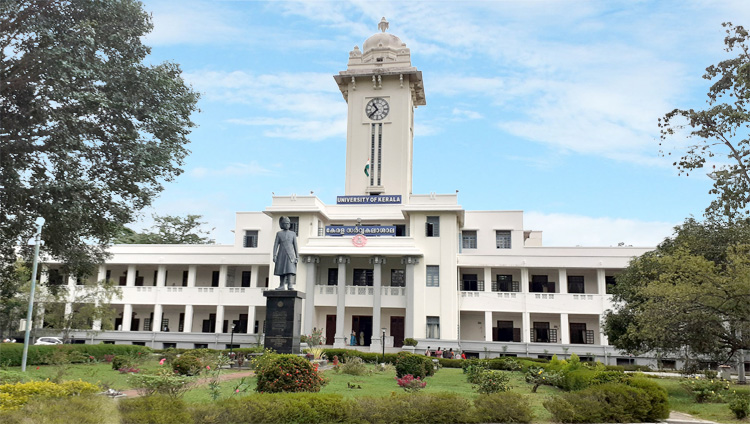
Ph.D. in Journalism and Mass Communication from Kerala University
Introduction about Ph.D. in Journalism and Mass Communication at Kerala University
Kerala University, renowned for its multidisciplinary research environment, offers a rigorous Ph.D. programme in Journalism and Mass Communication that equips scholars with critical thinking, advanced research methodologies, and a deep understanding of media dynamics in the digital age. This doctoral journey is designed for professionals who aspire to become thought?leaders, policy?makers, academic mentors, or senior strategists in the ever?evolving media landscape. The programme blends theoretical frameworks with practical insights, fostering innovative research that can shape public discourse, media ethics, and communication strategies worldwide.
Ph.D Admission 2026-2027 & Writing Support Services by Shiksha Research
Eligibility Criteria for Ph.D. in Journalism and Mass Communication at Kerala University
- A Master's degree (or equivalent) in Journalism, Mass Communication, Media Studies, or a closely related discipline with a minimum of 55% aggregate (or 5.0 CGPA on a 10?point scale).
- National Eligibility Test (NET) qualification or a University?level Ph.D. entrance test score is preferred but not mandatory.
- Applicants must possess a strong academic record, research orientation, and at least two years of professional experience in journalism, broadcasting, digital media, or related fields.
- English language proficiency, demonstrated through a minimum of 6.5 IELTS or TOEFL 80, for candidates whose previous medium of instruction was not English.
Entrance Exam for Ph.D. in Journalism and Mass Communication at Kerala University
The university conducts a comprehensive entrance examination to assess candidates' analytical abilities, research aptitude, and domain knowledge. The exam consists of:
- Paper I ? General Aptitude & Reasoning: Logical reasoning, quantitative ability, and English comprehension.
- Paper II ? Subject Specific: Media theories, communication models, research methodology, and contemporary issues in journalism.
- Interview: A personal interview with the Departmental Committee to evaluate research proposal relevance and candidate?s motivation.
Preparation resources such as PhD Topic Selection and Proposal Assistance can significantly improve performance.
Fee Structure for Ph.D. in Journalism and Mass Communication at Kerala University
| Category | Annual Fee (INR) | Remarks |
|---|---|---|
| Tuition & Laboratory Charges | 12,000 | Applicable for all full?time candidates. |
| Library & Resource Centre | 2,000 | Includes access to digital archives and journals. |
| Examination & Evaluation | 3,500 | Covered each semester. |
| Miscellaneous (Certificate, ID Card, etc.) | 1,500 | One?time payment. |
| Total Approximate Annual Cost | 19,000 | Subject to annual revision. |
Admission Process for Ph.D. in Journalism and Mass Communication at Kerala University
- Online Application: Submit the application through the university?s portal with scanned copies of academic certificates.
- Document Verification: Upload eligibility documents, research proposal, and proof of work experience.
- Entrance Examination: Appear for the written test and interview as per the scheduled dates.
- Result Declaration: Merit list released on the official website. Shortlisted candidates receive an admission offer.
- Fee Payment & Enrollment: Pay the provisional fee and complete registration within the stipulated time.
For seamless navigation through these steps, consider availing PhD Admission Assistance.
Ph.D. Subjects and Specializations in Journalism and Mass Communication at Kerala University
- Digital Media & New Communication Technologies
- Media Ethics and Law
- Political Communication and Public Policy
- Health Communication and Public Awareness
- Media Management and Entrepreneurship
- Broadcast Journalism and Documentary Production
- Audience Research and Media Effects
Research Areas in Journalism and Mass Communication at Kerala University
Scholars can explore a wide array of contemporary research domains, including:
- Impact of social media algorithms on public opinion formation.
- Strategies for combating misinformation and fake news.
- Role of citizen journalism in disaster management.
- Influence of streaming platforms on traditional broadcasting.
- Gender representation in Indian media.
- Media coverage of climate change and environmental activism.
- Data journalism and visual storytelling.
Documents Required for Ph.D. in Journalism and Mass Communication at Kerala University
| Document | Format | Notes |
|---|---|---|
| Academic Transcripts (M.A.) | PDF (Scanned) | Certified copies required. |
| Research Proposal (2,000?3,000 words) | DOCX or PDF | Should outline objectives, methodology, and expected contribution. |
| Curriculum Vitae | Highlight publications, projects, and professional experience. | |
| Proof of NET/UGC-JRF (if any) | Optional but adds merit. | |
| Identity Proof (Aadhaar/Passport) | Government?issued ID. | |
| English Proficiency Certificate | IELTS, TOEFL, or equivalent. |
Kerala University Ph.D. Syllabus for Journalism and Mass Communication
The doctoral syllabus is structured into three phases:
- Coursework (Year 1?2): Advanced research methods, media theory, quantitative & qualitative analysis, ethics, and elective modules based on specialization.
- Comprehensive Examination (End of Year 2): Written and oral tests to assess mastery of core concepts.
- Dissertation (Year 3?5): Original research, data collection, analysis, and submission of a thesis of 80?100 pages, followed by a viva?voce.
How To Apply for Ph.D. in Journalism and Mass Communication at Kerala University
Follow these precise steps to submit a successful application:
- Visit the official Kerala University admissions portal and click on ?Ph.D. ? Journalism & Mass Communication?.
- Register using a valid email address; an OTP will verify your identity.
- Complete the online application form, filling in personal, academic, and professional details.
- Upload the required documents (see the Documents Required table).
- Pay the non?refundable application fee of INR 1,500 via net banking or credit card.
- Submit the form and note the application reference number for future correspondence.
- Prepare for the entrance exam using past papers, reference books, and consider Editing and Proofreading Services to refine your research proposal.
Career Scope and Job Opportunities After Ph.D. in Journalism and Mass Communication from Kerala University
Graduates emerge as experts capable of influencing media policies, leading academic departments, or steering corporate communications. Typical career pathways include:
- Assistant/Associate Professor & Research Fellow in universities and think?tanks.
- Senior Editor, News Director, or Content Strategist in leading news houses and digital platforms.
- Media Consultant for NGOs, government agencies, and multinational corporations.
- Policy Analyst specialising in media regulation and freedom of expression.
- Chief Communication Officer (CCO) in corporate and public sector organisations.
- Independent researcher, author, and speaker at international conferences.
Our alumni network reports an average salary increase of 35?45% within two years of graduation.
Scholarship for Ph.D. in Journalism and Mass Communication at Kerala University
Several financial aid options are available to deserving candidates:
- Kerala State Government Fellowship: Covers tuition, a monthly stipend of INR 12,000, and travel allowance.
- University Merit Scholarship: Awarded to the top 10% of candidates based on entrance exam rank.
- External Grants: UGC?NET, CSIR, and private media foundations offer project?based funding.
- Research Publication Support: Research Publication Support can assist in securing journal funding.
FAQs Regarding Ph.D. in Journalism and Mass Communication at Kerala University
- 1. How long does it take to complete the Ph.D. programme?
- The typical duration is 4?5 years, depending on the








