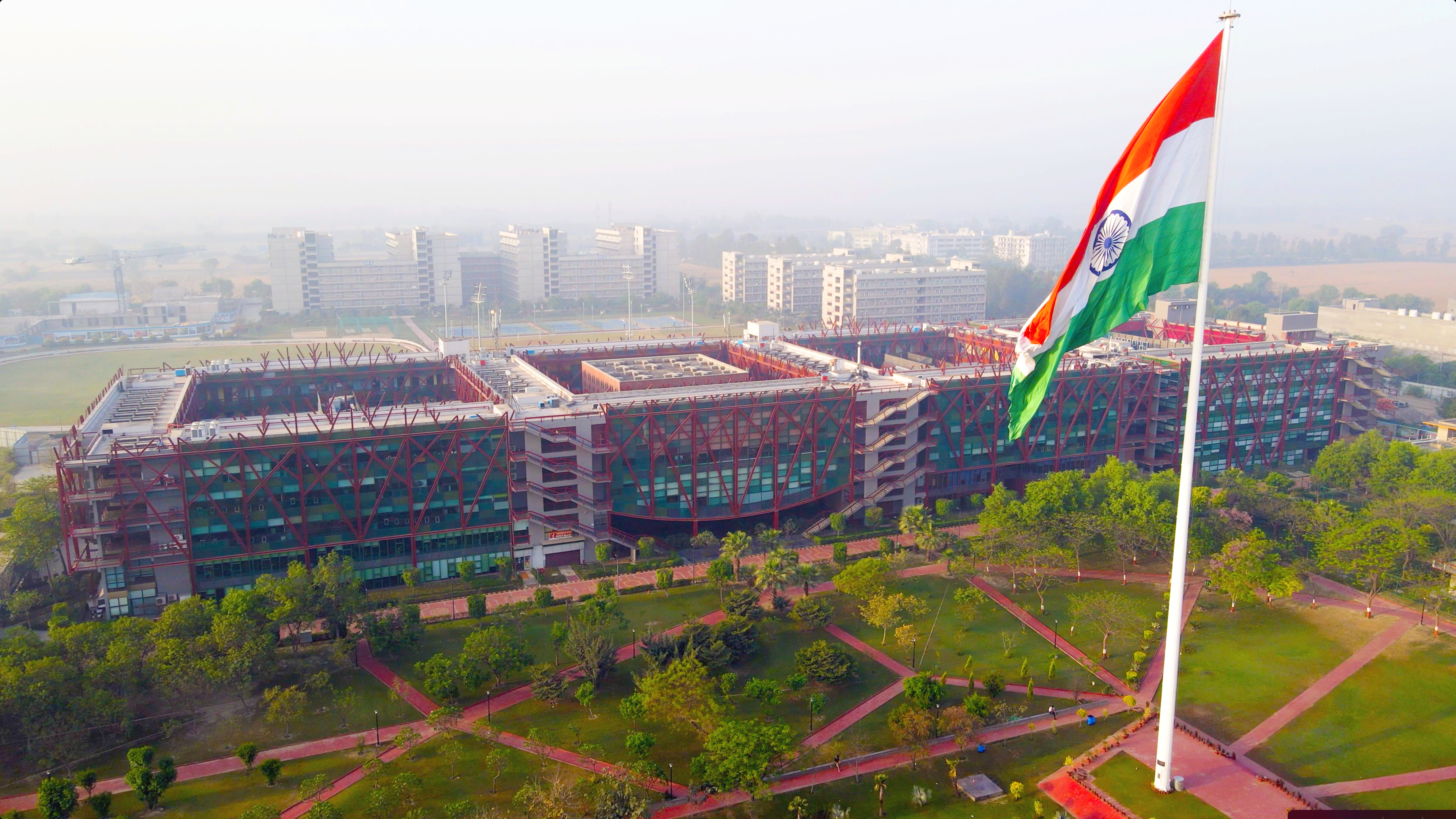
Ph.D. in Labour Economics from O.P. Jindal Global University: Eligibility, Entrance Exam, Fee Structure, Admission Process, Subjects, Research Areas, Syllabus, Scholarship & Career Scope
Introduction about Ph.D. in Labour Economics at O.P. Jindal Global University
The Doctorate in Labour Economics at O.P. Jindal Global University (OPJGU) is a premier research programme designed for seasoned professionals who aspire to shape policy, drive organisational change, and advance academic thought leadership in the dynamic field of labour markets. With a robust curriculum, world‑class faculty, and extensive industry collaborations, the Ph.D. empowers scholars to investigate wage dynamics, employment legislation, human capital development, and the socioeconomic impacts of technological disruption. Whether you aim to become a university professor, a senior policy analyst, or a strategic consultant, this programme offers a transformative journey grounded in rigorous research and real‑world relevance.
Eligibility Criteria for Ph.D. in Labour Economics at O.P. Jindal Global University
Candidates must hold a master’s degree (M.A., M.Sc., M.Com., MBA, or equivalent) with a minimum of 55% aggregate from a recognized university. Professionals with a distinguished work record in human resources, industrial relations, or economic research may also qualify under the Direct Entry provision, provided they demonstrate a strong research proposal and at least three years of relevant experience. Applicants must also satisfy the university’s language proficiency standards (IELTS/TOEFL) if their previous education was not in English.
Entrance Exam for Ph.D. in Labour Economics at O.P. Jindal Global University
The entrance assessment comprises two components: a written test evaluating research aptitude, quantitative methods, and conceptual knowledge of labour economics; and a personal interview to gauge motivation, analytical thinking, and alignment with faculty expertise. The written test is conducted online, featuring multiple‑choice questions, data interpretation, and a short essay. Candidates are encouraged to review past question papers and focus on econometric techniques, labour market theory, and policy analysis.
Fee Structure for Ph.D. in Labour Economics at O.P. Jindal Global University
| Component | Amount (INR) |
|---|---|
| Application Processing Fee | 2,500 |
| Annual Tuition Fee (per year) | 95,000 |
| Library & Lab Access | 5,000 |
| Exam & Evaluation Charges | 10,000 |
| Miscellaneous (student services, IT) | 8,000 |
| Total Approx. (3‑year program) | 342,500 |
The fee structure is subject to annual revision. Scholarships, research assistantships, and tuition waivers are available for meritorious candidates.
Admission Process for Ph.D. in Labour Economics at O.P. Jindal Global University
1. Online Application: Fill the digital form on the university portal and upload academic transcripts, a research proposal (max 1500 words), and two letters of recommendation.
2. Application Fee Payment: Pay the non‑refundable processing fee.
3. Entrance Examination: Appear for the online test scheduled by the university.
4. Interview: Shortlisted candidates are invited for a virtual or on‑campus interview.
5. Final Selection: Admission offers are released based on academic merit, test performance, and interview assessment.
6. Enrollment: Accepted candidates complete registration, pay the first year’s tuition, and attend the orientation program.
Ph.D. Subjects and Specializations in Labour Economics at O.P. Jindal Global University
The programme offers interdisciplinary specializations including:
• Industrial Relations and Collective Bargaining
• Human Capital Development
• Labour Market Policy & Regulation
• Wage Dynamics & Income Inequality
• Future of Work & Technological Disruption
Research Areas in Labour Economics at O.P. Jindal Global University
Faculty members guide dissertations across cutting‑edge domains such as:
- Impact of Gig Economy on Employment Security
- Skill Mismatch and Workforce Reskilling Strategies
- Gender Wage Gap and Inclusive Labour Policies
- Labor Migration, Remittances, and Economic Development
- Automation, AI, and the Changing Nature of Work
- Social Protection Schemes and Informal Sector Dynamics
These research themes align with national policy priorities and global labour market trends, positioning graduates as thought leaders in both academia and industry.
Documents Required for Ph.D. in Labour Economics at O.P. Jindal Global University
| Document | Details |
|---|---|
| Academic Transcripts | Certified copies of all graduate level marksheets. |
| Research Proposal | 1500‑word outline highlighting objectives, methodology, and expected contribution. |
| Letters of Recommendation | Two academic or professional references on university‑letterhead. |
| Proof of English Proficiency | IELTS/TOEFL scorecard (if applicable). |
| Curriculum Vitae | Updated CV with academic, research, and professional achievements. |
| Identity Proof | Aadhaar/Passport or any government‑issued ID. |
O.P. Jindal Global University Ph.D. Syllabus for Labour Economics
The syllabus is structured into three phases:
Phase I – Core Foundations (Year 1): Advanced Micro‑economics, Econometrics, Labour Market Theory, Research Methodology.
Phase II – Specialization Modules (Year 2): Electives aligned with chosen specialization, Policy Analysis, Data‑Driven Labour Analytics, Seminar Series.
Phase III – Dissertation (Year 3): Original research, fieldwork, data collection, writing, and defense.
Students also undertake workshops on statistical software (Stata, R), qualitative analysis, and academic publishing.
How To Apply for Ph.D. in Labour Economics at O.P. Jindal Global University
Visit the official OPJGU admissions portal, click on “Apply for Ph.D.”, and follow the step‑by‑step wizard. Ensure that all uploaded files are in PDF format and do not exceed 5 MB each. After submitting the application, monitor your email for the entrance exam schedule and further instructions. For any technical assistance, contact the admissions helpdesk at admissions@opjgu.edu.in.
Career Scope and Job Opportunities After Ph.D. in Labour Economics from O.P. Jindal Global University
Graduates enjoy a broad spectrum of career avenues, such as:
- University Lecturer / Professor
- Senior Research Analyst – International Labour Organization (ILO), World Bank, IMF
- Policy Advisor – Ministry of Labour & Employment, State Governments
- Chief Economist – HR Consulting Firms, Think‑Tanks
- Data Scientist – Focused on labour market analytics
- Corporate Strategy Lead – Workforce Planning & Talent Management
The interdisciplinary skill set, combined with OPJGU’s strong alumni network, ensures high employability and leadership roles in both public and private sectors.
Scholarship for Ph.D. in Labour Economics at O.P. Jindal Global University
Merit‑based scholarships covering up to 100% of tuition are awarded to top 10% of candidates based on academic performance and research proposal quality. Additionally, the university offers research assistantships that provide a monthly stipend of INR 20,000 and waive lab fees. International students may apply for the Global Scholars Programme, which includes a travel grant and accommodation subsidy.
FAQs Regarding Ph.D. in Labour Economics at O.P. Jindal Global University
- What is the minimum duration to complete the Ph.D.?
- The programme is designed for a three‑year full‑time commitment, with an option to extend up to five years based on research progress.
- Can I pursue the Ph.D. part‑time while working?
- Yes, a part‑time track is available for working professionals, extending the duration to a maximum of eight years.
- Is there any provision for publishing my dissertation in international journals?
- OPJGU provides mentorship, editorial support, and funding for conference travel to facilitate publication in peer‑reviewed journals.
- Do I need to appear for a separate language test if my master’s degree was in English?
- No, candidates with an English‑medium master’s degree are exempted from additional language proficiency tests.
- Are there any collaborative research opportunities with industry?
- Yes, the university has MoUs with leading HR consultancies, multinational corporations, and governmental bodies for joint research projects.
For assistance with your dissertation, data analysis, or research paper writing, explore professional services such as Thesis and Dissertation Writing Services, Research Data Analysis Services, Research Paper Writing Services, and Questionnaire Design and Development.








