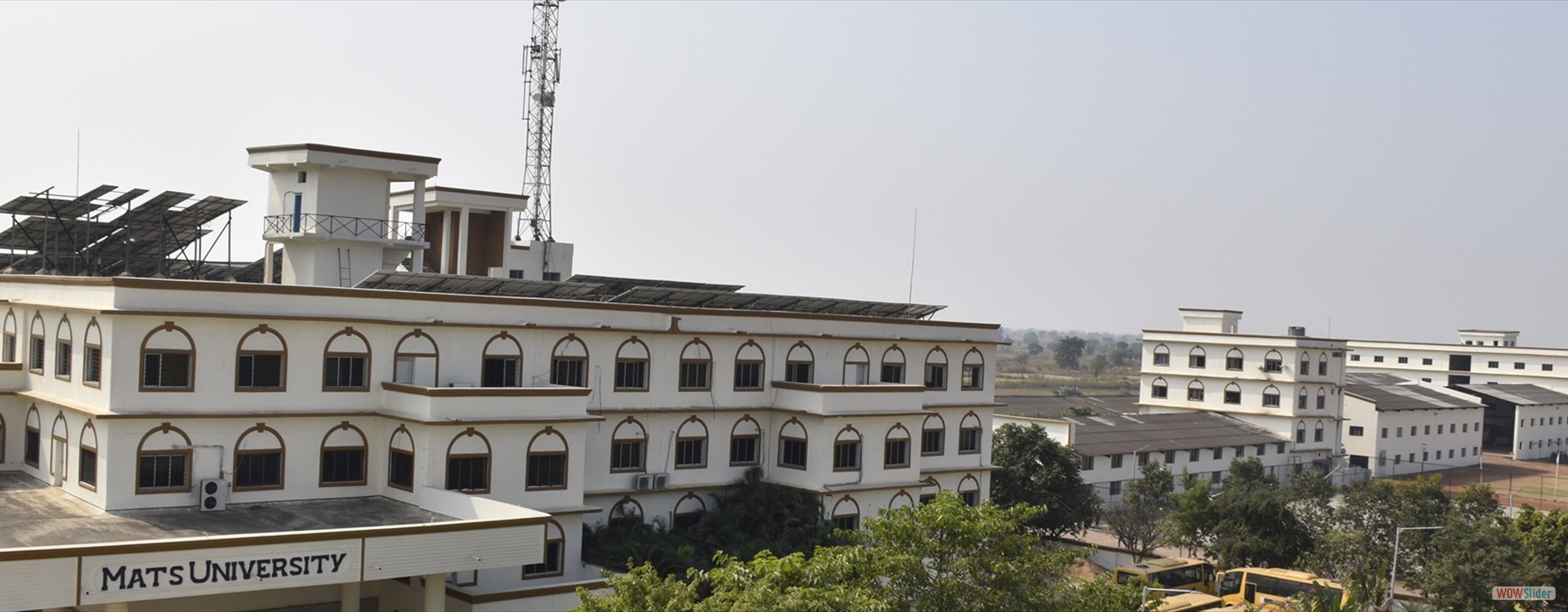
Introduction about Ph.D. in Law at MATS University
Pursuing a Ph.D. in Law at MATS University, Raipur, is a transformative journey designed for legal scholars, practitioners, and academicians who aspire to reach the pinnacle of legal expertise. MATS University stands as a beacon of academic excellence in Central India, offering a rigorous doctoral program that encourages deep analytical thinking and original research. This program isn't just about obtaining a degree; it is about contributing to the evolution of jurisprudence and addressing the complex legal challenges of the 21st century. Whether you are aiming to influence public policy, lead the judiciary, or inspire the next generation of lawyers, the MATS University Ph.D. program provides the intellectual ecosystem necessary for groundbreaking legal scholarship. To ensure your research meets international standards, many candidates opt for professional Editing and Proofreading Services to refine their doctoral thesis.
Ph.D Admission 2026-2027 & Writing Support Services by Shiksha Research
Eligibility Criteria for Ph.D. in Law at MATS University
The eligibility criteria for the Ph.D. in Law at MATS University strictly follow the guidelines set by the University Grants Commission (UGC). Candidates must possess a Master?s degree in Law (LL.M.) from a recognized university with a minimum of 55% aggregate marks (or an equivalent grade in a point scale). For candidates belonging to SC/ST/OBC (non-creamy layer)/Differently-abled categories, a relaxation of 5% marks is typically provided. Professionals who have cleared the NET/SET/JRF examinations are highly encouraged to apply, as they may be eligible for certain exemptions during the initial screening. Selecting a unique research area is the first step toward success, and scholars often seek PhD Topic Selection and Proposal Assistance to align their interests with contemporary legal trends.
Entrance Exam for Ph.D. in Law at MATS University
Admission to the Ph.D. in Law at MATS University is primarily based on the MATS University Entrance Test (MET). This exam is designed to evaluate the candidate?s research aptitude and core knowledge of legal subjects. The entrance exam covers Research Methodology and various branches of Law. Candidates who have qualified for national-level examinations such as UGC-NET (including JRF), CSIR-NET, SLET, or GATE are generally exempted from the written entrance exam, though they must still appear for the personal interview. The final selection is a weighted combination of the entrance score and the performance in the interview/viva-voce before the Research Degree Committee (RDC).
Fee Structure for Ph.D. in Law at MATS University
The fee structure at MATS University is competitive and structured to support long-term research. While the fees are subject to annual revisions, the following table provides a general estimate of the investment required for a Ph.D. in Law:
| Fee Component | Estimated Amount (INR) | Frequency |
|---|---|---|
| Application & Registration Fee | ?2,500 - ?5,000 | One-time |
| Coursework Fee | ?15,000 - ?20,000 | One-time |
| Annual Tuition Fee | ?60,000 - ?80,000 | Per Year |
| Thesis Submission Fee | ?15,000 - ?25,000 | One-time |
| Library & Development Fee | ?10,000 | Annual |
Navigating the administrative hurdles of enrollment can be taxing; therefore, expert PhD Admission Assistance can be invaluable for busy professionals wishing to streamline the process.
Admission Process for Ph.D. in Law at MATS University
The admission process at MATS University is transparent and merit-oriented. It begins with the release of the official notification on the university website. Interested candidates must submit their application along with a brief research summary. After the MET entrance exam, shortlisted candidates are invited for a personal interview. During this stage, the faculty assesses the candidate's research potential, the feasibility of the proposed topic, and the alignment with the university?s research priorities. For distinguished legal veterans who have significantly contributed to the field without a formal Ph.D., the university may offer information regarding Honorary Doctorate Programs as an alternative recognition of their expertise.
Ph.D. Subjects and Specializations in Law at MATS University
The Department of Law at MATS University offers a broad spectrum of specializations to cater to the diverse interests of doctoral scholars. These specializations allow for nuanced research into specific legal domains, including:
- Constitutional Law and Administrative Law
- Criminal Law and Criminology
- Corporate and Commercial Law
- Intellectual Property Rights (IPR)
- Environmental Law and Sustainable Development
- Human Rights and International Humanitarian Law
- Family Law and Personal Laws
- Cyber Law and Information Technology
Research Areas in Law at MATS University
MATS University encourages interdisciplinary research that bridges the gap between traditional legal theory and contemporary societal issues. Current research areas include Digital Privacy and Data Protection Law, Medical Jurisprudence, Arbitration and Alternative Dispute Resolution (ADR), and Legal Ethics in the Age of AI. The university emphasizes high-impact research, and scholars are encouraged to utilize Research Publication Support to ensure their findings are featured in Scopus-indexed or UGC-Care listed journals.
Documents Required for Ph.D. in Law at MATS University
To ensure a smooth admission process, candidates should keep the following documents ready:
- High School and Higher Secondary Marksheets (10th & 12th)
- Graduation Degrees and Marksheets (LL.B.)
- Post-Graduation Degrees and Marksheets (LL.M.)
- UGC-NET/JRF/SET Certificate (if applicable)
- Transfer Certificate (TC) and Migration Certificate
- Aadhaar Card and Passport-sized Photographs
- A detailed Research Proposal (Synopsis)
- No Objection Certificate (NOC) from current employer (for working professionals)
MATS University Ph.D. Syllabus for Law
The Ph.D. syllabus at MATS University is divided into a mandatory Coursework phase and the subsequent Research phase. The coursework usually lasts for one semester and covers:
- Research Methodology: Techniques of legal research, qualitative and quantitative data analysis, and citation styles (Bluebook, OSCOLA).
- Computer Applications: Use of legal databases like SCC Online, Manupatra, and Westlaw for academic purposes.
- Legal Theory: Advanced study of Jurisprudence and Legal Philosophies.
- Review of Literature: Identifying gaps in existing research within the chosen specialization.
For those innovating in the legal tech space, Patent Filing and Support Services may be relevant if your research results in a novel legal methodology or technical tool.
How To Apply for Ph.D. in Law at MATS University
Applying for a Ph.D. at MATS University is a straightforward process:
- Visit the official MATS University website and navigate to the 'Admissions' section.
- Register your details and log in to fill out the Ph.D. application form.
- Upload the scanned copies of required documents and your research proposal.
- Pay the application fee through the online payment gateway.
- Print the confirmation page and keep track of the entrance exam dates.
- Alternatively, you can visit the university campus at Raipur for offline registration.
Career Scope and Job Opportunities After Ph.D. in Law from MATS University
A Ph.D. in Law from MATS University opens doors to elite career paths. Graduates are highly sought after for senior roles such as:
- Academia: Professors, Deans, and Head of Departments in prestigious Law Schools.
- Judiciary: Opportunities to serve as judicial officers or legal researchers for High Courts and the Supreme Court.
- Legal Consultancy: High-level consultancy for International NGOs, the United Nations, or Corporate houses.
- Think Tanks: Policy analysts and legal researchers at government and private think tanks.
- Legal Journalism: Senior editors and legal analysts for top-tier media houses.
Scholarship for Ph.D. in Law at MATS University
MATS University offers various scholarships to deserving scholars to alleviate the financial burden of research. Merit-based scholarships are available for candidates who excel in the entrance exam. Additionally, scholars who have cleared the NET-JRF are entitled to the Junior Research Fellowship (JRF) provided by the UGC. The university also offers teaching assistantships where doctoral students can assist in undergraduate teaching while receiving a stipend. Candidates from economically weaker sections (EWS) or reserved categories can also apply for state-specific scholarships as per Chhattisgarh government norms.
FAQs Regarding Ph.D. in Law at MATS University
Q1: Is the Ph.D. program at MATS University full-time or part-time?
A: MATS University offers both full-time and part-time options to accommodate the needs of working legal professionals.
Q2: What is the minimum duration to complete the Ph.D.?
A: The minimum duration is 3 years, including coursework, while the maximum duration is typically 6 years.
Q3: Does MATS University assist with thesis publication?
A: Yes, the university and its research wing provide guidance on publishing research papers in reputable journals as part of the Ph.D. requirements.
Q4: Can I change my research topic after registration?
A: Minor changes are permitted with the approval of the Research Advisory Committee, but significant shifts may require a formal re-application process.
Q5: Is hosteling facility available for Ph.D. scholars?
A: Yes, MATS University provides comfortable residential facilities for research scholars within the campus.








