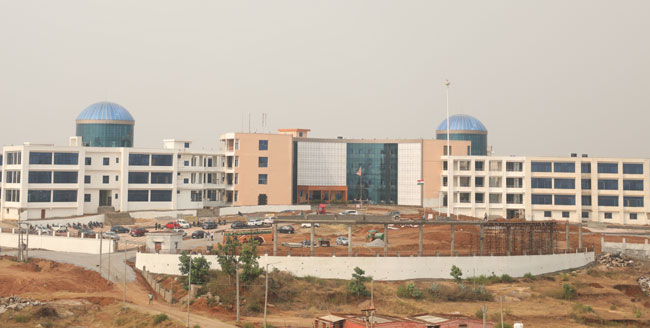
Ph.D. in Life Sciences from Central University of Jharkhand: Eligibility, Entrance Exam, Fee Structure, Admission Process, Subjects, Research Areas, Syllabus, Scholarship & Career Scope
Introduction about Ph.D. in Life Sciences at Central University of Jharkhand
The Doctor of Philosophy (Ph.D.) in Life Sciences at Central University of Jharkhand (CUJ) is a gateway for aspiring scientists, researchers, and academicians who seek to contribute to cutting‑edge discoveries in biology, biotechnology, ecology, and health sciences. Nestled in a vibrant academic environment, CUJ offers state‑of‑the‑art laboratories, interdisciplinary collaborations, and access to a network of eminent scholars across India and beyond. This program is designed not only to sharpen analytical and experimental skills but also to nurture innovative thinking that can transform societal challenges into scientific solutions.
Eligibility Criteria for Ph.D. in Life Sciences at Central University of Jharkhand
Prospective candidates must satisfy the following academic and professional prerequisites:
- A Master’s degree (M.Sc., M.Sc. (Tech), M.Phil., or equivalent) in Life Sciences, Biotechnology, Microbiology, Biochemistry, Environmental Science, or a closely related discipline, with a minimum of 55% aggregate (or equivalent CGPA of 5.5/10).
- Candidates holding a NET, SLET, CSIR, GATE, or any other national level fellowship are exempted from the entrance examination requirement.
- For students with a Bachelor’s degree combined with a postgraduate diploma (e.g., B.Sc. + M.Sc. (Tech)), a minimum of 60% in the postgraduate component is required.
- International applicants must provide an equivalent degree recognized by the University Grants Commission (UGC) of India.
- Good command of English, both written and spoken, is essential for research documentation and publications.
Entrance Exam for Ph.D. in Life Sciences at Central University of Jharkhand
CUJ conducts a comprehensive entrance test to assess the candidate’s foundational knowledge and research aptitude. The exam comprises three sections:
- Section A – General Aptitude: Logical reasoning, quantitative ability, and verbal comprehension.
- Section B – Subject Knowledge: Core concepts in molecular biology, genetics, ecology, microbiology, and biochemistry.
- Section C – Research Proposal: Candidates submit a concise research proposal (500–800 words) outlining their intended study area, objectives, methodology, and expected outcomes.
Successful candidates are invited for a personal interview and presentation of the research proposal before a panel of subject experts.
Fee Structure for Ph.D. in Life Sciences at Central University of Jharkhand
| Fee Component | Annual Amount (INR) | Total for 3‑Year Program (INR) |
|---|---|---|
| Tuition & Examination Fees | 22,000 | 66,000 |
| Laboratory & Infrastructure Charges | 8,000 | 24,000 |
| Library & Digital Resources | 3,500 | 10,500 |
| Student Activity & Welfare Fund | 2,000 | 6,000 |
| Total Estimated Fee | 35,500 | 106,500 |
Note: The fee structure is subject to revision by the university administration. Scholarships, stipends, and research grants can significantly offset the total cost.
Admission Process for Ph.D. in Life Sciences at Central University of Jharkhand
The admission cycle is structured into clear, sequential steps:
- Online Application: Submit the application form through the university’s official portal, upload scanned copies of academic transcripts, and pay the requisite application fee.
- Eligibility Verification: The admissions committee reviews academic qualifications, research experience, and any qualifying national fellowships.
- Entrance Examination: Eligible candidates appear for the written test and submit a research proposal as per the guidelines.
- Interview & Presentation: Shortlisted applicants attend a personal interview, where they discuss their proposal and answer discipline‑specific queries.
- Final Selection & Offer Letter: Successful candidates receive an admission offer detailing the supervisor assignment, stipend, and registration deadlines.
- Enrollment & Registration: Complete the enrollment formalities, submit original documents for verification, and pay the first year’s fee.
Ph.D. Subjects and Specializations in Life Sciences at Central University of Jharkhand
CUJ offers a wide range of specialization tracks that cater to diverse research interests:
- Molecular Genetics and Genomics
- Cellular and Developmental Biology
- Microbial Biotechnology
- Environmental Toxicology and Ecological Modeling
- Plant Physiology and Crop Improvement
- Neurobiology and Behavioral Sciences
- Biomedical Engineering and Translational Research
- Bioinformatics and Computational Biology
Research Areas in Life Sciences at Central University of Jharkhand
Faculty members and research centers at CUJ focus on the following high‑impact domains:
- Gene editing technologies (CRISPR‑Cas9) for disease resistance.
- Climate‑adapted crop varieties and sustainable agriculture.
- Pathogen‑host interactions and antimicrobial resistance.
- Bioremediation of heavy metals and organic pollutants.
- Stem cell therapy and regenerative medicine.
- Systems biology approaches to understand complex metabolic networks.
- Artificial intelligence applications in drug discovery.
- Conservation genetics of endangered flora and fauna.
Documents Required for Ph.D. in Life Sciences at Central University of Jharkhand
| Document | Format | Remarks |
|---|---|---|
| Academic Transcripts (10th to Post‑Graduation) | PDF (Scanned) | Must be certified by the issuing institution. |
| Proof of Qualifying National Fellowship (if any) | NET, CSIR, GATE, etc. | |
| Research Proposal (PDF) | Maximum 800 words, includes objectives & methodology. | |
| Curriculum Vitae | Highlight publications, conference presentations, and projects. | |
| Letter of Intent / Statement of Purpose | Explain motivation and alignment with CUJ’s research strengths. | |
| Two Academic Recommendation Letters | From supervisors who can attest to research capability. | |
| Passport‑size Photograph | JPEG/PNG (200 KB max) | Recent, white background. |
Central University of Jharkhand Ph.D. Syllabus for Life Sciences
The syllabus is structured into three phases, each aligning with the progression from coursework to independent research:
- Phase I – Core Coursework (First 6 months): Advanced Molecular Biology, Biostatistics, Research Ethics, and Scientific Writing.
- Phase II – Specialized Modules (Next 12 months): Choose from electives such as Plant Molecular Breeding, Clinical Microbiology, Environmental Genomics, or Bioinformatics.
- Phase III – Thesis Research (Remainder of the program): Conduct original experiments, compile data, and publish findings in peer‑reviewed journals.
Students are encouraged to supplement their learning with workshops on Thesis and Dissertation Writing Services and Research Data Analysis Services to enhance the quality of their dissertations.
How To Apply for Ph.D. in Life Sciences at Central University of Jharkhand
Follow these step‑by‑step instructions to submit a complete application:
- Visit the official CUJ admissions portal and click on “Ph.D. Admissions – Life Sciences”.
- Create a user account using a valid email address and set a secure password.
- Fill out the online application form, ensuring that all mandatory fields (personal details, academic history, research interests) are accurately completed.
- Upload the required documents listed in the “Documents Required” section in PDF format.
- Pay the non‑refundable application fee (INR 1,500) via net banking or credit/debit card.
- Submit the application and note the acknowledgment number for future correspondence.
- Monitor the registered email for notifications regarding the entrance exam schedule and interview invitations.
Applicants can also consult the university’s Research Paper Writing Services for guidance on structuring their proposal and literature review.
Career Scope and Job Opportunities After Ph.D. in Life Sciences from Central University of Jharkhand
A Ph.D. in Life Sciences opens doors to a myriad of high‑impact career paths, including:
- Tenured faculty positions at premier universities and research institutes.
- Senior researcher roles in government labs such as CSIR, ICMR, and DBT.
- Principal investigator in biotech startups focusing on genomics, bio‑pharma, and agricultural innovations.
- Science policy analyst for national research councils and NGOs.
- Intellectual property specialist in patent law firms with a scientific background.
- Scientific consultant for multinational corporations in health, environmental, and agritech sectors.
- Data science and bio








