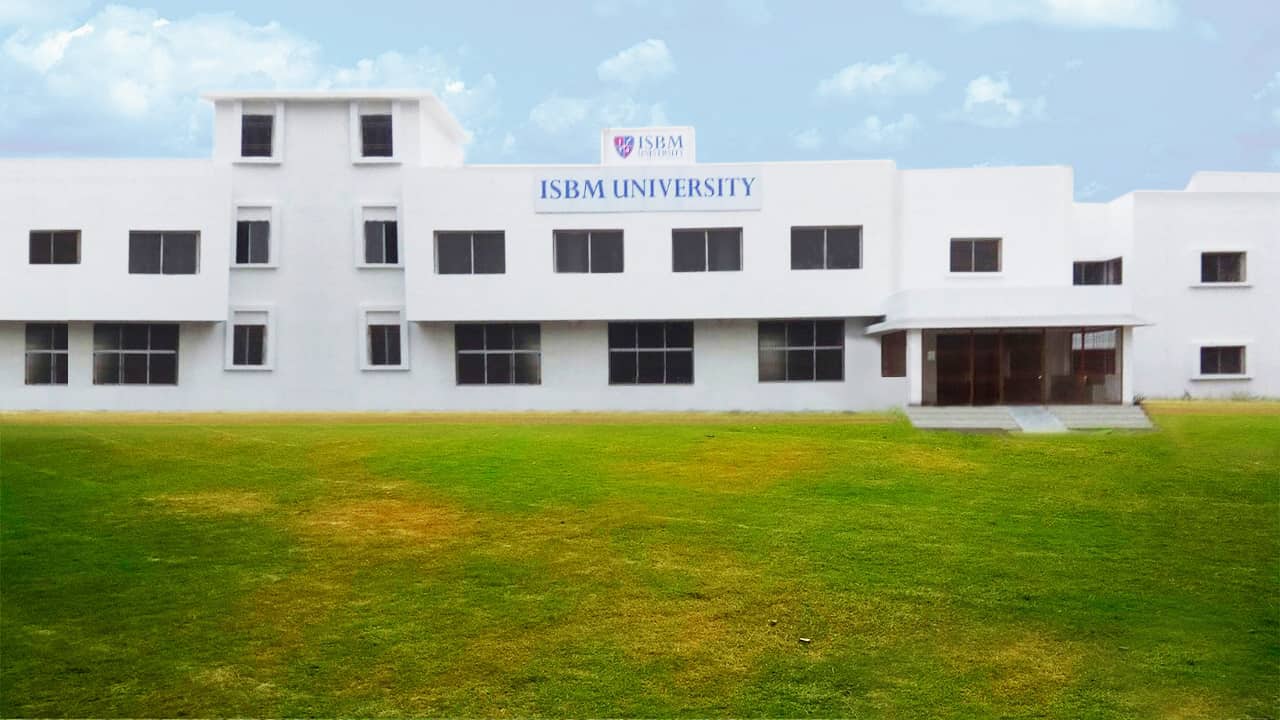
Introduction about Ph.D. in Life Sciences at ISBM University
The Doctor of Philosophy (Ph.D.) in Life Sciences at ISBM University is a research‑intensive program designed for professionals seeking to advance scientific knowledge and lead innovative projects in biotechnology, genetics, environmental science, and related fields. With state‑of‑the‑art laboratories, interdisciplinary faculty, and strong industry collaborations, ISBM University offers a vibrant platform for scholars to explore cutting‑edge research and make a tangible impact on global health, agriculture, and sustainability.
Eligibility Criteria for Ph.D. in Life Sciences at ISBM University
- Master’s degree (M.Sc., M.Tech., M.Pharm., or equivalent) in Life Sciences, Biotechnology, Biochemistry, Microbiology, Environmental Science, or a closely related discipline.
- Minimum aggregate of 55% (or equivalent grade) in the qualifying degree.
- Valid GATE/NET score is preferred but not mandatory.
- Applicants must have a strong academic record and demonstrated research potential, evidenced by publications or project work.
- For candidates with a B.E./B.Tech. background, a minimum of 2 years of relevant research experience is required.
Entrance Exam for Ph.D. in Life Sciences at ISBM University
ISBM University conducts its own entrance examination to assess candidates' foundational knowledge and research aptitude. The exam comprises three sections:
- Subject Knowledge: Multiple‑choice questions covering core Life Sciences topics such as molecular biology, genetics, ecology, and bioinformatics.
- Research Aptitude: Short answer questions evaluating the ability to formulate hypotheses, design experiments, and analyze data.
- Communication Skills: A written English proficiency test and an oral interview to gauge presentation and academic discourse abilities.
Top‑scoring candidates are shortlisted for a personal interview with the department faculty, where their proposed research proposal is reviewed.
Fee Structure for Ph.D. in Life Sciences at ISBM University
| Category | Annual Fee (INR) | Notes |
|---|---|---|
| Tuition Fee | 85,000 | Applicable for the first two years; thereafter, a reduced rate of 60,000 per year. |
| Laboratory & Facility Charges | 30,000 | Includes access to core facilities, reagents, and equipment usage. |
| Library & Digital Resources | 10,000 | Unlimited access to e‑journals, databases, and inter‑library loans. |
| Administration & Miscellaneous | 5,000 | Registration, examination, and certification fees. |
| Total (First Year) | 130,000 |
Admission Process for Ph.D. in Life Sciences at ISBM University
- Online Application: Fill the application form on the university portal and upload required documents.
- Entrance Examination: Appear for the ISBM Ph.D. entrance test (or submit a valid GATE/NET score).
- Interview: Qualified candidates are invited for an interview and a research proposal presentation.
- Final Selection: Admissions committee evaluates academic merit, research potential, and interview performance.
- Enrollment: Successful candidates receive an offer letter and must complete fee payment to commence the program.
Ph.D. Subjects and Specializations in Life Sciences at ISBM University
The program offers a broad spectrum of specializations, allowing scholars to tailor their research to emerging scientific challenges:
- Molecular Genetics & Genomics
- Cellular & Developmental Biology
- Microbial Biotechnology
- Environmental & Ecological Sciences
- Bioinformatics & Computational Biology
- Pharmacognosy & Natural Product Chemistry
- Bioprocess Engineering
Research Areas in Life Sciences at ISBM University
ISBM University encourages interdisciplinary research that addresses real‑world problems. Current focus areas include:
- CRISPR‑based gene editing for disease modeling.
- Climate‑resilient crop development.
- Microbial consortia for waste biodegradation.
- Artificial intelligence in drug discovery.
- Stem cell therapy and regenerative medicine.
- Bio‑nanotechnology for targeted delivery systems.
Documents Required for Ph.D. in Life Sciences at ISBM University
| Document | Format | Remarks |
|---|---|---|
| Academic Transcripts (M.Sc./M.Tech.) | PDF (original + notarized copy) | Must show minimum 55% aggregate. |
| Curriculum Vitae | Include publications, conferences, and project experience. | |
| Research Proposal (max 1500 words) | Outline objectives, methodology, and expected outcomes. | |
| Entrance Exam Scorecard (GATE/NET) or ISBM Test Result | Valid for the current admission cycle. | |
| Letter of Recommendation (2) | From academic supervisors or industry mentors. | |
| Identity Proof (Aadhaar/Passport) | Government‑issued photo ID. |
ISBM University Ph.D. Syllabus for Life Sciences
The doctoral curriculum balances coursework, comprehensive examinations, and research milestones:
- Year 1 – Core Courses: Advanced Molecular Biology, Research Methodology, Biostatistics, and Ethics in Scientific Research.
- Year 2 – Electives & Seminars: Choose from Bioinformatics, Environmental Toxicology, Pharmaceutical Biotechnology, etc.
- Comprehensive Examination: Conducted at the end of Year 2 to assess breadth and depth of knowledge.
- Thesis Research: Independent project under a faculty supervisor, culminating in a published dissertation.
How To Apply for Ph.D. in Life Sciences at ISBM University
- Visit the official ISBM University admissions portal.
- Register using a valid email address and create a password.
- Complete the online application form, upload all required documents, and pay the non‑refundable application fee of INR 2,500.
- Schedule and appear for the entrance examination (or submit a valid GATE/NET score).
- After clearing the exam, attend the interview and submit the final research proposal.
- Upon selection, accept the admission offer and remit the first-year fee to secure your seat.
Career Scope and Job Opportunities After Ph.D. in Life Sciences from ISBM University
Graduates are equipped to pursue high‑impact careers in both academia and industry:
- Assistant/Associate Professor or Post‑Doctoral Fellow at leading universities and research institutes.
- Senior Scientist or R&D Manager in biotechnology, pharma, and agro‑chemical companies.
- Principal Investigator in government labs such as CSIR, ICMR, or DRDO.
- Consultant for regulatory bodies, environmental agencies, and health ministries.
- Entrepreneurial ventures – start‑ups focused on bio‑innovation, diagnostics, or sustainable agriculture.
Scholarship for Ph.D. in Life Sciences at ISBM University
Merit‑based and need‑based financial assistance is available:
- ISBM Merit Scholarship: Up to 50% tuition waiver for top 10% of applicants.
- Research Grant Assistantships: Stipends ranging from INR 12,000 to 20,000 per month for candidates working on funded projects.
- External Fellowships: Eligibility for CSIR, UGC, and AICTE doctoral fellowships.
FAQs Regarding Ph.D. in Life Sciences at ISBM University
- Can I pursue the Ph.D. part‑time while working?
- Yes, ISBM University offers a flexible part‑time mode for industry professionals, provided they meet the minimum 6‑hour weekly research commitment.
- Is there a minimum duration for completing the Ph.D.?
- The normal duration is 3‑4 years; however, extensions may be granted for valid academic or research reasons.
- Do I need to submit a published paper before enrollment?
- While not mandatory, having at least one peer‑reviewed publication strengthens your application.
- Are there collaborations with international universities?
- ISBM University has MoUs with several overseas institutions, enabling joint supervision, exchange programs, and co‑authored publications.
- What support is available for data analysis?
- Students can access professional Research Data Analysis Services through university partnerships.
- Can I get assistance with thesis writing?
- Yes, the university provides access to Thesis and Dissertation Writing Services for guidance and editing.
- Are questionnaire design services offered?
- For social‑science oriented life‑science studies, students may use Questionnaire Design and Development resources.
- How can I publish my research papers?
- The university’s writing center connects students with Research Paper Writing Services to enhance manuscript quality and journal selection.








