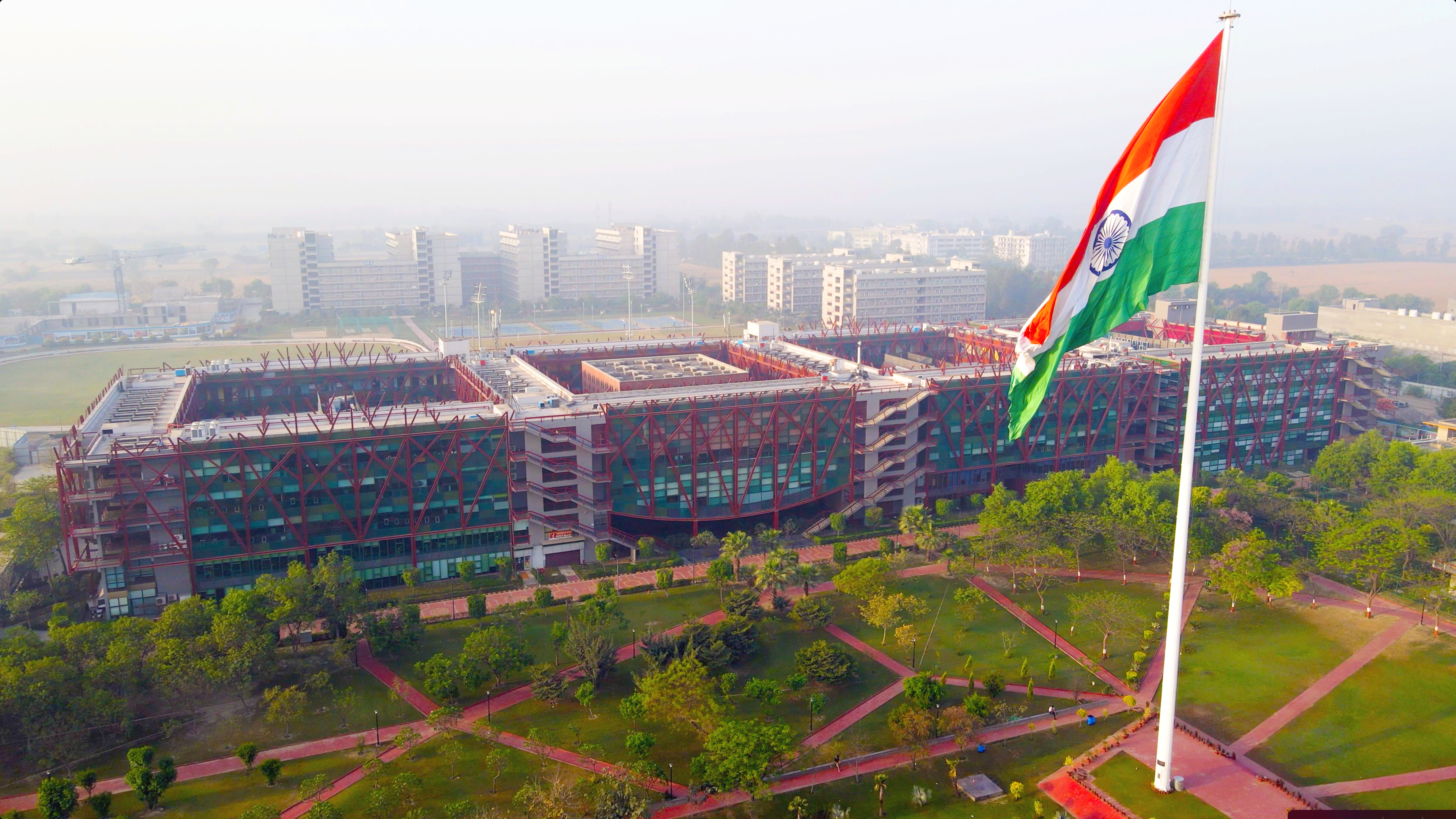
Ph.D. in Macro Economics from O.P. Jindal Global University
Introduction about Ph.D. in Macro Economics at O.P. Jindal Global University
Embarking on a Ph.D. in Macro Economics at O.P. Jindal Global University offers ambitious professionals a gateway to pioneering research, thought‑leadership, and transformative impact on global economic policy. The programme blends rigorous theoretical foundations with cutting‑edge empirical methods, enabling scholars to address complex macro‑economic challenges such as fiscal stability, monetary dynamics, and sustainable development. With a faculty comprising internationally recognised economists and a vibrant research ecosystem, candidates are empowered to translate academic insight into real‑world solutions that shape nations and markets.
Eligibility Criteria for Ph.D. in Macro Economics at O.P. Jindal Global University
Prospective candidates must satisfy the following minimum requirements:
- Master’s degree (or equivalent) in Economics, Finance, Statistics, or a related discipline with a minimum aggregate of 55% (or CGPA 6.0 on a 10‑point scale).
- Valid score in a recognised national or international entrance test (e.g., UGC‑NET, CSIR‑UGC NET, or university‑specific test).
- Demonstrated research aptitude through a research proposal, publications, or relevant work experience.
- English language proficiency (IELTS ≥ 6.5 or TOEFL iBT ≥ 80) for international applicants.
Entrance Exam for Ph.D. in Macro Economics at O.P. Jindal Global University
The entrance examination assesses analytical, quantitative, and theoretical competencies essential for doctoral research. The test comprises three sections:
- Micro‑Macro Foundations: Core concepts, welfare economics, and market structures.
- Quantitative Methods: Econometrics, statistical inference, and data analysis techniques.
- Research Aptitude: Critical review of literature, hypothesis formulation, and research design.
Candidates may also submit a valid UGC‑NET or CSIR‑NET score to qualify directly, bypassing the university‑conducted exam.
Fee Structure for Ph.D. in Macro Economics at O.P. Jindal Global University
| Component | Annual Cost (INR) | Notes |
|---|---|---|
| Tuition Fee | 1,50,000 | Inclusive of library and lab access |
| Research & Laboratory Charges | 30,000 | Data subscriptions, software licences |
| Examination & Evaluation Fee | 15,000 | Annual comprehensive assessment |
| Student Services & Welfare | 10,000 | Health, counselling, career services |
| Total Approx. per Year | 2,05,000 | Subject to change based on policy updates |
The university also offers a limited number of merit‑based waivers and need‑based scholarships that can reduce the effective cost by up to 50%.
Admission Process for Ph.D. in Macro Economics at O.P. Jindal Global University
- Online Application: Complete the web‑based form, upload academic transcripts, a research proposal, and a statement of purpose.
- Entrance Evaluation: Appear for the university’s written test or submit a valid UGC‑NET/CSIR‑NET score.
- Interview: Qualified candidates are invited for a panel interview to assess research fit and motivation.
- Document Verification: Submit attested originals of certificates, identity proof, and caste/category certificates (if applicable).
- Admission Offer: Receive the admission letter with details on fee payment, orientation schedule, and supervisor allocation.
Ph.D. Subjects and Specializations in Macro Economics at O.P. Jindal Global University
The doctoral programme offers the following specializations, allowing scholars to tailor their research trajectory:
- Advanced Monetary Theory and Policy
- Fiscal Federalism and Public Finance
- International Macro‑Finance and Exchange Rate Dynamics
- Development Economics and Growth Modelling
- Macroeconomic Modelling of Climate Change
Research Areas in Macro Economics at O.P. Jindal Global University
Faculty expertise and ongoing projects span a broad spectrum of macro‑economic inquiries, including:
- Impact of digital currencies on monetary stability.
- Fiscal consolidation strategies in emerging economies.
- Quantitative easing and its spill‑over effects.
- Macroeconomic implications of global supply‑chain disruptions.
- Policy responses to climate‑induced economic shocks.
Documents Required for Ph.D. in Macro Economics at O.P. Jindal Global University
| Document | Format | Remarks |
|---|---|---|
| Academic Transcripts (Post‑Graduation) | PDF, attested | Must show degree and marks |
| Entrance Test Scorecard | UGC‑NET / CSIR‑NET or university test | |
| Research Proposal (2,000‑3,000 words) | Word/ PDF | Outline objectives, methodology, and expected contribution |
| Curriculum Vitae | Highlight publications, conferences, and work experience | |
| Identity Proof (Aadhaar/Passport) | Scanned copy | Valid, government‑issued |
O.P. Jindal Global University Ph.D. Syllabus for Macro Economics
The syllabus is designed to develop a deep theoretical understanding while fostering analytical rigor. Core modules include:
- Advanced Micro‑Economic Theory
- Mathematical Methods for Economists
- Econometrics and Time‑Series Analysis
- Monetary Theory and Policy Frameworks
- Public Finance and Budgetary Analysis
- Research Methodology and Academic Writing
Elective courses enable students to explore interdisciplinary topics such as Research Paper Writing Services and data‑driven policy evaluation.
How To Apply for Ph.D. in Macro Economics at O.P. Jindal Global University
Follow these step‑by‑step instructions to submit a successful application:
- Visit the university’s official admissions portal and create a user account.
- Complete the personal and academic sections, ensuring accuracy of marks and dates.
- Upload the required documents (transcripts, ID proof, research proposal).
- Pay the non‑refundable application fee of INR 2,500 via net‑banking or credit card.
- Submit the application and note the generated reference number for future correspondence.
- Prepare for the entrance examination or arrange for the submission of a valid UGC‑NET/CSIR‑NET score.
- After clearing the test, schedule the interview through the portal.
- Upon receiving the admission offer, confirm acceptance and pay the initial tuition deposit.
Career Scope and Job Opportunities After Ph.D. in Macro Economics from O.P. Jindal Global University
Graduates emerge as highly sought‑after experts for roles such as:
- Senior Economist – Central Banks, RBI, IMF, World Bank.
- Policy Analyst – Government ministries, think‑tanks, and NGOs.
- Academic Faculty – Universities and research institutes worldwide.
- Chief Data Scientist – Financial institutions focusing on macro‑data modelling.
- Consulting Lead – Economic advisory firms and multinational corporations.
In addition to traditional pathways, many alumni leverage their research proficiency to launch independent research consultancies, contribute to high‑impact publications, or secure fellowships with prestigious international bodies.
Scholarship for Ph.D. in Macro Economics at O.P. Jindal Global University
The university provides a variety of financial assistance programmes:
- Merit‑Based Scholarships: Up to 50% tuition waiver for candidates with top‑ranked entrance scores.
- Research Fellowships: Funded projects that cover tuition plus a stipend for two years.
- Need‑Based Assistance: Financial aid based on family income, assessed through a formal application.
- External Grants: Partnerships with agencies like the Indian Council of Social Science Research (ICSSR) and international foundations.
Applicants are encouraged to explore the university’s Research Data Analysis Services for guidance on crafting compelling scholarship proposals.
FAQs Regarding Ph.D. in Macro Economics at O.P. Jindal Global University
- Q: Can a candidate with a non‑economics master's join the programme?
A: Yes, provided they have a strong quantitative background and submit a robust research proposal. - Q: Is part‑time enrollment available for working professionals?
A: The university offers a flexible schedule with weekend seminars and online modules for part‑time candidates. - Q: How long does it take to complete the Ph.D.?
A: The typical duration is 4–5 years, contingent on research progress and publication requirements. - Q: Are there opportunities for international collaboration?
A: Yes, the university has MOUs with leading global institutions, facilitating joint research and exchange programmes. - Q: What support is provided for dissertation writing?
A:








