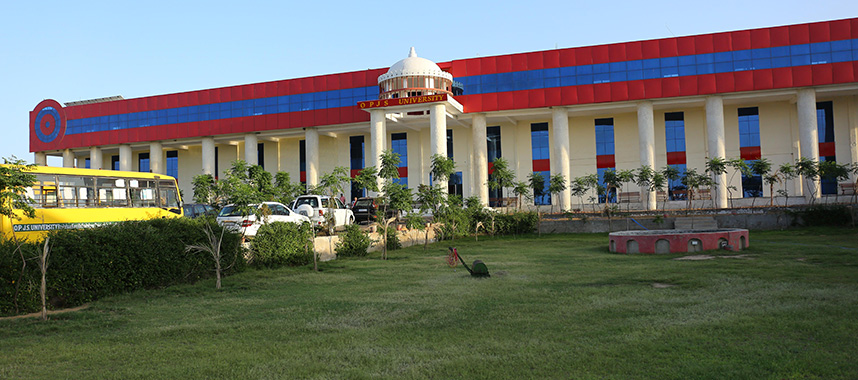
Introduction about Ph.D. in Materials and Devices at OPJS University
The Ph.D. in Materials and Devices offered by OPJS University stands as a beacon for innovators seeking to shape the future of nanotechnology, semiconductor engineering, and smart material systems. Designed for professionals with a profound curiosity for material science, this programme blends rigorous research methodology with cutting‑edge laboratory exposure, empowering scholars to transform scientific insights into tangible, market‑ready technologies.
Whether you aim to lead R&D divisions, drive sustainable product development, or secure a tenure‑track faculty position, OPJS University provides an ecosystem rich in mentorship, state‑of‑the‑art facilities, and collaborative industry linkages. The curriculum is continuously updated to reflect global trends such as flexible electronics, energy‑harvesting devices, and biomaterials, ensuring that graduates remain at the forefront of innovation.
Eligibility Criteria for Ph.D. in Materials and Devices at OPJS University
Candidates must possess a relevant Master's degree (M.Sc., M.Tech., M.Pharm.) with a minimum aggregate of 55% (or equivalent CGPA). Applicants should have a background in physics, chemistry, metallurgical engineering, or related disciplines. A valid GATE/NET score in a pertinent subject is highly advantageous, though not mandatory if the candidate demonstrates exceptional research potential through publications or prior project experience.
Entrance Exam for Ph.D. in Materials and Devices at OPJS University
OPJS University conducts its own entrance examination, comprising:
- Written Test (60 marks): Objective and descriptive questions covering advanced material characterization, device physics, and research methodology.
- Interview (30 marks): Evaluation of research vision, analytical skills, and alignment with faculty expertise.
Fee Structure for Ph.D. in Materials and Devices at OPJS University
| Component | Amount (INR) | Notes |
|---|---|---|
| Admission Application Fee | 2,500 | One‑time, non‑refundable |
| Annual Tuition & Lab Charges | 45,000 | Includes access to nanofabrication labs |
| Research Material & Consumables | 15,000 | Estimated per annum, varies by project |
| Annual Hostel & Mess (Optional) | 30,000 | On‑campus accommodation |
| Total Approx. per Year | 92,500 |
The programme typically spans 3–4 years. Financial aid, scholarships, and research grants can significantly offset costs, especially for candidates with a strong publication record.
Admission Process for Ph.D. in Materials and Devices at OPJS University
The streamlined admission workflow is as follows:
- Online Application: Fill the web‑based form and upload academic transcripts, a detailed CV, and a research proposal (1,000‑1,500 words).
- Document Verification: The admissions office validates credentials and issues a provisional ID.
- Entrance Examination & Interview: Appear for the university test or submit qualifying national scores; attend a faculty interview.
- Final Selection: Successful candidates receive an offer letter with enrolment instructions.
- Registration & Fee Payment: Complete the registration formalities and remit fees through the university portal.
Ph.D. Subjects and Specializations in Materials and Devices at OPJS University
The doctoral programme offers a spectrum of specializations, including:
- Nanomaterials & Nanocomposites
- Semiconductor Device Engineering
- Energy Storage & Conversion Materials
- Biomaterials for Medical Devices
- Smart & Flexible Electronics
- Advanced Characterization Techniques
Research Areas in Materials and Devices at OPJS University
OPJS University is renowned for its interdisciplinary research clusters. Prominent areas include:
- 2‑D Materials (Graphene, MoS₂) for high‑frequency devices
- Perovskite solar cells and stability engineering
- Wearable sensor platforms based on conductive polymers
- Thermoelectric materials for waste‑heat recovery
- Bio‑compatible implantable electronics
- Additive manufacturing of functional composites
Documents Required for Ph.D. in Materials and Devices at OPJS University
| Document | Format | Remarks |
|---|---|---|
| Academic Transcripts (Graduation & Post‑Graduation) | PDF (Scanned) | Must be attested |
| Mark Sheets | Original copies to be shown on campus | |
| Curriculum Vitae | Include publications and patents | |
| Research Proposal | Maximum 1,500 words | |
| Proof of Identity (Aadhar/Passport) | Government‑issued | |
| Entrance Exam Scorecard (if applicable) | GATE/NET/UGC NET |
OPJS University Ph.D. Syllabus for Materials and Devices
The syllabus is structured into three phases:
- Core Coursework (Year 1): Advanced Materials Thermodynamics, Device Physics, Research Methodology, and Ethics in Science.
- Laboratory & Project Work (Year 2): Hands‑on training in electron microscopy, thin‑film deposition, and device fabrication.
- Thesis & Publication (Years 3‑4): Original research, manuscript preparation, and defense.
How To Apply for Ph.D. in Materials and Devices at OPJS University
Follow these steps to submit a successful application:
- Visit the official OPJS University Ph.D. portal and click “Apply Now”.
- Create an account using a valid email address.
- Complete the online form, upload the required documents, and pay the non‑refundable application fee.
- Submit the research proposal and wait for an acknowledgment email.
- Prepare for the entrance test or arrange for submission of your national exam scores.
- Attend the interview scheduled by the department.
- Upon selection, sign the admission agreement and remit the first year’s fee.
Career Scope and Job Opportunities After Ph.D. in Materials and Devices from OPJS University
Graduates enjoy a broad spectrum of career paths:
- R&D Scientist in semiconductor fabs, renewable‑energy firms, or materials startups.
- Principal Investigator leading funded projects in national labs or research institutes.
- Professor / Lecturer at universities and technical institutes.
- Technology Consultant for venture‑capital backed innovators.
- Patent Analyst / IP Specialist within corporate legal teams.
Scholarship for Ph.D. in Materials and Devices at OPJS University
OPJS University offers merit‑based scholarships covering up to 80% of tuition fees for candidates with a CGPA above 8.0 or those who have cleared national qualifying exams with top ranks. Additionally, industry‑sponsored fellowships, government research grants (e.g., DST‑SERB), and the university’s own “Innovation in Materials” award provide financial support and stipends.
FAQs Regarding Ph.D. in Materials and Devices at OPJS University
- What is the minimum duration of the Ph.D. programme?
- The minimum duration is three years, provided the candidate fulfills publication and coursework requirements. Extensions up to one year are granted on a case‑by‑case basis.
- Can I pursue the Ph.D. part‑time while working?
- Yes. OPJS University offers a flexible part‑time option for working professionals, with evening lab access and








