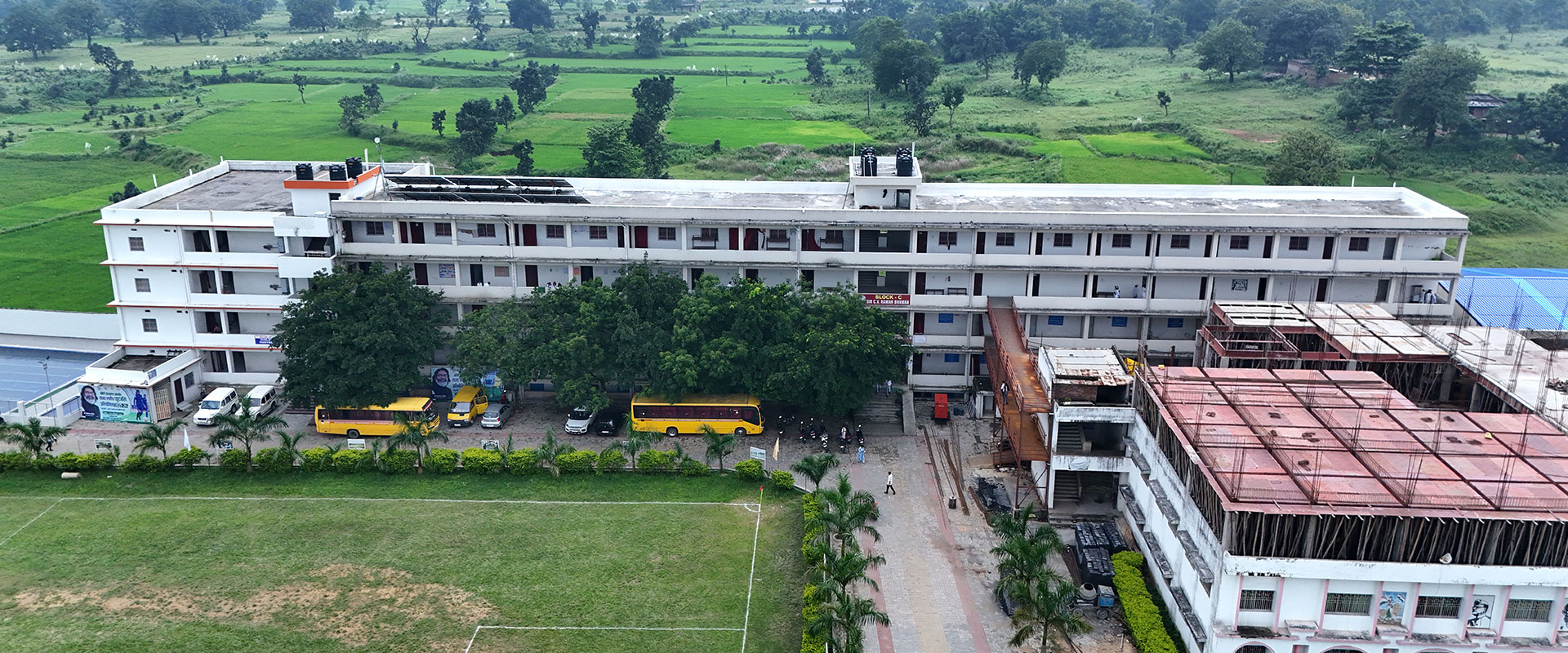
Ph.D. in Materials and Devices from Radha Govind University
Introduction about Ph.D. in Materials and Devices at Radha Govind University
Embarking on a Doctor of Philosophy in Materials and Devices at Radha Govind University means joining a legacy of cutting‑edge research, interdisciplinary collaboration, and industry‑driven innovation. This program is meticulously designed for professionals who aspire to shape the future of nanotechnology, semiconductor engineering, smart materials, and advanced device fabrication. Leveraging state‑of‑the‑art laboratories, world‑class faculty, and strategic partnerships with leading corporations, the Ph.D. cultivates thought leaders equipped to drive sustainable technological breakthroughs.
Eligibility Criteria for Ph.D. in Materials and Devices at Radha Govind University
Prospective candidates must satisfy the following minimum qualifications:
- Master’s degree (M.Sc./M.Tech.) in Materials Science, Electronics, Physics, Chemistry, or a closely related discipline with a minimum aggregate of 55% (or 5.0 CGPA).
- GATE/NET score in a relevant subject is highly preferred, though not mandatory.
- For candidates holding a B.E./B.Tech. with a minimum of 60% and a research-oriented background, direct entry to Ph.D. may be considered after an interview.
- English language proficiency (IELTS/TOEFL) for international applicants.
Professional experience in R&D, semiconductor manufacturing, or material characterization can strengthen the application and may be considered during the admission interview.
Entrance Exam for Ph.D. in Materials and Devices at Radha Govind University
Radha Govind University conducts its own entrance examination, the RGU Ph.D. Entrance Test (RGU‑PET). The test evaluates:
- Fundamental concepts in Materials Science and Device Physics.
- Analytical and problem‑solving abilities.
- Research aptitude through a written proposal abstract.
The exam pattern includes:
- Section A – Multiple Choice Questions (50 marks).
- Section B – Short Answer Questions (30 marks).
- Section C – Research Proposal Summary (20 marks).
Candidates who have secured qualifying scores in GATE, UGC NET, or CSIR‑NET are exempted from the written test and are invited directly for a personal interview and proposal evaluation.
Fee Structure for Ph.D. in Materials and Devices at Radha Govind University
| Component | Annual Fee (INR) | Notes |
|---|---|---|
| Tuition & Laboratory Charges | 85,000 | Includes access to nanofabrication lab, microscopy suite, and material testing facilities. |
| Research Project Grant (mandatory) | 30,000 | Allocated for consumables, software licenses, and field trips. |
| Library & Digital Resources | 5,000 | Unlimited access to IEEE Xplore, ScienceDirect, and proprietary databases. |
| Administration & Examination Fees | 7,500 | Covers registration, counseling, and assessment costs. |
| Total Approximate Annual Cost | 127,500 | Subject to revision each academic year. |
Scholarships, fellowships, and industry‑sponsored projects can significantly offset these fees. Candidates are encouraged to explore the Thesis and Dissertation Writing Services for additional financial support options.
Admission Process for Ph.D. in Materials and Devices at Radna Govind University
The admission journey follows a transparent, step‑by‑step workflow:
- Online Application: Fill out the official RGU portal, upload academic transcripts, and submit a concise research proposal (max 1500 words).
- Document Verification: The university’s admissions office validates certificates, degree authenticity, and eligibility.
- Entrance Examination / Interview: Appear for RGU‑PET or attend a personal interview if exempted.
- Selection Committee Review: A panel of senior faculty evaluates academic merit, research potential, and alignment with departmental priorities.
- Offer Letter & Fee Payment: Successful candidates receive a provisional offer, followed by payment of the first year’s fee.
- Enrollment & Induction: Students join the orientation programme, meet supervisors, and commence lab assignments.
The entire process typically spans 6–8 weeks from application submission to enrollment.
Ph.D. Subjects and Specializations in Materials and Devices at Radha Govind University
Candidates may tailor their doctoral research across a spectrum of specialized domains, including:
- Advanced Nanomaterials and Nanocomposites
- Semiconductor Device Engineering
- Smart and Adaptive Materials
- Energy Harvesting Devices (Solar Cells, Thermoelectrics)
- Biomedical Implantable Sensors
- Flexible Electronics and Wearable Tech
- Materials for Quantum Computing
Each specialization is supported by dedicated faculty mentors, industry collaborations, and access to high‑resolution instrumentation.
Research Areas in Materials and Devices at Radha Govind University
The university’s research portfolio aligns with global technology trends and national priorities. Prominent research clusters include:
- 2D Materials & Heterostructures
- Exploring graphene, MoS₂, and transition‑metal dichalcogenides for next‑generation transistors.
- Solar Photovoltaics & Perovskite Devices
- Designing high‑efficiency, low‑cost solar cells with enhanced stability.
- Additive Manufacturing of Functional Materials
- Integrating 3‑D printing with conductive inks for rapid prototyping of electronic components.
- Materials for Sustainable Energy Storage
- Developing lithium‑sulfur and solid‑state battery technologies.
- Bio‑compatible Sensors & Actuators
- Creating implantable devices for real‑time health monitoring.
Students are encouraged to partner with industry leaders such as Tata Steel, Samsung, and ISRO through joint research projects.
Documents Required for Ph.D. in Materials and Devices at Radha Govind University
| Document | Details / Format |
|---|---|
| Application Form (online) | Completed via the university portal, PDF receipt after submission. |
| Academic Transcripts | Certified copies of B.Sc./M.Sc. (or B.E./M.Tech.) marksheets. |
| Degree Certificates | Original and notarized copies. |
| Research Proposal | Maximum 1500 words, outlining objectives, methodology, and expected impact. |
| GATE/NET Scorecard (if applicable) | Official score report; optional but advantageous. |
| Letter of Recommendation (2) | From academic supervisors or industry mentors. |
| Curriculum Vitae (CV) | Professional format highlighting research experience, publications, and patents. |
| Identity Proof | Aadhaar card, passport, or driver's license. |
| Passport‑size Photograph | White background, 2 copies. |
Radha Govind University Ph.D. Syllabus for Materials and Devices
The syllabus is structured into three progressive phases, each designed to deepen theoretical knowledge and enhance experimental competence.
Phase I – Core Foundations (Year 1)
- Advanced Materials Characterization Techniques
- Quantum Mechanics for Materials Scientists
- Device Physics and Modeling
- Statistical Methods and Data Analysis (includes Research Data Analysis Services)
Phase II – Specialized Electives (Year 2)
- Nanofabrication & Lithography
- Energy Materials & Devices
- Biomedical Sensors and Actuators
- Intelligent Materials and Soft Robotics
Phase III – Research & Dissertation (Year 3‑5)
- Original Research Project under a faculty supervisor.
- Publication of at least two peer‑reviewed journal articles.
- Presentation at national/international conferences.
- Thesis writing and defense (supported by Research Paper Writing Services).
How To Apply for Ph.D. in Materials and Devices at Radha Govind University
Follow these simple steps to submit a successful application:
- Visit the official Radha Govind University Admissions Portal and create a user account.
- Fill in personal details, academic history, and upload scanned copies of required documents.</








