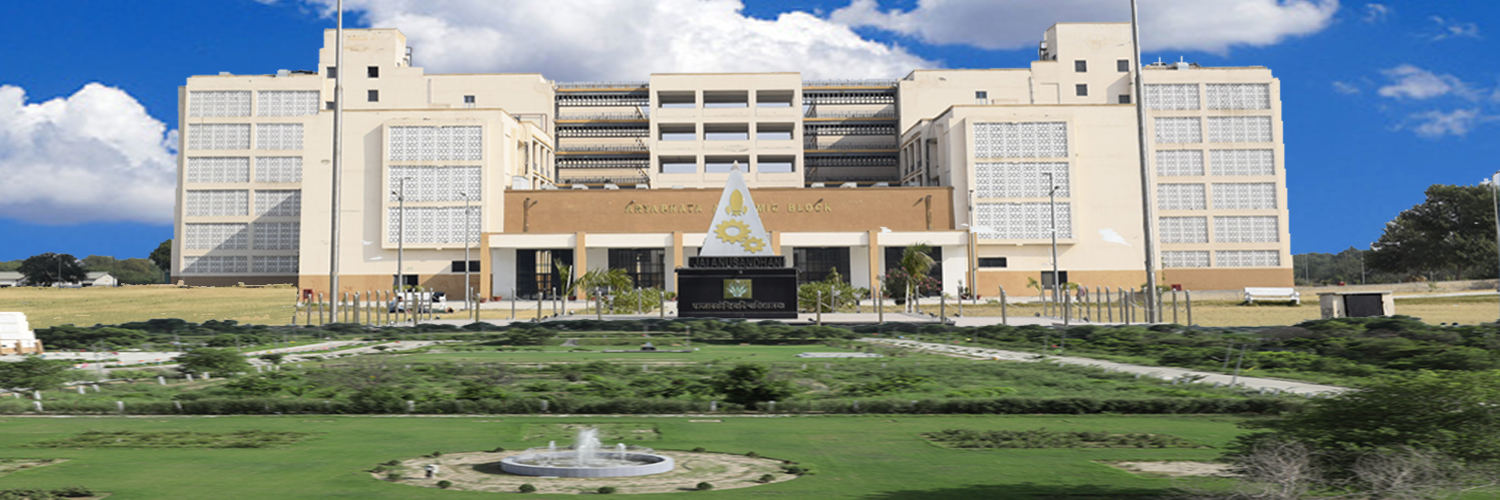
Ph.D. in Mathematics from Central University of Punjab: Eligibility, Entrance Exam, Fee Structure, Admission Process, Subjects, Research Areas, Syllabus, Scholarship & Career Scope
Introduction about Ph.D. in Mathematics at Central University of Punjab
The Central University of Punjab (CUP) stands as a beacon of academic excellence in North India, offering a rigorous Ph.D. in Mathematics that blends deep theoretical foundations with cutting‑edge research. Designed for professionals and scholars who aspire to push the boundaries of mathematical knowledge, the programme cultivates analytical precision, problem‑solving acumen, and innovative thinking. With state‑of‑the‑art laboratories, interdisciplinary collaborations, and mentorship from internationally recognised faculty, candidates are empowered to contribute to fields ranging from pure mathematics to data science.
Whether your goal is to become a university professor, a research scientist in a leading institute, or a senior analyst in industry, a doctorate from CUP equips you with the credibility and expertise demanded by today’s knowledge‑driven economy. The journey is challenging yet rewarding, encouraging you to transform curiosity into scholarly impact.
Ph.D Admission 2026-2027 & Writing Support Services by Shiksha Research
Eligibility Criteria for Ph.D. in Mathematics at Central University of Punjab
Prospective candidates must meet the following minimum qualifications:
- Hold a Master’s degree (M.Sc.) in Mathematics or a closely related discipline with at least 55% aggregate marks (50% for reserved categories).
- Alternatively, a Bachelor’s degree (B.Sc.) with a minimum of 55% and a valid NET/JRF qualification in Mathematics.
- Applicants with a professional degree (e.g., B.Tech/M.Tech) who have completed a minimum of 60% in the qualifying mathematics subjects are also considered.
- Applicants must demonstrate proficiency in English, either through prior academic exposure or standardized tests like TOEFL/IELTS for international students.
Entrance Exam for Ph.D. in Mathematics at Central University of Punjab
The admission process includes a two‑stage evaluation:
- Written Test: A comprehensive 2‑hour paper covering advanced calculus, algebra, real analysis, and applied mathematics. The test evaluates conceptual clarity and problem‑solving speed.
- Interview & Presentation: Shortlisted candidates present a research proposal and engage in a viva‑voce to assess research aptitude, motivation, and alignment with faculty expertise.
Candidates who hold a valid score in national level exams such as UGC‑NET, CSIR‑UGC NET, or GATE in Mathematics are exempted from the written test and directly invited for the interview.
Fee Structure for Ph.D. in Mathematics at Central University of Punjab
| Category | Annual Fee (INR) | Frequency |
|---|---|---|
| Tuition Fee | 40,000 | Per Year |
| Laboratory & Resource Fee | 12,000 | Per Year |
| Registration & Examination Fee | 8,000 | One‑time |
| Hostel & Mess (Optional) | 45,000 | Per Year |
| Total Approximate Cost | 1,00,000 – 1,20,000 | For 3‑Year Programme |
Financial assistance is available through university scholarships, government fellowships, and project‑based stipends. Detailed eligibility for each aid scheme is outlined in the scholarship section.
Admission Process for Ph.D. in Mathematics at Central University of Punjab
The streamlined admission workflow comprises the following steps:
- Online Application: Fill the registration form on the official CUP portal, upload academic transcripts, a detailed CV, and a research proposal (maximum 1500 words).
- Document Verification: The admissions office validates the uploaded documents and issues a provisional ID.
- Entrance Evaluation: Appear for the written test (unless exempted) and attend the interview.
- Selection & Offer Letter: Successful candidates receive an admission offer specifying the start date, fee details, and scholarship eligibility.
- Enrollment: Pay the initial fee, complete the registration formalities, and begin coursework and research activities.
Ph.D. Subjects and Specializations in Mathematics at Central University of Punjab
CUP offers a flexible curriculum that allows candidates to specialize in one or more of the following domains:
- Algebraic Geometry
- Number Theory
- Functional Analysis
- Applied Mathematics & Computational Modelling
- Probability Theory & Stochastic Processes
- Mathematical Physics
- Data Science & Machine Learning Mathematics
Students are encouraged to tailor their research focus to emerging interdisciplinary fields, ensuring relevance in both academia and industry.
Research Areas in Mathematics at Central University of Punjab
The university’s research ecosystem promotes investigation in cutting‑edge topics such as:
- Cryptographic Algorithms and Number Theoretic Security
- Topological Data Analysis
- Non‑linear Dynamical Systems
- Quantum Computing Mathematics
- Optimization Techniques for Large‑Scale Networks
- Mathematical Modelling of Epidemic Spread
- Advanced Numerical Methods for Partial Differential Equations
Faculty members actively collaborate with national labs, industry partners, and international research centres, providing Ph.D. scholars with exposure to real‑world challenges. For comprehensive research support, candidates can also avail of Research Paper Writing Services to polish manuscript submissions.
Documents Required for Ph.D. in Mathematics at Central University of Punjab
| Document | Purpose |
|---|---|
| Academic Transcripts (M.Sc./B.Sc.) | Proof of eligibility and marks |
| NET/JRF Score Card (if applicable) | Exemption from written test |
| Research Proposal | Demonstrates research intent and alignment |
| Curriculum Vitae | Highlights academic and professional background |
| Letter of Recommendation (2) | Endorses scholarly potential |
| Proof of Identity (Aadhaar/Passport) | Verification of personal details |
| English Proficiency Certificate (if required) | Ensures language competency for international candidates |
Central University of Punjab Ph.D. Syllabus for Mathematics
The doctoral syllabus is structured into three progressive phases:
- Coursework (Year 1): Core modules such as Advanced Real Analysis, Abstract Algebra, Differential Geometry, and Computational Mathematics. Each course carries 4 credits and includes a written examination.
- Comprehensive Examination (End of Year 1): Evaluates mastery of the foundational topics through a written test and oral defense.
- Research & Thesis (Years 2‑3): Independent research under a supervising faculty member, culminating in a dissertation that must be defended before a panel of experts.
Students may also enroll in elective workshops on topics like scientific writing, data analytics, and academic publishing. For assistance in structuring and presenting research findings, Thesis and Dissertation Writing Services are frequently recommended.
How To Apply for Ph.D. in Mathematics at Central University of Punjab
Follow the step‑by‑step guide below to submit a successful application:
- Visit the official CUP admissions portal and register with a valid email address.
- Complete the online application form, ensuring accurate entry of personal and academic details.
- Upload scanned copies of all required documents (see the documents table).
- Pay the non‑refundable application fee of INR 2,500 via net banking or credit card.
- Submit the research proposal and, if applicable, your NET/JRF scorecard.
- Keep a copy of the confirmation email; it contains the provisional registration number.
- Prepare for the written test (if required) and schedule the interview through the portal.
- After selection, log in to the student portal to upload fee payment receipts and finalize enrollment.
For data‑driven research projects, many candidates benefit from Research Data Analysis Services to handle large datasets efficiently.
Career Scope and Job Opportunities After Ph.D. in Mathematics from Central University of Punjab
A doctorate in Mathematics from CUP opens doors to a spectrum of high‑impact careers:
- Academia: Lecturer, Assistant Professor, Associate Professor, or Dean in universities and colleges worldwide.
- Research Institutes: Senior Scientist roles at CSIR, ISRO, DRDO, and international research laboratories.
- Finance & Banking: Quantitative Analyst, Risk Modeller, and Portfolio Manager in investment banks and hedge funds.
- Technology & IT: Machine Learning Engineer, Algorithm Designer, and Data Scientist in leading tech firms.
- Government & Public Policy: Statistical Analyst for ministries, policy advisor for scientific committees.
- Consultancy: Independent consultant for








