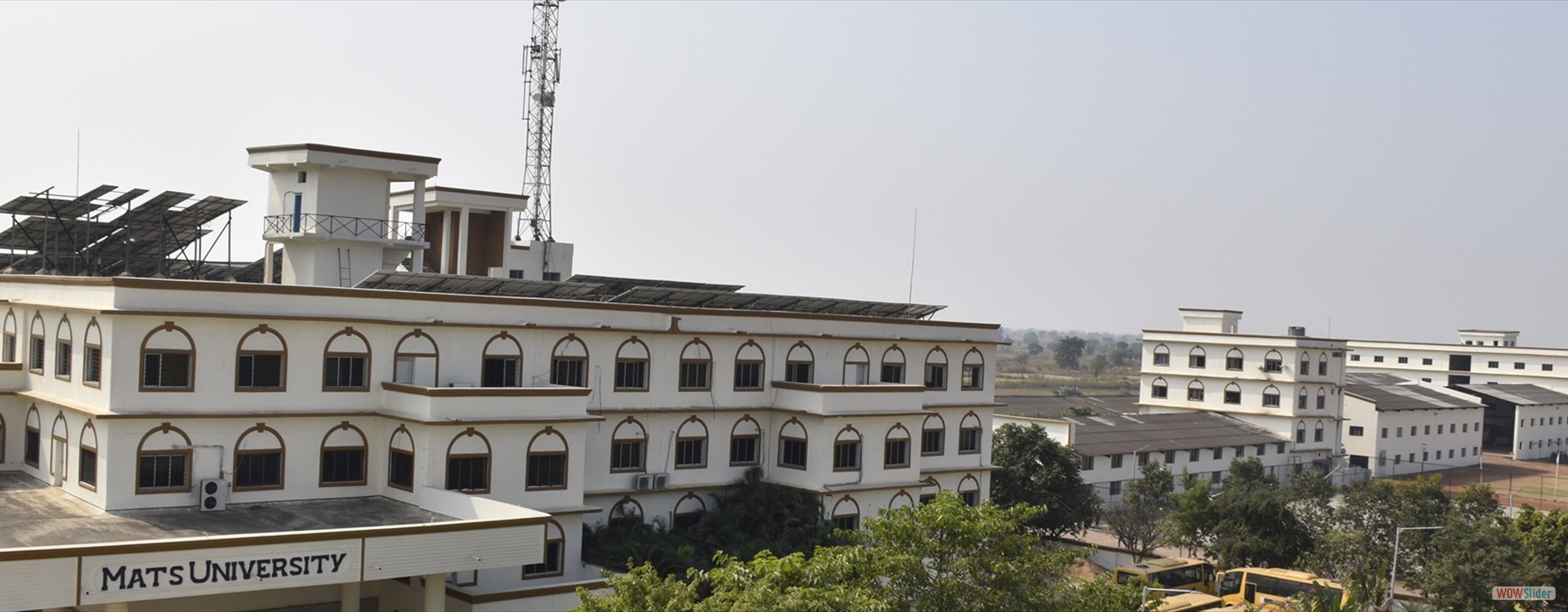
Introduction about Ph.D. in Mechanical and Automation Engineering at MATS University
The Doctor of Philosophy (Ph.D.) in Mechanical and Automation Engineering at MATS University is a premier research‑focused program designed for seasoned engineers, innovators, and academicians. This rigorous curriculum blends advanced theoretical concepts with cutting‑edge laboratory work, empowering scholars to push the boundaries of automation, robotics, thermodynamics, and sustainable manufacturing. Graduates emerge as thought leaders, ready to transform industry standards and drive technological breakthroughs on a global scale.
Eligibility Criteria for Ph.D. in Mechanical and Automation Engineering at MATS University
- A master's degree (M.Tech / MS) in Mechanical Engineering, Automation Engineering, Mechatronics, Robotics, or a closely related discipline with a minimum CGPA of 6.5/10 (or equivalent grade).
- For candidates holding a B.E./B.Tech, a minimum of 55% aggregate and at least three years of relevant research or professional experience is required.
- Clearance of the university‑approved entrance examination (or a recognized national test such as GATE) with a qualifying score.
- Proficiency in English – TOEFL/IELTS scores are mandatory for international applicants.
- Eligibility for research funding or scholarships, where applicable.
Entrance Exam for Ph.D. in Mechanical and Automation Engineering at MATS University
MATS University conducts its own entrance test, the MATS Ph.D. Entrance Exam (MPEE), which evaluates:
- Core Mechanical Engineering concepts (thermodynamics, fluid mechanics, material science).
- Advanced Automation and Control Theory.
- Analytical and problem‑solving abilities through quantitative sections.
- Research aptitude via a statement of purpose and a brief proposal abstract.
Applicants who have secured qualifying scores in GATE (Mechanical Engineering) are exempted from MPEE but must submit their official scorecard.
Fee Structure for Ph.D. in Mechanical and Automation Engineering at MATS University
| Component | Domestic Students (INR) | International Students (USD) |
|---|---|---|
| Application Processing Fee | 2,000 | 150 |
| Annual Tuition Fee | 45,000 | 3,200 |
| Laboratory & Equipment Charge | 10,000 | 700 |
| Research Publication & Conference Support | 5,000 | 350 |
| Miscellaneous (Library, Internet, etc.) | 3,000 | 210 |
| Total (Estimated per annum) | 65,000 | 4,610 |
Students may be eligible for fee waivers or scholarships based on academic merit, research contributions, or industry sponsorship.
Admission Process for Ph.D. in Mechanical and Automation Engineering at MATS University
- Online Application: Submit the digital application form along with scanned copies of academic transcripts, research proposal, and passport‑size photograph.
- Entrance Examination: Appear for MPEE or upload verified GATE scores.
- Interview & Proposal Review: Shortlisted candidates are invited for a virtual interview with the departmental panel; the research proposal is evaluated for originality and feasibility.
- Document Verification: Accepted candidates must present original certificates during the campus verification day.
- Admission Confirmation: Upon successful verification, a formal offer letter and payment invoice are issued.
Ph.D. Subjects and Specializations in Mechanical and Automation Engineering at MATS University
Students can tailor their doctoral research to one of the following emerging domains:
- Robotics and Intelligent Systems
- Advanced Manufacturing & Additive Processes
- Computational Fluid Dynamics (CFD) and Heat Transfer
- Smart Materials and Nanostructures
- Control Systems and Cyber‑Physical Integration
- Renewable Energy Systems and Sustainable Design
- Industrial Automation and IoT‑enabled Production
Research Areas in Mechanical and Automation Engineering at MATS University
The university’s state‑of‑the‑art facilities support interdisciplinary research across a spectrum of topics, including but not limited to:
- Autonomous Vehicles
- Development of sensor fusion algorithms, actuation mechanisms, and safety protocols.
- Biomechanical Engineering
- Design of prosthetic devices and exoskeletons for medical rehabilitation.
- Energy Harvesting
- Optimization of thermoelectric and piezoelectric systems for waste‑heat conversion.
- Digital Twins & Simulation
- Real‑time virtual modeling of manufacturing lines for predictive maintenance.
- Advanced Robotics
- Human‑robot interaction, collaborative robots (cobots), and tactile sensing.
- Smart Manufacturing
- Integration of AI, machine learning, and big data analytics into production workflows.
Documents Required for Ph.D. in Mechanical and Automation Engineering at MATS University
| Document | Format | Remarks |
|---|---|---|
| Academic Transcripts (M.Tech/ MS) | PDF, scanned | Authenticated by the issuing university. |
| Certificate of Eligibility (GATE/ GRE) | Required only if GATE score is used. | |
| Research Proposal (2,000‑3,000 words) | DOCX or PDF | Should outline objectives, methodology, and expected outcomes. |
| Statement of Purpose | Focus on career goals and alignment with MATS research labs. | |
| Letter of Recommendation (2) | From academic supervisors or industry mentors. | |
| English Proficiency Test Score (if applicable) | TOEFL/IELTS for non‑native speakers. |
MATS University Ph.D. Syllabus for Mechanical and Automation Engineering
The syllabus is structured across three phases, each building a strong foundation for independent research:
- Core Coursework (Year 1): Advanced Thermodynamics, Control Theory, Robotics, Finite Element Analysis, and Research Methodology.
- Comprehensive Exams (End of Year 1): Written and oral assessments covering core subjects.
- Research & Thesis (Years 2‑4): Original research, publications in peer‑reviewed journals, conference presentations, and submission of the doctoral thesis.
How To Apply for Ph.D. in Mechanical and Automation Engineering at MATS University
Follow these step‑by‑step instructions to secure your place in the program:
- Visit the official MATS University Ph.D. portal and create a user account.
- Complete the online application form, ensuring all mandatory fields are filled accurately.
- Upload the required documents listed in the Documents Required section.
- Pay the non‑refundable application fee through the integrated payment gateway.
- Schedule your entrance examination date or submit your GATE scorecard.
- After the entrance test, monitor your email for interview invites and further instructions.
- Upon successful admission, finalize your enrollment by submitting the fee payment receipt and signing the enrollment agreement.
Career Scope and Job Opportunities After Ph.D. in Mechanical and Automation Engineering from MATS University
Graduates of the Ph.D. program are highly sought after in both academia and industry. Typical career pathways include:
- Assistant/Associate Professor at leading engineering schools.
- R&D Lead in automotive, aerospace, or renewable energy firms.
- Chief Technology Officer (CTO) for startups focusing on robotics and IoT.
- Senior Consultant for global consulting firms specializing in manufacturing optimization.
- Principal Investigator for government‑funded research projects and collaborative industry labs.
According to recent industry surveys, Ph.D. holders in Mechanical and Automation Engineering command an average salary increase of 30‑45% over their master’s‑level peers.
Scholarship for Ph.D. in Mechanical and Automation Engineering at MATS University
MATS University offers a range of merit‑based and need‑based scholarships to support doctoral candidates:
- University Excellence Fellowship: Covers 100% tuition and provides a monthly stipend of INR 20,000.
- Industry Sponsored Research Grant: Collaborative projects with leading firms, offering project‑based funding and access to proprietary labs.
- National Doctoral Scholarship (NDS): Government‑backed award for high‑achieving researchers.
- Women in Engineering Grant: Dedicated to promoting gender diversity in advanced engineering research.
Applicants are encouraged to explore these opportunities early, as many scholarships have separate application deadlines.
FAQs Regarding Ph.D. in Mechanical and Automation Engineering at MATS University
- Q: Can I pursue the Ph.D. part‑time while working?
- A: Yes. MATS University offers a flexible part‑time track with evening lab access and extended thesis submission timelines.
- Q: Is there a provision for industry‑








