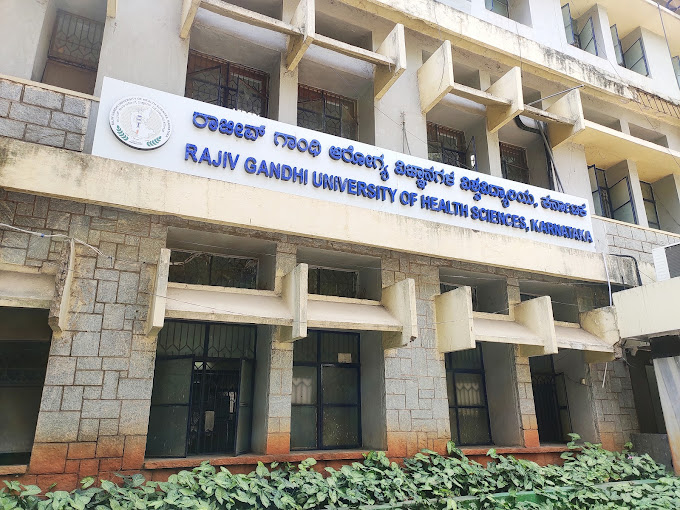
Ph.D. in Medical Anatomy from Rajiv Gandhi University of Health Sciences
Introduction about Ph.D. in Medical Anatomy at Rajiv Gandhi University of Health Sciences
The pursuit of a Doctorate in Medical Anatomy at Rajiv Gandhi University of Health Sciences (RGUHS) opens a gateway to advanced research, academic leadership, and specialized clinical expertise. This program is meticulously designed for professionals who aspire to explore the intricate structures of the human body, contribute to groundbreaking discoveries, and influence medical education at a global level. Whether you are a practicing anatomist, a biomedical researcher, or a healthcare educator, the Ph.D. in Medical Anatomy equips you with rigorous scientific methodology, cutting‑edge laboratory techniques, and a strong foundation in translational anatomy.
RGUHS, a premier health‑science university in Karnataka, boasts state‑of‑the‑art facilities, a distinguished faculty, and collaborative ties with leading hospitals and research institutes. The doctorate emphasizes interdisciplinary integration, enabling scholars to intersect anatomy with fields such as radiology, forensic science, developmental biology, and regenerative medicine.
Ph.D Admission 2026-2027 & Writing Support Services by Shiksha Research
Eligibility Criteria for Ph.D. in Medical Anatomy at Rajiv Gandhi University of Health Sciences
- Master’s degree (M.Sc., M.D., M.B.B.S., or equivalent) in Anatomy, Biomedical Sciences, or a related discipline with a minimum of 55% aggregate (or equivalent CGPA).
- Candidates who have cleared the National Eligibility Test (NET) in Life Sciences, or an equivalent university‑level test, are exempted from the university entrance exam.
- GATE/UGC‑CSIR qualified candidates may also apply, provided they meet the minimum academic requirements.
- Professional experience of at least two years in teaching, research, or clinical practice is preferred but not mandatory.
- English language proficiency (IELTS/TOEFL) for international candidates, with a minimum overall score of 6.0 (IELTS) or 80 (TOEFL).
Entrance Exam for Ph.D. in Medical Anatomy at Rajiv Gandhi University of Health Sciences
RGUHS conducts a comprehensive entrance test that evaluates both theoretical knowledge and research aptitude. The exam consists of three sections:
- Theory (50 marks): Questions cover human anatomy, histology, embryology, and clinical correlations.
- Research Methodology (30 marks): Items assess understanding of experimental design, statistics, and scientific writing.
- Viva‑Voce (20 marks): A short interview panel evaluates the candidate’s motivation, proposed research topic, and communication skills.
Candidates who have cleared NET/UGC‑CSIR are exempt from the Theory section but must attend the interview. The application deadline for the entrance exam typically falls in the first week of June, with the test scheduled for early August.
Fee Structure for Ph.D. in Medical Anatomy at Rajiv Gandhi University of Health Sciences
| Fee Component | Amount (INR) | Notes |
|---|---|---|
| Admission & Registration Fee | 15,000 | One‑time, payable at the time of enrollment. |
| Annual Tuition Fee | 35,000 | Charged per academic year (minimum 3 years). |
| Lab & Infrastructure Charges | 8,000 | Covers use of dissection labs, microscopy suites, and imaging facilities. |
| Library & E‑Resources Subscription | 5,000 | Access to journals, e‑books, and databases. |
| Miscellaneous (Examination, Certification) | 4,000 | Includes assessment fees and certificate issuance. |
| Total Approximate Cost (3‑Year Program) | 147,000 |
Scholarships, fellowships, and research grants are available to eligible candidates, substantially reducing the financial burden. Detailed eligibility for each financial aid option is provided in the “Scholarship” section below.
Admission Process for Ph.D. in Medical Anatomy at Rajiv Gandhi University of Health Sciences
- Online Application: Submit the application through the university’s portal, uploading academic transcripts, a research proposal (max 1500 words), and a statement of purpose.
- Payment of Application Fee: INR 2,500 (non‑refundable).
- Document Verification: The admissions office verifies certificates and clears any discrepancies.
- Entrance Examination: Appear for the written test (or get exemption based on NET/UGC‑CSIR).
- Interview & Viva‑Voce: Shortlisted candidates attend an interview with the Departmental Panel.
- Final Selection: Merit list released; selected candidates receive an admission offer letter.
- Enrollment: Pay the admission fee, submit the signed declaration form, and complete registration.
Ph.D. Subjects and Specializations in Medical Anatomy at Rajiv Gandhi University of Health Sciences
The doctoral program offers a broad spectrum of specializations, allowing candidates to tailor their research to personal interests and industry demand:
- Neuroanatomy and Neuroscience
- Cardiovascular Anatomy and Imaging
- Musculoskeletal System and Orthopedic Research
- Embryology and Developmental Biology
- Forensic Anatomy and Human Identification
- Comparative Anatomy and Evolutionary Studies
- Radiological Anatomy and 3‑D Modeling
- Clinical Anatomy and Surgical Simulation
Research Areas in Medical Anatomy at Rajiv Gandhi University of Health Sciences
RGUHS encourages interdisciplinary collaboration. Current research thrusts include:
- Advanced imaging techniques for anatomical mapping (MRI, CT, PET).
- Stem cell differentiation and tissue engineering for organ regeneration.
- Digital dissection and virtual reality platforms for education.
- Genomic correlates of anatomical variations and congenital anomalies.
- Biomechanical analysis of musculoskeletal disorders.
- Anthropological studies linking anatomy with population genetics.
Documents Required for Ph.D. in Medical Anatomy at Rajiv Gandhi University of Health Sciences
| Document | Purpose |
|---|---|
| Academic Transcripts (M.Sc./M.D.) | Proof of eligibility and minimum percentage. |
| NET/UGC‑CSIR Scorecard (if applicable) | Exemption from written entrance test. |
| Research Proposal | Demonstrates research intent and feasibility. |
| Curriculum Vitae (CV) | Highlights academic and professional background. |
| Letter of Recommendation (2) | Validates scholarly potential. |
| Identity Proof (Aadhaar/Passport) | Mandatory for verification. |
| Passport‑size Photographs (4) | For university records and ID card. |
Rajiv Gandhi University of Health Sciences Ph.D. Syllabus for Medical Anatomy
The syllabus is structured into core modules, elective courses, and research milestones:
- Core Modules (Year 1): Advanced Human Anatomy, Histology & Cytology, Embryology, Research Methodology, Biostatistics.
- Elective Courses (Year 2): Choose two from Neuroanatomy, Forensic Anatomy, Imaging Techniques, Clinical Anatomy, Comparative Anatomy.
- Laboratory Rotations: Practical exposure in dissection labs, imaging suites, and histopathology.
- Seminars & Journal Clubs: Monthly presentations on recent literature.
- Thesis Work (Year 3): Original research, data analysis, manuscript preparation, and defense.
How To Apply for Ph.D. in Medical Anatomy at Rajiv Gandhi University of Health Sciences
Follow these step‑by‑step instructions to submit a successful application:
- Visit the official RGUHS website and navigate to the “Postgraduate Admissions” portal.
- Create a user account and fill in the personal details accurately.
- Upload scanned copies of the required documents (as listed in the Documents section).
- Enter the title and abstract of your research proposal; ensure alignment with faculty expertise.
- Pay the non‑refundable application fee via net banking or credit card.
- Submit the application and note the generated Application ID for future correspondence.
- Monitor the email and portal for updates on eligibility verification, exam schedule, and interview invitation.
Career Scope and Job Opportunities After Ph.D. in Medical Anatomy from Rajiv Gandhi University of Health Sciences
Graduates enjoy a broad spectrum of career pathways, both within academia and industry:
- Academic Positions: Assistant Professor, Associate Professor, Department Head at medical colleges and universities.
- Research Scientist: Roles in national research institutes (ICMR, CSIR), private biotech firms, and pharmaceutical companies.
- Clinical Consultant: Anatomical expertise for radiology departments, surgical planning, and forensic units.








