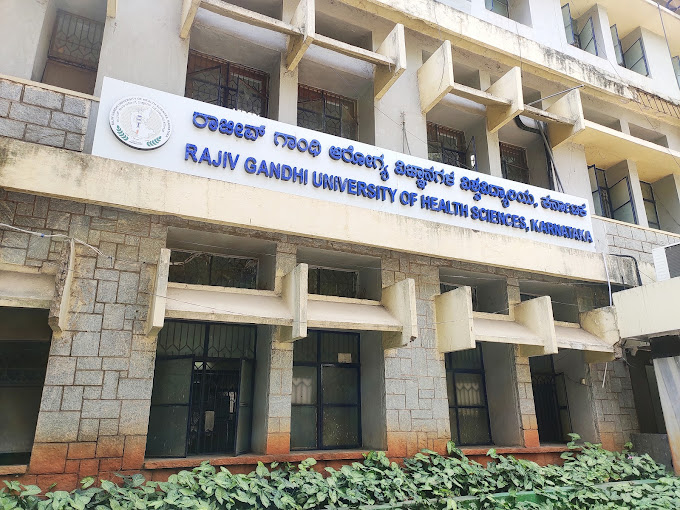
Ph.D. in Medical Gastroenterology from Rajiv Gandhi University of Health Sciences
Introduction about Ph.D. in Medical Gastroenterology at Rajiv Gandhi University of Health Sciences
The Ph.D. in Medical Gastroenterology offered by Rajiv Gandhi University of Health Sciences (RGUHS) is a premier research program designed for clinicians, academicians, and healthcare professionals aspiring to become thought leaders in digestive system diseases. This doctoral program blends rigorous coursework with cutting‑edge laboratory and clinical research, empowering candidates to develop innovative diagnostics, therapeutic strategies, and public health interventions.
Eligibility Criteria for Ph.D. in Medical Gastroenterology at Rajiv Gandhi University of Health Sciences
- Master’s degree (M.D., M.Sc., or equivalent) in Medicine, Surgery, Gastroenterology, or allied health sciences with a minimum of 55% aggregate (or CGPA 6.5/10).
- Candidates who have cleared the UGC NET, CSIR or JRF are exempted from the entrance test.
- Valid GATE score (optional) may be considered for additional credit points.
- Indian nationals and foreign students meeting the above academic standards are welcome.
- Applicants must possess a valid registration with the Medical Council of India (MCI) or respective professional body.
Entrance Exam for Ph.D. in Medical Gastroenterology at Rajiv Gandhi University of Health Sciences
Prospective scholars who have not qualified for UGC NET, CSIR, JRF, or GATE must appear for the RGUHS Ph.D. entrance examination. The test comprises two stages:
- Written Examination – 100 multiple‑choice questions covering basic sciences, clinical gastroenterology, research methodology, and biostatistics.
- Interview & Presentation – Candidates present a research proposal and undergo a viva‑voce with the department faculty.
The selection is merit‑based, emphasizing both academic knowledge and research potential.
Fee Structure for Ph.D. in Medical Gastroenterology at Rajiv Gandhi University of Health Sciences
| Component | Annual Fee (INR) | Notes |
|---|---|---|
| Tuition & Lab Charges | 45,000 | Includes access to hospital labs and research facilities. |
| Registration & Examination Fee | 10,000 | One‑time fee payable at admission. |
| Library & Digital Resources | 5,000 | Provides unlimited access to e‑journals and databases. |
| Miscellaneous (Workshops, Seminars) | 3,000 | Optional but highly recommended for skill enhancement. |
| Total Approximate Cost | 63,000 | Subject to annual revisions by the university. |
Admission Process for Ph.D. in Medical Gastroenterology at Rajiv Gandhi University of Health Sciences
Admission to the doctoral program follows a systematic, transparent process:
- Online Application – Submit the application form through the university portal along with scanned copies of academic certificates.
- Document Verification – The admission office verifies eligibility, marksheets, and professional registrations.
- Entrance Examination – Eligible candidates appear for the written test (or submit UGC NET/CSIR scores).
- Interview & Proposal Review – Shortlisted candidates present a detailed research proposal and attend a faculty interview.
- Final Selection & Offer Letter – Successful candidates receive an official admission letter and enrollment instructions.
- Orientation – A mandatory orientation session introduces students to lab safety, ethical guidelines, and research resources.
For personalized guidance, many aspirants benefit from PhD Admission Assistance services that streamline the application journey.
Ph.D. Subjects and Specializations in Medical Gastroenterology at Rajiv Gandhi University of Health Sciences
The program offers a range of specialized research streams, enabling candidates to focus on sub‑domains that align with their career aspirations:
- Clinical Gastroenterology & Hepatology
- Endoscopic Techniques and Therapeutics
- Functional GI Disorders
- Inflammatory Bowel Disease (IBD) Pathogenesis
- Digestive Oncology and Molecular Diagnostics
- Nutrition, Metabolism, and Gut Microbiome
- Public Health and Epidemiology of Gastrointestinal Diseases
Research Areas in Medical Gastroenterology at Rajiv Gandhi University of Health Sciences
RGUHS encourages interdisciplinary research that tackles pressing challenges in gastrointestinal health. Current research themes include:
- Novel biomarkers for early detection of colorectal cancer.
- Mechanistic studies of gut‑brain axis in functional dyspepsia.
- Development of minimally invasive endoscopic devices.
- Impact of dietary patterns on microbiome composition and disease susceptibility.
- Health economics of chronic GI disorders in rural populations.
- Translational studies on stem‑cell therapy for liver cirrhosis.
Students may access advanced instrumentation through collaborations with the university’s Centre for Advanced Biomedical Research.
Documents Required for Ph.D. in Medical Gastroenterology at Rajiv Gandhi University of Health Sciences
| Document | Details | Format |
|---|---|---|
| Application Form | Online submission with fee payment receipt | |
| Academic Transcripts | Mark sheets of MBBS, MD/M.Sc., and any post‑graduate certifications | Scanned copies (PDF, JPEG) |
| Proof of Professional Registration | MCI or equivalent council registration certificate | |
| Research Proposal | 500–700 words outlining objectives, methodology, and expected outcomes | Word/PDF |
| Identity Proof | Aadhaar card, passport, or driver’s license | Scanned copy |
| Letters of Recommendation | Two academic/clinical referees (PDF) |
Rajiv Gandhi University of Health Sciences Ph.D. Syllabus for Medical Gastroenterology
The syllabus is structured to balance theoretical knowledge, research methodology, and practical exposure:
- Core Modules – Advanced Human Physiology, Pathophysiology of GI Tract, Clinical Gastroenterology, Hepatology.
- Research Methodology – Biostatistics, Epidemiology, Clinical Trial Design, Ethics in Research.
- Special Topics – Endoscopic Innovations, Molecular Gastroenterology, Nutrition & Metabolism.








