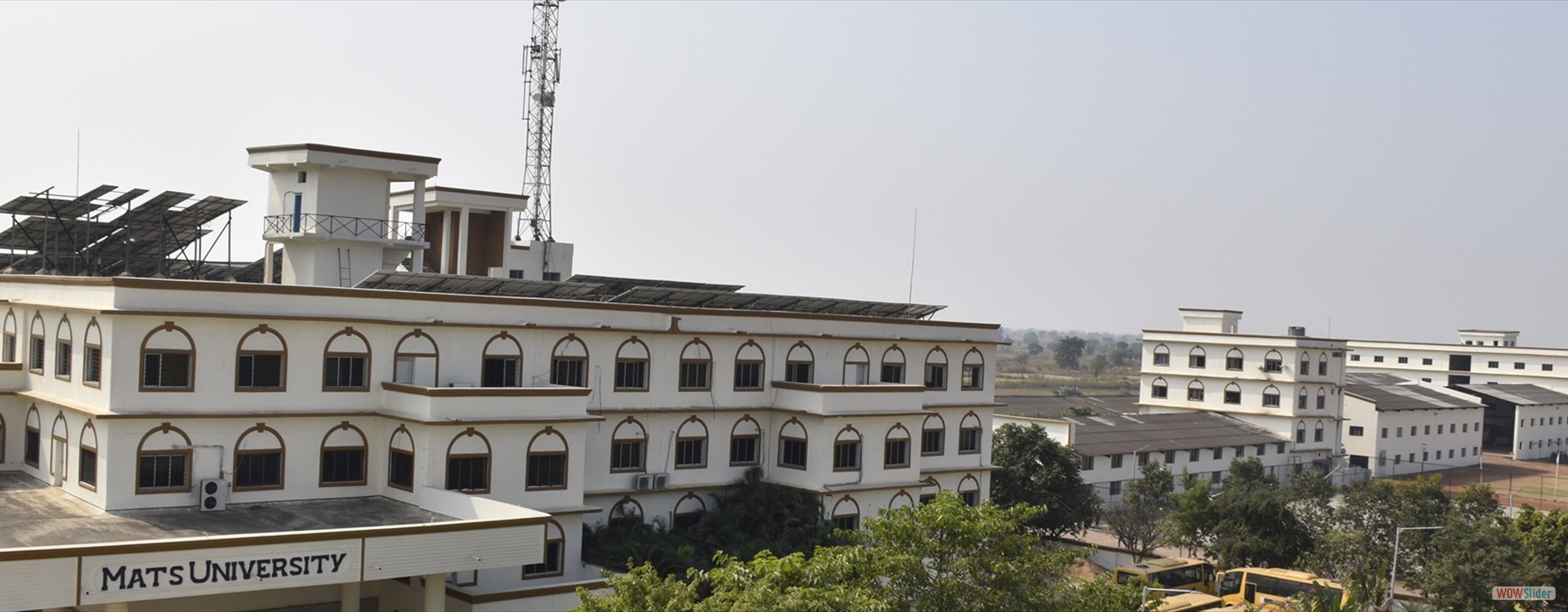
Introduction about Ph.D. in Microbial Technology at MATS University
The pursuit of a Doctor of Philosophy (Ph.D.) in Microbial Technology at MATS University represents a pinnacle of academic achievement and a gateway to groundbreaking scientific discovery. In an era where microorganisms define the frontiers of medicine, agriculture, and environmental sustainability, this program is designed for visionary professionals who seek to lead the next wave of biotechnological innovation. MATS University, known for its commitment to excellence and state-of-the-art research facilities, provides an intellectually stimulating environment where scholars can delve into the microscopic world to solve macroscopic global challenges. Microbial Technology is not just about studying life forms; it is about harnessing their genetic and metabolic potential to create sustainable solutions for humanity. Whether you are aiming to develop novel antibiotics, engineer bio-fuels, or optimize industrial fermentation processes, this Ph.D. program offers the rigorous training and mentorship required to transform your research aspirations into tangible impact.
Ph.D Admission 2026-2027 & Writing Support Services by Shiksha Research
Eligibility Criteria for Ph.D. in Microbial Technology at MATS University
Defining the path to high-level research requires a solid foundation in biological sciences. To be considered for admission into the Ph.D. in Microbial Technology program at MATS University, candidates must meet the following eligibility standards:
- Academic Qualification: Candidates must hold a Master?s degree (M.Sc. or M.Tech) in Microbiology, Biotechnology, Biochemistry, Life Sciences, or a related discipline from a recognized university.
- Minimum Percentage: A minimum of 55% aggregate marks (or an equivalent CGPA) is required at the postgraduate level. A relaxation of 5% is granted to candidates belonging to SC/ST/OBC (non-creamy layer)/Differently-abled categories as per government norms.
- Professional Experience: While not mandatory, candidates with prior research experience or industry exposure in microbial labs are highly encouraged to apply.
- Final Year Students: Candidates appearing for their final semester Master?s examination may also apply, provided they meet the eligibility criteria at the time of admission.
Entrance Exam for Ph.D. in Microbial Technology at MATS University
MATS University ensures a merit-based selection process through a comprehensive entrance examination. The MATS University Research Entrance Test (MET) evaluates candidates on their analytical abilities and subject-specific knowledge. The exam typically consists of two sections: Research Methodology and Subject-Specific Knowledge (Microbial Technology). Candidates who have successfully cleared national-level examinations such as UGC-NET, CSIR-NET, GATE, or hold a M.Phil. degree are generally exempted from the university entrance test but must still participate in the personal interview round. This rigorous screening ensures that only the most dedicated and capable minds enter the research ecosystem.
Fee Structure for Ph.D. in Microbial Technology at MATS University
Investing in a Ph.D. is an investment in your professional future. MATS University offers a competitive and transparent fee structure designed to support long-term research commitments. Below is an approximate breakdown of the costs involved:
| Fee Component | Estimated Amount (INR) | Frequency |
|---|---|---|
| Application & Registration Fee | ?2,500 - ?5,000 | One-time |
| Course Work Fee | ?20,000 - ?30,000 | One-time |
| Annual Tuition Fee | ?70,000 - ?90,000 | Per Year |
| Lab & Infrastructure Charges | ?15,000 | Per Year |
| Thesis Submission & Evaluation Fee | ?25,000 | One-time (at submission) |
Note: The fee structure is subject to change as per university policies. Scholars are encouraged to contact the admissions office for the most current details.
Admission Process for Ph.D. in Microbial Technology at MATS University
The admission journey at MATS University is designed to be seamless yet thorough. It begins with an online application where candidates submit their academic credentials and a preliminary research proposal. Following the entrance examination, shortlisted candidates are invited for a personal interview or viva-voce. During this interaction, the Research Advisory Committee evaluates the candidate's research aptitude and the feasibility of their proposed topic. For those who find the rigorous nature of academic writing challenging, utilizing professional Thesis and Dissertation Writing Services can provide valuable guidance in structuring their research thoughts during the initial phases of the program.
Ph.D. Subjects and Specializations in Microbial Technology at MATS University
Microbial Technology is a multi-faceted domain. At MATS University, scholars can specialize in several cutting-edge sub-disciplines that align with global industrial trends:
- Industrial Microbiology: Focuses on the large-scale production of enzymes, organic acids, and bioactive compounds.
- Environmental Biotechnology: Investigates microbial roles in waste management, bioremediation, and carbon sequestration.
- Agricultural Microbiology: Studies plant-microbe interactions, bio-fertilizers, and microbial pesticides for sustainable farming.
- Medical and Pharmaceutical Microbiology: Explores antimicrobial resistance, vaccine development, and microbial diagnostics.
- Food and Dairy Technology: Concentrates on fermentation, food preservation, and probiotics.
Research Areas in Microbial Technology at MATS University
Research is the heartbeat of the Ph.D. program. MATS University encourages interdisciplinary studies that push the boundaries of conventional science. Key research areas include the study of extremophiles for industrial applications, CRISPR-Cas9 applications in microbial genomes, and the development of microbial fuel cells (MFCs). Effective research requires precision, and many scholars opt for Research Data Analysis Services to ensure their experimental results are statistically significant and robust for publication in high-impact journals.
Documents Required for Ph.D. in Microbial Technology at MATS University
A successful application requires the submission of various documents to verify eligibility and research potential. These include:
- Postgraduate Entrance Scorecards and Degree Certificates.
- Undergraduate Marksheets and Degree.
- Master?s Thesis or Research Project Report.
- Valid ID Proof (Aadhar Card, Passport, etc.).
- Passport-sized Photographs.
- Category Certificate (if applicable).
- No Objection Certificate (NOC) for working professionals.
- A detailed Research Proposal (Statement of Purpose).
MATS University Ph.D. Syllabus for Microbial Technology
The syllabus for the Ph.D. program is structured into two phases: Coursework and Independent Research. The coursework phase typically lasts six months to a year and includes:
- Research Methodology: Techniques in scientific writing, ethics, and experimental design.
- Quantitative Techniques: Application of statistics in biological data.
- Recent Advances in Microbiology: Deep dives into genomics, proteomics, and metabolism.
- Elective Subject: Specialized modules based on the candidate's research area.
- Seminar Presentation: Review of literature and defense of the research plan.
How To Apply for Ph.D. in Microbial Technology at MATS University
Prospective scholars can follow these steps to secure their place at MATS University:
- Visit the official MATS University website and navigate to the 'Admissions' section.
- Register and fill out the online application form for Ph.D. admissions.
- Upload scanned copies of all required documents and pay the application fee.
- Prepare for and appear in the MATS Research Entrance Test (MET).
- Clear the personal interview round where you will present your research vision.
- In the research design phase, it is recommended to seek Questionnaire Design and Development assistance if your research involves field surveys or industrial data collection.
Career Scope and Job Opportunities After Ph.D. in Microbial Technology from MATS University
Graduating with a Ph.D. in Microbial Technology from MATS University opens doors to prestigious careers in both academia and the private sector. The expertise gained allows professionals to occupy roles such as Research Scientist in pharmaceutical giants, Quality Control Head in food sectors, or Environmental Consultant for government agencies. For those choosing academia, opportunities as Professors and Post-doctoral Fellows are abundant. To enhance employability, publishing findings is crucial; many candidates utilize Research Paper Writing Services to polish their manuscripts for international journals, establishing themselves as thought leaders in the field.
Scholarship for Ph.D. in Microbial Technology at MATS University
MATS University believes in fostering talent regardless of financial constraints. Scholarships are available through various channels:
- University Fellowships: Awarded to top-ranking students based on performance in the entrance exam.
- Government Scholarships: Candidates can apply for JRF/SRF fellowships through UGC, CSIR, or ICMR.
- Industry-Sponsored Research: Many research projects are funded by private biotech firms, providing stipends to researchers.
- External Funding: Encouragement to apply for international grants and travel fellowships for research dissemination.
FAQs Regarding Ph.D. in Microbial Technology at MATS University
Q1: Is the Ph.D. program at MATS University recognized by UGC?
Yes, MATS University is a recognized institution, and its Ph.D. programs strictly follow the guidelines of the University Grants Commission (UGC).
Q2: Can I pursue this Ph.D. while working full-time?
MATS University offers flexibility for working professionals, although they must complete a mandatory coursework period and provide an NOC from their employer.
Q3: How long does it take to complete the Ph.D.?
The minimum duration is three years, including coursework, while the maximum duration is typically six years.
Q4: What is the focus of the interview process?
The interview focuses on your understanding of the subject, the clarity of your research proposal, and your motivation for pursuing high-level research.
Q5: Does the university provide assistance in lab experiments?
MATS University offers state-of-the-art laboratory facilities and expert technical staff to support scholars in their experimental endeavors.








