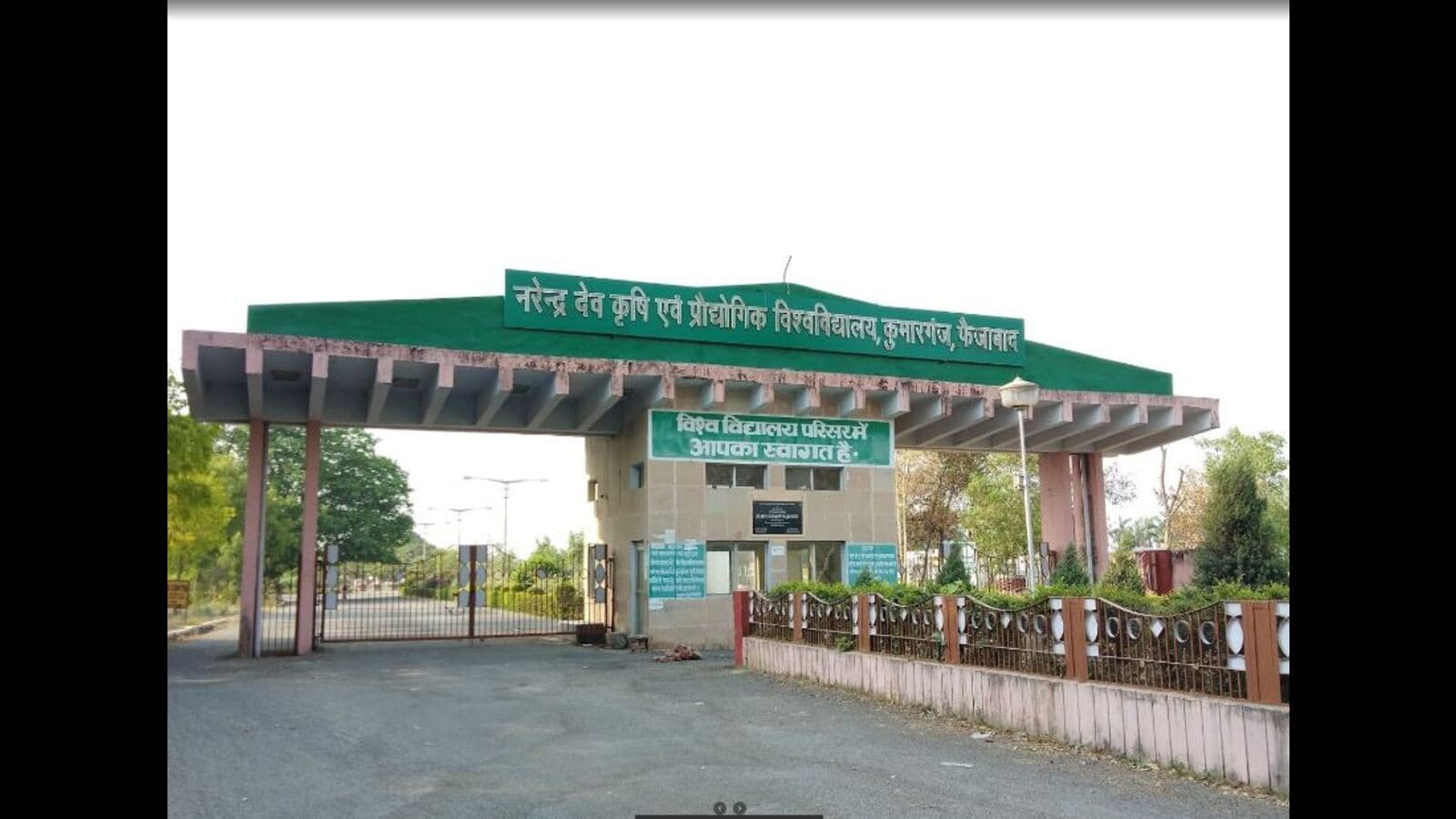
Introduction about Ph.D. in Microbiology at Narendra Deo University
The Doctor of Philosophy (Ph.D.) in Microbiology at Narendra Deo University is a premier research‑oriented programme designed for professionals who aspire to become innovators in microbial science, biotechnology, and allied health sectors. This interdisciplinary doctorate blends advanced laboratory techniques, cutting‑edge genomics, and translational research, equipping scholars with the expertise required to solve global challenges such as antimicrobial resistance, food safety, and environmental sustainability.
Graduates emerge as thought leaders capable of leading research teams in academia, industry, and governmental agencies. The curriculum emphasizes rigorous scientific inquiry, publication in high‑impact journals, and collaboration with leading research centres, fostering a vibrant ecosystem for scholarly excellence.
Eligibility Criteria for Ph.D. in Microbiology at Narendra Deo University
- Master’s degree (M.Sc., M.Sc. (Tech), M.Phil.) in Microbiology or a closely related discipline with a minimum of 55% aggregate (or equivalent CGPA).
- Valid GATE or NET score is preferred but not mandatory.
- Candidates must possess a solid foundation in molecular biology, immunology, and microbial genetics.
- Foreign nationals must provide equivalence certificates from the Association of Indian Universities (AIU).
Entrance Exam for Ph.D. in Microbiology at Narendra Deo University
The university conducts its own entrance examination, typically scheduled in the months of June and December. The exam comprises three sections:
- General Aptitude & Reasoning – 30 marks
- Subject‑Specific Knowledge (Microbiology) – 50 marks
- Research Methodology & Analytical Skills – 20 marks
Shortlisted candidates are invited for a personal interview and a research proposal presentation. Candidates with a valid GATE/NET score are exempted from the written test but must still appear for the interview.
Fee Structure for Ph.D. in Microbiology at Narendra Deo University
| Component | Annual Fee (INR) | Notes |
|---|---|---|
| Tuition & Examination Fee | 45,000 | Applicable for the entire 3‑year programme |
| Laboratory & Resource Charges | 20,000 | Includes access to BSL‑2/3 facilities |
| Library & Digital Resources | 5,000 | Annual subscription to journals and e‑books |
| Administrative & Miscellaneous | 3,000 | Student services and certification |
| Total Approximate Cost | 73,000 | Subject to annual revisions |
Admission Process for Ph.D. in Microbiology at Narendra Deo University
The admission cycle is streamlined into five clear steps:
- Online Application – Fill the web‑based form and upload scanned documents.
- Entrance Test (if applicable) – Appear for the university‑conducted exam or submit GATE/NET scores.
- Interview & Proposal Review – Present a 10‑minute research pitch to the faculty panel.
- Selection & Offer Letter – Receive an admission letter with guidance on registration.
- Enrollment & Orientation – Complete fee payment, obtain ID card, and attend the induction programme.
Ph.D. Subjects and Specializations in Microbiology at Narendra Deo University
Students can tailor their doctoral research across a spectrum of specializations, including:
- Clinical Microbiology & Infectious Diseases
- Environmental & Agricultural Microbiology
- Industrial Biotechnology & Fermentation Technology
- Microbial Genomics & Bioinformatics
- Immunology and Vaccine Development
- Food Microbiology and Safety
Research Areas in Microbiology at Narendra Deo University
The university hosts several research clusters that align with national priorities and global trends:
- Antimicrobial Resistance (AMR) Surveillance
- Novel Antibiotic Discovery from Marine Microbes
- Microbial Fuel Cells for Sustainable Energy
- Probiotic Development for Human Health
- Bioremediation of Industrial Waste
- Host‑Pathogen Interaction Modeling
Documents Required for Ph.D. in Microbiology at Narendra Deo University
| Document | Format | Remarks |
|---|---|---|
| Academic Transcripts (M.Sc./M.Phil.) | PDF (Scanned) | Original and equivalence certificates if obtained abroad |
| Entrance Test Scorecard (GATE/NET) | Optional if applying through university test | |
| Research Proposal (5‑10 pages) | Must include objectives, methodology, and expected outcomes | |
| Curriculum Vitae | Highlight publications, patents, and conference presentations | |
| Two Academic References | PDF (Signed) | From professors familiar with your research capabilities |
Narendra Deo University Ph.D. Syllabus for Microbiology
The doctoral syllabus is structured into three phases:
- Coursework (Year 1) – Core modules such as Advanced Microbial Physiology, Molecular Genetics, Biostatistics, and Research Ethics.
- Comprehensive Examination (End of Year 1) – Written and oral assessment to qualify for candidacy.
- Research & Dissertation (Years 2‑3) – Independent research, periodic progress reviews, manuscript preparation, and final viva‑voce.
How To Apply for Ph.D. in Microbiology at Narendra Deo University
Prospective candidates should follow these precise steps:
- Visit the official university portal and click on “Apply for Ph.D.”
- Register using a valid email address and create a secure password.
- Complete the application form, ensuring accurate entry of academic details.
- Upload the required documents (see the table above) and pay the non‑refundable application fee of INR 2,500.
- Submit the form and note the application reference number for future correspondence.
Career Scope and Job Opportunities After Ph.D. in Microbiology from Narendra Deo University
Doctoral graduates enjoy a broad spectrum of high‑impact career avenues:
- Academic Positions – Assistant Professor, Associate Professor, or Principal Investigator in leading universities.
- Industrial Research – R&D scientist in pharmaceuticals, biotech firms, and food processing companies.
- Government & Public Health – Senior scientist in ICMR, CSIR, or health‑policy advisory bodies.
- Entrepreneurship – Start‑ups focusing on microbial diagnostics, bio‑remediation, or probiotic formulations.
- Consultancy & Technical Writing – Expert consultant for regulatory compliance, grant writing, and scientific communication.
Scholarship for Ph.D. in Microbiology at Narendra Deo University
Financial assistance is available through multiple channels:
- University Merit Scholarship – Full tuition waiver for candidates scoring above 85% in their master's programme.
- UGC‑NGSS Research Fellowships – Annual stipend of INR 31,000 plus contingency grant.
- External Grants – Opportunities from CSIR, DBT, and private foundations.
- Industry Sponsored Projects – Sponsored research leading to stipends and project‑based funding.
FAQs Regarding Ph.D. in Microbiology at Narendra Deo University
- What is the minimum duration for completing the Ph.D.?
- The programme typically spans three years, subject to satisfactory progress and timely dissertation submission.
- Can I pursue the Ph.D. part‑time while working?
- Yes, the university offers a part‑time mode for professionals, extending the duration to five years.
- Is prior research experience mandatory?
- While not compulsory, having publications or a research project strengthens the application.
- Are there opportunities for international collaboration?
- Absolutely. The university has MoUs with several overseas institutes, enabling joint research and exchange programmes.
- How many publications are required before the final viva?
- At least two peer‑reviewed articles in recognized journals are expected, though the exact number may vary by department.
For additional support with dissertation writing, data analysis, research paper preparation, or questionnaire design, consider professional services such as Thesis and Dissertation Writing Services, Research Data Analysis Services, Research Paper Writing Services and








