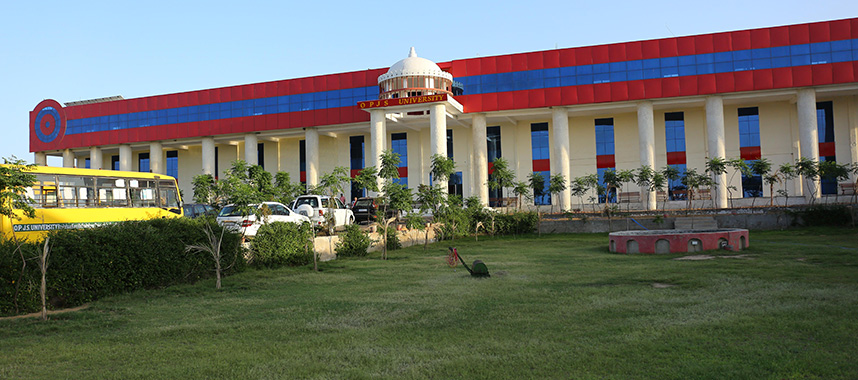
Ph.D. in Microbiology at OPJS University: Eligibility, Entrance Exam, Fee Structure, Admission Process, Subjects, Research Areas, Syllabus, Scholarship & Career Scope
Introduction about Ph.D. in Microbiology at OPJS University
OPJS University stands at the forefront of scientific research, offering a Doctor of Philosophy in Microbiology designed for seasoned professionals who aspire to lead breakthrough investigations in health, agriculture, and industrial biotechnology. This program blends rigorous coursework with cutting‑edge laboratory work, fostering expertise that meets global standards. Whether you aim to become a university professor, a senior research scientist, or a policy adviser, the Ph.D. in Microbiology equips you with the analytical acumen and innovative mindset required in today’s fast‑evolving biosciences landscape.
Eligibility Criteria for Ph.D. in Microbiology at OPJS University
- A Master’s degree (M.Sc., M.Tech., or equivalent) in Microbiology, Biotechnology, Biochemistry, Molecular Biology, or a closely related discipline with a minimum aggregate of 55% (or CGPA 6.0 on a 10‑point scale).
- For candidates with a B.Sc. (Hons.) in Microbiology, a minimum of 3 years of relevant research or industry experience is mandatory.
- Qualified candidates must have a valid GATE score (Life Sciences) or state‑level entrance exam score; candidates without a score may appear for the university’s own entrance test.
- English language proficiency (IELTS ≥ 6.5 or TOEFL ≥ 80) for international applicants.
Entrance Exam for Ph.D. in Microbiology at OPJS University
The university conducts a comprehensive written test followed by a personal interview. The written component evaluates:
- Fundamental concepts in microbiology, genetics, and biochemistry.
- Data interpretation and statistical analysis skills.
- Research methodology and scientific writing.
Successful candidates are then shortlisted for an interview that assesses research aptitude, motivation, and alignment with faculty expertise.
Fee Structure for Ph.D. in Microbiology at OPJS University
| Component | Annual Fee (INR) |
|---|---|
| Tuition & Laboratory Charges | 1,45,000 |
| Research Materials & Consumables | 55,000 |
| Library & Digital Resources | 10,000 |
| Miscellaneous (Seminars, Workshops) | 5,000 |
| Total Approx. Per Year | 2,15,000 |
Scholarships, research assistantships, and industry‑funded projects can offset up to 50% of the total cost.
Admission Process for Ph.D. in Microbiology at OPJS University
- Online Application: Submit the completed application form through the university portal.
- Upload Documents: Attach academic transcripts, GATE/Entrance scorecards, research proposal, and two letters of recommendation.
- Entrance Examination: Appear for the written test (or present a valid GATE score) and subsequent interview.
- Final Selection: Merit list released based on academic performance, entrance score, and interview assessment.
- Admission Confirmation: Pay the initial fee, complete enrollment formalities, and receive your student ID.
Ph.D. Subjects and Specializations in Microbiology at OPJS University
Students may select one of the following specialized tracks, each guided by dedicated faculty groups:
- Medical Microbiology & Infectious Diseases
- Industrial Microbiology & Bioprocess Engineering
- Environmental & Agricultural Microbiology
- Microbial Genetics & Synthetic Biology
- Immunology and Host‑Pathogen Interactions
Research Areas in Microbiology at OPJS University
OPJS University hosts state‑of‑the‑art laboratories where Ph.D. scholars contribute to high‑impact research domains such as:
- Antimicrobial resistance mechanisms and novel drug discovery.
- Biofuel production using engineered microbial consortia.
- Microbiome analysis for human health and plant growth promotion.
- CRISPR‑based gene editing in prokaryotes.
- Bioremediation of heavy metals and plastic waste.
Collaborations with leading biotech firms and research institutes provide exposure to real‑world challenges.
Documents Required for Ph.D. in Microbiology at OPJS University
| Document | Details |
|---|---|
| Academic Transcripts | Original & attested copies of B.Sc. & M.Sc. marksheets |
| GATE/Entrance Scorecard | Valid score report (if applicable) |
| Research Proposal | 2‑page synopsis outlining objectives and methodology |
| Letters of Recommendation | Two academic/professional references |
| Identity Proof | Aadhaar/PAN/Passport |
| Passport‑size Photograph | Recent color photograph (white background) |
OPJS University Ph.D. Syllabus for Microbiology
The curriculum is structured into two phases: Coursework (Year 1) and Research (Year 2‑4).
Year 1 – Core Modules
- Advanced Microbial Physiology
- Statistical Methods & Bioinformatics
- Research Ethics & Scientific Writing
- Laboratory Techniques in Molecular Microbiology
Year 2‑4 – Research & Thesis
- Elective seminars aligned with the chosen specialization
- Regular progress reviews with the supervisory committee
- Publication of at least two peer‑reviewed articles
- Submission and defense of the doctoral dissertation
For tailored support on dissertation writing, explore our Thesis and Dissertation Writing Services.
How To Apply for Ph.D. in Microbiology at OPJS University
Follow this step‑by‑step guide to submit a successful application:
- Visit the official OPJS University Admissions Portal and register using a valid email address.
- Complete the online application form, ensuring all fields are accurately filled.
- Upload scanned copies of the required documents (refer to the Documents Required table).
- Pay the non‑refundable application fee of INR 2,500 via net banking or UPI.
- Submit the application and note the generated application ID for future correspondence.
Career Scope and Job Opportunities After Ph.D. in Microbiology from OPJS University
Graduates emerge as subject‑matter experts ready to assume senior roles across diverse sectors:
- Academia: Lecturer, Assistant Professor, or Principal Investigator in leading universities.
- Industry: R&D Scientist, Process Development Manager, or Quality Assurance Lead in pharma, food, and biotech firms.
- Government & Public Health: Policy analyst, epidemiologist, or senior scientist in agencies such as ICMR, CSIR, and the Ministry of Health.
- Entrepreneurship: Founder of a microbial‑based startup focusing on biofertilizers, diagnostics, or waste management.
Enhance your research data presentation with our Research Data Analysis Services and secure high‑impact publications through our Research Paper Writing Services. For project surveys, consider our Questionnaire Design and Development assistance.
Scholarship for Ph.D. in Microbiology at OPJS University
OPJS University is committed to merit‑based financial support. Eligible candidates can apply for:
- OPJS Merit‑Based Fellowship: Covers 100% tuition and a monthly stipend of INR 20,000.
- Industry‑Sponsored Research Grants: Partial tuition waiver plus project‑specific allowances.
- Government Scholarships: UGC‑NET, CSIR‑JRF, and DST‑INSPIRE awards.
Applications for scholarships are evaluated concurrently with the admission process.
FAQs Regarding Ph.D. in Microbiology at OPJS University
- Q1: Can I pursue the Ph.D. part‑time while working?
- Yes. OPJS University offers a flexible part‑time schedule for industry professionals, with extended timelines for thesis submission.
- Q2: Is there a minimum age limit for admission?
- No specific age restriction; eligibility is based on academic qualifications and research potential.
- Q3: How long does the Ph.D. program typically take?
- The average duration is 3‑4 years, depending on the research progress and publication requirements.
- Q4: Are international students eligible for the same scholarships?
- International candidates can apply for university merit scholarships and are also encouraged to seek external funding from their home countries.
- Q5: What is the language of instruction?
- All coursework and thesis work are conducted in English.








