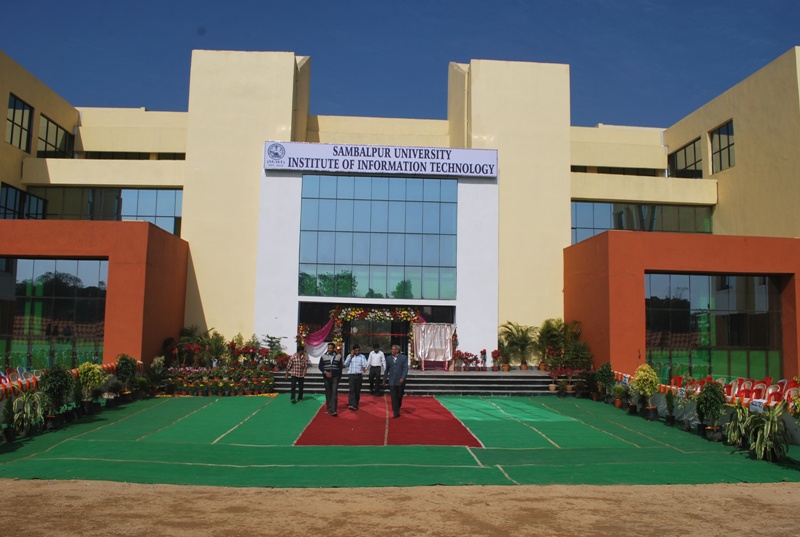
Ph.D. in Microbiology at Sambalpur University
Introduction about Ph.D. in Microbiology at Sambalpur University
Sambalpur University, situated in the heart of Odisha, has emerged as a hub for cutting‑edge research in life sciences. The Ph.D. in Microbiology program is designed for professionals who aspire to become leaders in microbial research, industrial biotechnology, clinical diagnostics, and environmental management. With a rigorous curriculum, state‑of‑the‑art laboratories, and collaborations with premier research institutes, this doctorate equips scholars with the analytical expertise and innovative mindset needed to address global challenges such as antimicrobial resistance, food safety, and sustainable agriculture.
Eligibility Criteria for Ph.D. in Microbiology at Sambalpur University
- A Master’s degree (M.Sc., M.Pharma, M.Tech, or equivalent) with a minimum of 55% aggregate marks from a recognized university.
- Candidates with a Bachelor’s degree in a relevant science discipline (B.Sc. + M.Sc.) may also be considered if they have demonstrated research experience.
- Qualifying score in the university‑conducted Ph.D. entrance test or a national level test such as NET/UGC/CSIR.
- Proficiency in English (both written and spoken) for effective thesis presentation and publication.
- For foreign nationals, a valid GATE or equivalent qualification is required.
Entrance Exam for Ph.D. in Microbiology at Sambalpur University
The entrance examination consists of two stages:
- Written Test: 100 multiple‑choice questions covering core microbiology, biochemistry, molecular biology, genetics, and research methodology. Duration – 2 hours.
- Interview & Viva‑voce: Candidates are evaluated on their research proposal, analytical thinking, and subject‑specific knowledge by a panel of senior faculty.
Candidates who have qualified in national level exams (NET, CSIR‑JRF, GATE) are exempted from the written test but must appear for the interview. Preparation resources include previous year question papers, standard textbooks such as “Brock Biology of Microorganisms,” and peer‑reviewed journals.
Fee Structure for Ph.D. in Microbiology at Sambalpur University
| Component | Amount (INR) | Frequency |
|---|---|---|
| Application & Registration Fee | 1,500 | One‑time |
| Entrance Examination Fee | 2,000 | One‑time (waived for NET/CSIR qualifiers) |
| Annual Tuition & Lab Charges | 15,000 | Per academic year |
| Thesis Submission Fee | 3,000 | One‑time |
| Miscellaneous (Library, Sports, etc.) | 2,500 | Per year |
| Total Approximate Cost (4‑year program) | 78,000 | — |
The fee structure is subject to revision each academic session. Scholarships, research grants, and teaching assistantships significantly reduce the financial burden for eligible candidates.
Admission Process for Ph.D. in Microbiology at Sambalpur University
- Online Application: Fill the application form on the university portal, upload scanned copies of academic certificates, and pay the registration fee.
- Document Verification: The admission committee validates the submitted documents and shortlists candidates for the entrance test.
- Entrance Examination: Appear for the written test (unless exempted) followed by the interview.
- Admission Offer: Successful candidates receive an admission letter with details of tuition fees, start date, and research supervisor allocation.
- Enrollment: Pay the first-year tuition, submit the signed enrollment form, and register for university‑wide services (library, email, etc.).
Ph.D. Subjects and Specializations in Microbiology at Sambalpur University
The doctoral program offers a wide array of specialization tracks, enabling scholars to tailor their research focus:
- Medical Microbiology & Clinical Diagnostics
- Industrial Microbiology & Biotechnology
- Agricultural Microbiology & Plant‑Pathogen Interactions
- Environmental Microbiology & Bioremediation
- Food Microbiology & Safety Assurance
- Molecular Genetics & Genomics of Microbes
- Immunology & Vaccine Development
Research Areas in Microbiology at Sambalpur University
Faculty members lead research projects in the following high‑impact domains:
- Antimicrobial resistance mechanisms and novel drug targets.
- Enzyme production for bio‑fuel and bioplastic synthesis.
- Microbial consortia for waste‑water treatment and heavy‑metal detoxification.
- Probiotic formulation for animal health and aquaculture.
- CRISPR‑Cas systems in bacterial genome editing.
- Metagenomic analysis of soil and marine microbiomes.
- Development of rapid diagnostic kits using nanotechnology.
Documents Required for Ph.D. in Microbiology at Sambalpur University
| Document | Details | Format |
|---|---|---|
| Academic Transcripts | Mark sheets of B.Sc. and M.Sc. (or equivalent) | PDF, scanned |
| Degree Certificates | Original certificates (photocopy accepted for verification) | PDF, scanned |
| Research Proposal | 1500‑word outline of intended research | DOCX or PDF |
| Entrance Exam Scorecard | NET, CSIR‑JRF, GATE or university test result | |
| Curriculum Vitae (CV) | Academic and professional achievements | |
| Letter of Recommendation | Two referees from academia or industry | |
| Identity Proof | Aadhar Card / Passport |
Sambalpur University Ph.D. Syllabus for Microbiology
The syllabus is divided into core modules and elective electives, spanning two semesters per academic year. Core modules include:
- Advanced Microbial Physiology
- Techniques in Molecular Microbiology
- Statistical Methods for Biological Research
- Scientific Writing and Publication Ethics
- Research Methodology & Project Management
Electives allow specialization, e.g., “Industrial Enzyme Engineering,” “Marine Microbial Ecology,” or “Clinical Mycology.” Each semester culminates in a written assessment and a laboratory practical, while the final year is devoted to thesis work.
How To Apply for Ph.D. in Microbiology at Sambalpur University
Follow these step‑by‑step instructions to submit a successful application:
- Visit the official Sambalpur University website and navigate to the “Post‑Graduate Admissions” section.
- Register using a valid email address and set a secure password.
- Complete the online application form, entering personal details, academic history, and preferred research supervisor.
- Upload the required documents (as listed in the “Documents Required” table).
- Pay the non‑refundable application fee through the integrated payment gateway.
- Submit the form and note the application reference number for future correspondence.
- Prepare for the entrance examination; download the syllabus and sample papers from the university portal.
- Attend the written test and interview on the scheduled dates.
- If selected, accept the admission offer and complete the enrollment formalities.
Career Scope and Job Opportunities After Ph.D. in Microbiology from Sambalpur University
A doctorate in microbiology opens doors to diverse, high‑impact careers:
- Senior Research Scientist in pharmaceutical, biotech, or agro‑chemical firms.
- Faculty positions (Assistant/Associate Professor) at universities and research institutes.
- Principal Investigator leading government‑funded projects (e.g., DBT, DST, ICMR).
- Clinical Microbiology Specialist in hospitals and diagnostic laboratories.
- Regulatory affairs and quality assurance manager in food safety authorities.
- Entrepreneur – start‑up focused on microbial biosensors, bio‑fertilizers, or novel antibiotics.
- Policy advisor for public health agencies tackling infectious disease outbreaks.
According to recent placement data, 85% of Ph.D. graduates secure positions within six months of graduation, with an average starting salary ranging from INR 8 to 12 lakhs per annum, depending on the sector.
Scholarship for Ph.D. in Microbiology at Sambalpur University
Several financial assistance schemes are available to meritorious candidates:
<







