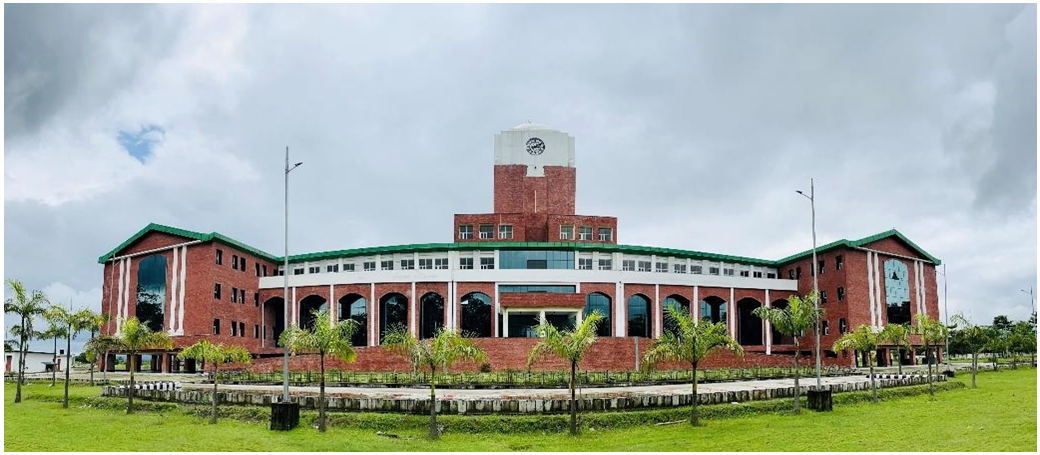
Introduction about Ph.D. in Molecular Biology at Indian Agricultural Research Institute
Embedded in the heart of New Delhi, the Indian Agricultural Research Institute (IARI), popularly known as Pusa Institute, stands as a beacon of scientific excellence and a pioneer in agricultural innovation. Pursuing a Ph.D. in Molecular Biology at this prestigious institution is more than just an academic endeavor; it is an invitation to join the ranks of elite scientists dedicated to solving global food security challenges. Since its inception as a Deemed University, IARI has remained at the forefront of the Green Revolution and continues to lead in the era of Biotechnology and Genomes. The Molecular Biology program here is designed to foster a spirit of inquiry, providing students with a platform to explore the intricate blueprints of life?from the fundamental structures of DNA to the complex mechanisms of gene expression in crops. Aspiring researchers are encouraged to dream big, knowing that their work in these laboratories will eventually translate into resilient crops and sustainable farming practices that feed millions.
Ph.D Admission 2026-2027 & Writing Support Services by Shiksha Research
The journey of a doctoral candidate at IARI is characterized by rigorous training and exposure to world-class infrastructure. By integrating classical genetics with modern molecular tools, the institute ensures that its graduates are not just degree holders, but thought leaders capable of steering the future of biological sciences. As you prepare to embark on this demanding yet rewarding path, understanding the strategic framework of the program is essential for long-term success.
Eligibility Criteria for Ph.D. in Molecular Biology at Indian Agricultural Research Institute
To secure a seat in one of the most competitive Ph.D. programs in India, candidates must meet stringent eligibility requirements. The Indian Agricultural Research Institute looks for individuals with a solid foundation in biological sciences and a consistent academic record.
- Educational Qualification: Candidates must possess a Master?s degree (M.Sc. or M.Tech.) in Molecular Biology, Biotechnology, Life Sciences, Biochemistry, or a related discipline from a recognized university.
- Minimum Marks: A minimum of 60% marks (or an Overall Grade Point Average - OGPA of 6.60 out of 10.00) is generally required for General/OBC/EWS categories. For SC/ST/PwD candidates, there is usually a relaxation, bringing the requirement down to 50% or 5.60 OGPA.
- Age Limit: The minimum age for admission is 21 years as of the date of admission, though there is no fixed upper age limit for most candidates.
- Degree Type: The qualifying degree must be obtained after completing at least a four-year undergraduate program (10+2+4 or 10+2+3+2 system), which is standard for agricultural universities under the ICAR umbrella.
Entrance Exam for Ph.D. in Molecular Biology at Indian Agricultural Research Institute
Admission to the Ph.D. program is primarily governed by the All India Competitive Examination (AICE) conducted by the Indian Council of Agricultural Research (ICAR). This national-level examination, often referred to as the ICAR AICE-JRF/SRF (Ph.D.), tests the depth of knowledge and analytical skills of the candidates.
The entrance exam consists of multiple-choice questions focusing on three distinct parts: General Knowledge (related to agriculture and allied sciences), Core Subject knowledge (Molecular Biology and Biotechnology), and Specialized topics. High performance in this exam is crucial as it determines the eligibility for Junior Research Fellowship (JRF) and Senior Research Fellowship (SRF). Preparation requires a strategic approach, often necessitating the study of advanced genomic theories and molecular techniques. Many successful candidates utilize professional Questionnaire Design and Development tools and methodologies to sharpen their analytical thinking during their early research proposal stages.
Fee Structure for Ph.D. in Molecular Biology at Indian Agricultural Research Institute
The fee structure at IARI is known for being highly subsidized compared to private universities, ensuring that financial constraints do not hinder the progress of merit-based research. Below is an approximate breakdown of the costs involved:
| Fee Component | Approximate Amount (Per Semester) | Remarks |
|---|---|---|
| Tuition Fee | ?6,000 - ?8,000 | May vary based on category |
| Registration/Admission Fee | ?2,000 - ?4,000 | One-time fee during 1st sem |
| Laboratory & Library Fee | ?3,000 - ?5,000 | Covers access to high-end equipment |
| Hostel Rent (Shared) | ?1,500 - ?3,000 | Subject to availability |
| Examination Fee | ?1,000 - ?2,000 | Paid before end-term exams |
| Total Estimated Basic Fee | ?13,500 - ?22,000 | Excluding Mess & Personal Expenses |
Admission Process for Ph.D. in Molecular Biology at Indian Agricultural Research Institute
The admission process is a journey of meticulous steps, starting with the national entrance notification. IARI prides itself on a transparent and meritocratic selection process:
- Online Application: Candidates must register on the official ICAR/NTA portal when the admission cycle begins.
- Entrance Testing: Candidates appear for the ICAR AICE-JRF/SRF (Ph.D.) examination.
- Declaration of Result & Merit List: Based on the scores, a merit list is generated for different categories.
- Counseling: Shortlisted candidates undergo online or offline counseling where they select their preferred discipline and institute (IARI being a top choice).
- Interview/Document Verification: Some departments may conduct an additional interview or verification process to assess the candidate's research aptitude.
- Final Admission: Upon successful verification and fee payment, the candidate is formally enrolled.
Ph.D. Subjects and Specializations in Molecular Biology at Indian Agricultural Research Institute
The curriculum is designed to provide a comprehensive understanding of life at the molecular level, specifically tailored to agricultural needs. The subjects are divided into core courses, minor courses, and supporting courses.
Major subjects include Molecular Genetics, Plant Bio-chemistry, Genetic Engineering, and Plant Genomics. Specialized areas often touch upon Proteomics and Metabolomics, giving students a 360-degree view of biological systems. During the later years, the focus shifts heavily toward independent research. If you find yourself overwhelmed with the documentation of your findings, you can seek expertise in Thesis and Dissertation Writing Services to ensure your academic output meets international standards.
Research Areas in Molecular Biology at Indian Agricultural Research Institute
Research is the heartbeat of IARI. The Molecular Biology department offers a diverse array of research avenues that allow students to work on real-world problems. Key areas include:
- Abiotic Stress Tolerance: Understanding how crops respond to drought, salinity, and heat at the molecular level.
- Transgenic Development: Designing Genetically Modified (GM) crops for pest and disease resistance.
- Genome Editing: Utilizing CRISPR/Cas9 and other modern tools to make precise changes in the plant genome.
- Marker-Assisted Selection: Developing molecular markers to accelerate conventional breeding programs.
- Nano-Biotechnology: Integrating nanotechnology with biology for targeted drug delivery in plant systems.
Documents Required for Ph.D. in Molecular Biology at Indian Agricultural Research Institute
Before the counseling session, ensure you have the following documents ready to avoid last-minute hurdles:
- ICAR AICE-JRF/SRF Rank Card and Admit Card.
- Proof of Date of Birth (Secondary School Certificate).
- All mark sheets and certificates from Class 10th to Master?s degree.
- Master?s Thesis/Dissertation abstract.
- Character Certificate from the last attended institution.
- Caste Certificate (if applicable) and EWS/PwD certificates.
- Aadhaar Card or any valid Government ID.
- Passport-size photographs.
Indian Agricultural Research Institute Ph.D. Syllabus for Molecular Biology
The syllabus is structured into two phases: Coursework and Research Work. The first year involves rigorous classroom learning followed by comprehensive examinations.
Core Coursework: Covers Molecular Structure of Genes, Regulation of Gene Expression, Tissue Culture, and Bioinformatics. Students also learn about advanced laboratory techniques such as Next-Generation Sequencing (NGS) and High-Performance Liquid Chromatography (HPLC).
Research Methodology: This phase includes experimental design and statistical tools. Scholars often benefit from Research Data Analysis Services to interpret complex biological datasets generated during their field trials or lab experiments. The final two to three years are purely dedicated to original research contributing to the field of Agricultural Molecular Biology.
How To Apply for Ph.D. in Molecular Biology at Indian Agricultural Research Institute
The application process is primarily online. Follow these steps to ensure a smooth application:
- Visit the official website of ICAR or NTA (National Testing Agency).
- Look for the notification regarding "Entrance Examination for Admission to Ph.D. Degree Programmes".
- Fill out the registration form with accurate personal and academic details.
- Upload scanned copies of required documents and photographs.
- Pay the application fee via online payment gateways.
- Download the confirmation page and keep it safe for future reference.
- Stay updated with the institute?s website for entrance dates and admit card downloads.
Career Scope and Job Opportunities After Ph.D. in Molecular Biology from Indian Agricultural Research Institute
A Ph.D. from IARI opens doors to prestigious career paths globally. The industry recognition of this institute ensures that its alumni are highly sought after. You can pursue roles such as:
- ARS Scientist: Join the Agricultural Research Service (ARS) through the ASRB exam and work at various ICAR institutes across India.
- Academician: Become an Assistant Professor or Researcher in top-tier State Agricultural Universities (SAUs) or international universities.
- R&D Scientist in Private Sector: Multinational corporations like Monsanto, Syngenta, and Bayer actively recruit molecular biologists for their seed and pesticide divisions.
- Policy Advisor: Work with government bodies or NGOs in biosafety and regulatory affairs.
- Post-Doctoral Fellow: Pursue advanced research in the USA, Europe, or Australia using the vast network of IARI alumni.
To enhance your employability, it is vital to publish high-impact articles. Utilizing Research Paper Writing Services can help in structuring your findings for high-impact factor journals.
Scholarship for Ph.D. in Molecular Biology at Indian Agricultural Research Institute
IARI offers numerous financial support systems to its doctoral candidates. The most prominent are:
- ICAR Junior/Senior Research Fellowship: Awarded based on the entrance exam rank, providing a generous monthly stipend and an annual contingency grant.
- IARI Fellowships: For those not covered under ICAR fellowships, the institute provides its own institutional fellowships to deserving students.
- CSIR/UGC NET Fellowship: Students who have qualified for the National Eligibility Test (NET) can avail themselves of the fellowships provided by the respective government bodies.
- DST-INSPIRE: High-achieving master's students can also apply for the INSPIRE fellowship from the Department of Science and Technology.
FAQs Regarding Ph.D. in Molecular Biology at Indian Agricultural Research Institute
1. Can I apply for the Ph.D. program if I have a Master's degree in general Botany?
Generally, IARI prefers candidates with a background in Molecular Biology, Biotechnology, or Biochemistry. However, if your specialization or thesis was related to molecular aspects, you might be eligible. Always check the specific ICAR notification for that year.
2. Is there an interview after the entrance exam?
Yes, for many years IARI has included a counseling cum interview process to assess the research suitability of candidates after they qualify the national entrance test.
3. What is the duration of the Ph.D. program?
The minimum duration is three years (six semesters), while the maximum allowed duration is usually six years.
4. Does IARI provide placement assistance?
While IARI is a research-focused institute, its placement cell and strong industry ties ensure that students receive ample opportunities for campus interviews and recruitments by major agri-biotech firms.
5. Is the Ph.D. degree from IARI recognized internationally?
Absolutely. IARI is one of the premier agricultural institutes globally. Its graduates are frequently found in leading positions at the CGIAR centers, the FAO, and top international universities.








