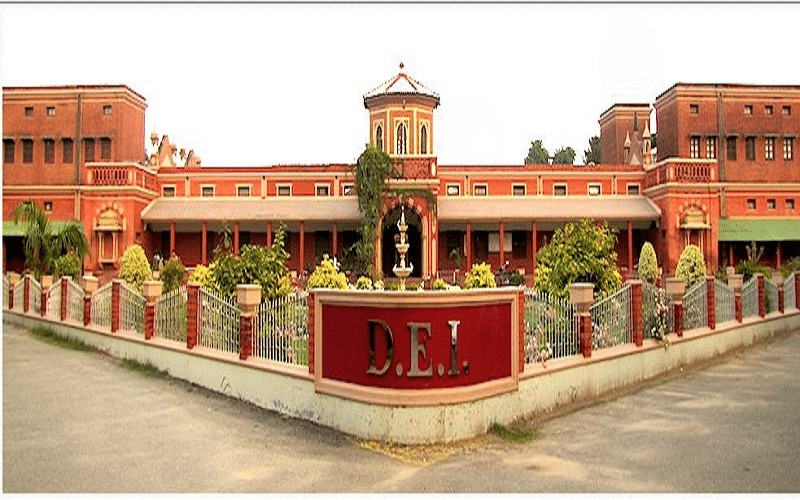
Introduction about Ph.D. in Music at Dayalbagh Educational Institute
Dayalbagh Educational Institute (DEI), a Deemed University located in the serene and spiritually charged environment of Agra, stands as a beacon of value-based education. Pursuing a Ph.D. in Music at DEI is more than just an academic endeavor; it is a journey into the soul of Indian classical traditions blended with modern research methodologies. The Department of Music at DEI is renowned for its commitment to preserving the rich heritage of Hindustani Classical Music while encouraging innovative explorations in musicology, aesthetics, and performance arts. For professionals and dedicated scholars, this program offers a unique opportunity to contribute to the global discourse on music through rigorous scholarly inquiry. Whether your interest lies in the intricacies of Raag-Daari, the rhythmic complexities of Tabla, or the sociological impacts of folk music, DEI provides the perfect ecosystem for intellectual and artistic growth.
Ph.D Admission 2026-2027 & Writing Support Services by Shiksha Research
Eligibility Criteria for Ph.D. in Music at Dayalbagh Educational Institute
To maintain the high standards of research, Dayalbagh Educational Institute follows a strict eligibility framework for its doctoral candidates. Aspiring scholars must meet the following requirements:
- Educational Qualification: Candidates must possess a Master?s degree in Music (Vocal, Instrumental, or specialized fields) from a recognized university.
- Minimum Marks: A minimum of 55% aggregate marks (or an equivalent grade) is required at the postgraduate level. A relaxation of 5% is typically provided to candidates from SC/ST/OBC (non-creamy layer) and PwD categories.
- Pre-Ph.D. Coursework: Candidates who have already completed an M.Phil. with at least 55% marks may be eligible for certain exemptions in coursework, subject to university norms.
- NET/JRF Preference: While the Research Entrance Test is mandatory for many, candidates who have cleared UGC-NET (including JRF), SLET, or GATE are often given preference or exempted from the written entrance test, though they must still appear for the interview.
Entrance Exam for Ph.D. in Music at Dayalbagh Educational Institute
The gateway to the doctoral program at DEI is the Research Entrance Test (RET). This exam is designed to evaluate both the candidate's core knowledge of music and their aptitude for research. The RET usually consists of two parts:
- Part A: Research Methodology: This section tests the candidate's analytical skills, logical reasoning, and understanding of research techniques. To excel in this section, many scholars seek professional Questionnaire Design and Development guidance to understand how to structure qualitative and quantitative data collection in musical research.
- Part B: Subject-Specific Knowledge: This section focuses deeply on the Theory of Indian Classical Music, History of Music, Contribution of Great Musicians, and Musical Aesthetics.
Candidates must secure the minimum qualifying marks in the RET to proceed to the interview stage, where their research proposal and performance capabilities are scrutinized by the departmental committee.
Fee Structure for Ph.D. in Music at Dayalbagh Educational Institute
DEI is widely recognized for providing high-quality education at a very affordable cost, aligning with its mission of selfless service and social upliftment. Below is an approximate breakdown of the fee structure for the Ph.D. program:
| Component | Per Semester (Approx. INR) | Total Estimated (3 Years) |
|---|---|---|
| Tuition Fee | ?1,800 | ?10,800 |
| Development Fee | ?1,200 | ?7,200 |
| Library & Laboratory Fee | ?1,000 | ?6,000 |
| Examination & Registration | ?500 | ?3,000 |
| Other Miscellaneous Fees | ?1,500 | ?9,000 |
| Grand Total | ?6,000 | ?36,000 |
Note: The fees mentioned are indicative and subject to revision by the University administration. Additional costs for thesis submission and convocation may apply.
Admission Process for Ph.D. in Music at Dayalbagh Educational Institute
The admission process at DEI is rigorous and merit-based, ensuring that only the most dedicated scholars are selected. The steps typically include:
- Online Application: Submission of the application form via the official DEI website during the admission cycle (usually June-July).
- Research Entrance Test (RET): Shortlisted candidates sit for the written entrance exam.
- Interview/Presentation: Candidates who pass the RET are called for an interview. Here, you must present your research interest and demonstrate your proficiency in music. This is the stage where having a solid draft of your proposal is vital; many students use Research Paper Writing Services to polish their preliminary findings.
- Final Merit List: Scores from the Master's degree, RET, and Interview are combined to form the final merit list.
- Registration: Successful candidates undergo document verification and pay the admission fees to finalize their registration.
Ph.D. Subjects and Specializations in Music at Dayalbagh Educational Institute
The Department of Music at DEI offers a broad spectrum of specializations, allowing researchers to dive deep into their specific areas of interest. These include:
- Vocal Music: Focus on Hindustani Classical styles like Khayal, Dhrupad, and semi-classical genres.
- Sitar & Other String Instruments: Research into the technique, history, and evolution of stringed instruments.
- Tabla & Percussion: Study of rhythmic structures (Taals), evolution of Gharanas, and accompaniment techniques.
- Musicology: Historical and theoretical study of music, manuscripts, and ancient treatises.
- Applied Music: Exploring the role of music in modern contexts, including technology and composition.
Research Areas in Music at Dayalbagh Educational Institute
Research at DEI is characterized by its interdisciplinarity. Scholars are encouraged to explore areas such as:
- Music Therapy: Investigating the healing power of Ragas on psychological and physiological health. This often requires complex Research Data Analysis Services to interpret clinical results.
- Aesthetics and Philosophy: Analyzing the emotional and spiritual impact of Indian music (Rasa Theory).
- Folk Music Traditions: Documentation and analysis of the dying folk traditions of Braj and other regions.
- Technological Integration: The use of AI and digital tools in musical preservation and education.
- Comparative Musicology: Studying the similarities and differences between Indian and Western musical systems.
Documents Required for Ph.D. in Music at Dayalbagh Educational Institute
Candidates must ensure they have the following documents ready for the admission process:
- High School and Intermediate Certificates (Original and Photocopies).
- Bachelor?s and Master?s Degree Marksheets and Certificates.
- UGC-NET/JRF/SLET Certificate (if applicable).
- Migration Certificate and Character Certificate from the last attended institution.
- Caste Certificate (if applying under a reserved category).
- No Objection Certificate (NOC) from the current employer for working professionals.
- Recent Passport-size Photographs.
- A detailed Research Proposal (Synopsis).
Dayalbagh Educational Institute Ph.D. Syllabus for Music
The Ph.D. coursework syllabus at DEI is designed to build a strong foundation for independent research. It generally includes:
- Course 1: Research Methodology: Introduction to research types, hypothesis testing, and ethnographic methods in music.
- Course 2: Advanced Theory of Music: Deep dive into ancient texts like Natyashastra and Sangita Ratnakara.
- Course 3: Computer Applications in Music: Learning to use software for notation and sound analysis.
- Course 4: Literature Review: Critical analysis of existing research in the chosen field of study.
During the final stages of the Ph.D., scholars often utilize Thesis and Dissertation Writing Services to ensure their final submission meets the highest academic standards of clarity and formatting.
How To Apply for Ph.D. in Music at Dayalbagh Educational Institute
Follow these steps to apply for the Ph.D. program:
- Visit the official DEI website at www.dei.ac.in.
- Navigate to the 'Admissions' section and look for the 'Research Entrance Test' notification.
- Register yourself by providing a valid email ID and phone number.
- Fill out the application form with accurate personal and academic details.
- Upload scanned copies of the required documents and your signature.
- Pay the application fee online via the integrated payment gateway.
- Download and print the confirmation page and your admit card when released.
Career Scope and Job Opportunities After Ph.D. in Music from Dayalbagh Educational Institute
A Ph.D. in Music from an esteemed institution like DEI opens diverse career paths for professionals:
- Academician: Become a Professor or Lecturer in top-tier universities and conservatories.
- Researcher: Work with cultural organizations like the Sangeet Natak Akademi or ICCR on preservation projects.
- Music Therapist: Work in hospitals and wellness centers using Raga therapy for mental health.
- Professional Performer: Elevate your performance career with a deep theoretical understanding of your craft.
- Music Critic/Journalist: Contribute to leading arts publications and media houses.
- Curriculum Designer: Develop educational content for schools and digital learning platforms.
Scholarship for Ph.D. in Music at Dayalbagh Educational Institute
DEI supports its research scholars through various financial aid programs:
- UGC-JRF/SRF: Students who have cleared the Junior Research Fellowship are eligible for a monthly stipend as per UGC norms.
- Institute Scholarships: DEI offers various merit-cum-means scholarships to deserving students.
- Research Fellowships: Specific projects funded by DST, ICSSR, or other government bodies often provide fellowships to Ph.D. students working on those projects.
- State Government Scholarships: Various schemes for SC/ST and minority students are available.
FAQs Regarding Ph.D. in Music at Dayalbagh Educational Institute
Q1: Is the Ph.D. program at DEI available in part-time mode?
A: DEI primarily focuses on full-time research, but working professionals may be allowed if they fulfill the residency requirements and provide an NOC from their employer.
Q2: What is the duration of the Ph.D. program in Music?
A: The minimum duration is three years, including coursework, and the maximum is usually six years.
Q3: Can I apply if my Master's degree is not in Music but in a related field?
A: Generally, a Master's in Music is required. However, for interdisciplinary research, a candidate with a related degree and a diploma/Prabhakar in Music might be considered at the discretion of the department.
Q4: Do I need to be a performer to pursue a Ph.D. in Music?
A: While the Ph.D. is academic, a certain level of practical proficiency is expected, especially if your research area involves performance analysis or musicology.
Q5: Does DEI provide hostel facilities for research scholars?
A: Yes, DEI provides hostel facilities for both male and female research scholars, subject to availability.








