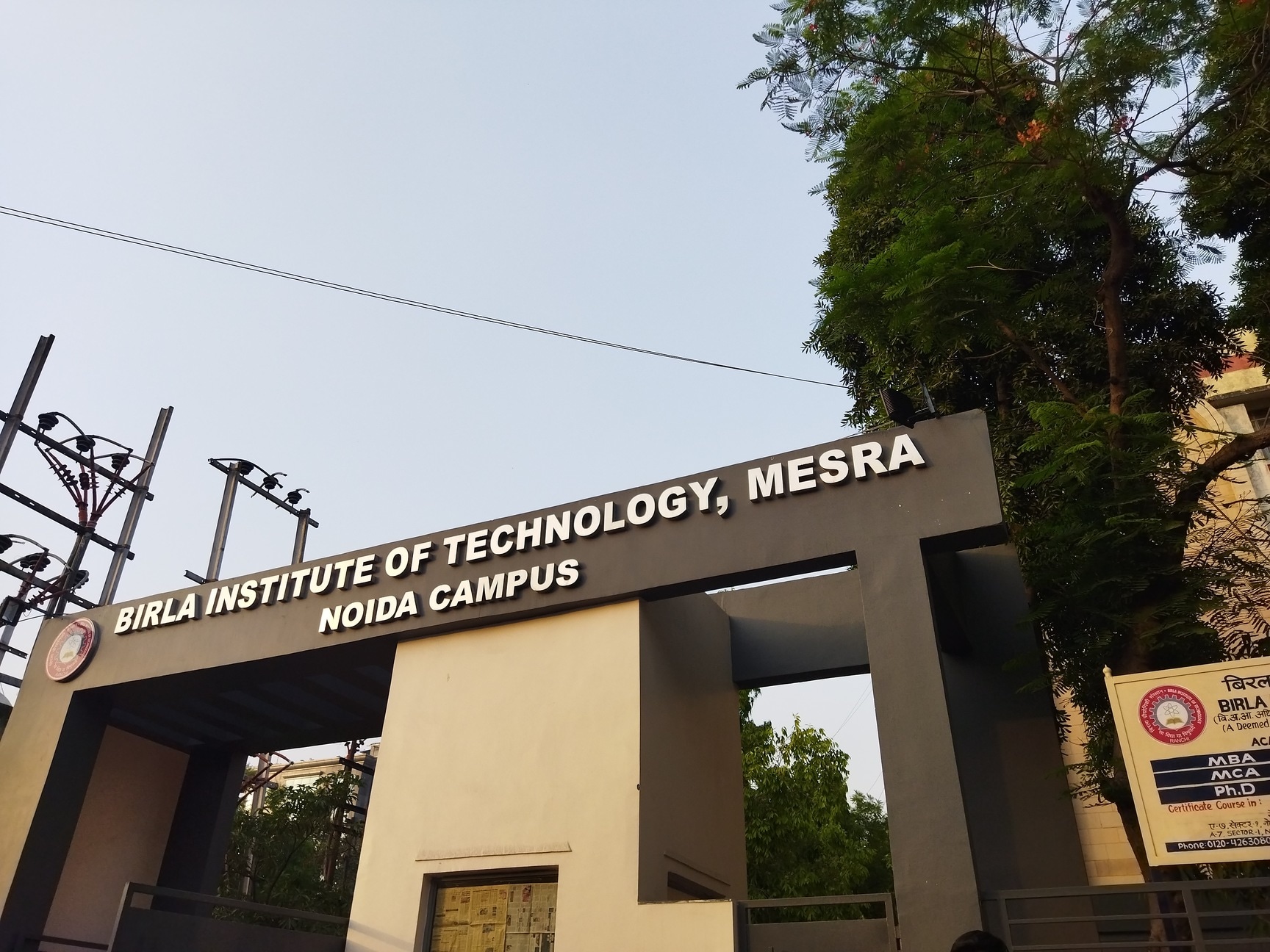
Ph.D. in Nanomaterial Chemistry at Birla Institute of Technology
Introduction about Ph.D. in Nanomaterial Chemistry at Birla Institute of Technology
The Ph.D. in Nanomaterial Chemistry offered by the Birla Institute of Technology (BIT) stands as a flagship programme for aspiring researchers who wish to lead innovations at the intersection of chemistry, material science, and nanotechnology. Positioned within a vibrant research ecosystem, BIT provides state‑of‑the‑art laboratories, interdisciplinary collaborations, and extensive industry linkages that empower candidates to transform fundamental nanochemistry concepts into real‑world applications such as energy storage, catalysis, biomedical devices, and sustainable manufacturing.
Designed for professionals with a master’s degree in chemistry, material science, or related disciplines, this doctoral programme emphasizes rigorous scientific inquiry, advanced analytical techniques, and cutting‑edge computational modeling. Graduates emerge as thought leaders equipped to secure high‑impact research grants, publish in top‑tier journals, and take on strategic roles in academia, R&D centres, and high‑technology industries.
Eligibility Criteria for Ph.D. in Nanomaterial Chemistry at Birla Institute of Technology
- Master’s degree (M.Sc., M.Tech., M.Phil.) in Chemistry, Materials Science, Chemical Engineering or a closely related field with a minimum of 55% aggregate marks (or equivalent CGPA).
- Valid GATE score in Chemistry (or related discipline) is preferred but not mandatory.
- Applicants must possess a strong foundation in physical chemistry, organic synthesis, and analytical techniques.
- English language proficiency (IELTS/TOEFL) is required for international candidates.
- Research proposal outlining the intended area of study within nanomaterial chemistry.
Entrance Exam for Ph.D. in Nanomaterial Chemistry at Birla Institute of Technology
BIT conducts its own Ph.D. entrance examination supplemented by interviews. The exam evaluates:
- Fundamental concepts of inorganic, organic, and physical chemistry.
- Knowledge of nanomaterial synthesis, characterization, and applications.
- Analytical problem‑solving and data interpretation skills.
Candidates with a valid GATE score in Chemistry may be exempted from the written test and directly called for a research interview.
Fee Structure for Ph.D. in Nanomaterial Chemistry at Birla Institute of Technology
| Component | Annual Cost (INR) | Notes |
|---|---|---|
| Tuition Fee | 1,20,000 | Waivable for GATE qualified candidates |
| Laboratory & Facility Charges | 45,000 | Includes access to nanofabrication labs |
| Library & Digital Resources | 10,000 | Unlimited access to journals and e‑books |
| Miscellaneous (Sports, Student Welfare) | 5,000 | |
| Total Approx. | 1,80,000 | Subject to annual revision |
Scholarships, teaching assistantships, and research grants can significantly offset the tuition fee. The institute also offers a limited number of merit‑based fellowships for outstanding candidates.
Admission Process for Ph.D. in Nanomaterial Chemistry at Birla Institute of Technology
- Online Application: Fill the BIT Ph.D. portal with personal details, academic transcripts, and research proposal.
- Document Upload: Upload scanned copies of degree certificates, mark sheets, GATE scorecard (if any), and passport‑size photograph.
- Application Fee Payment: Pay a non‑refundable fee of INR 2,500 via net banking or credit card.
- Screening: The Admission Committee reviews eligibility and research proposal.
- Entrance Test & Interview: Eligible candidates are invited for the written test followed by a technical interview with faculty members.
- Final Selection & Offer Letter: Successful candidates receive an official offer letter with details of fee waiver, stipend, and start date.
- Enrollment: Complete the enrollment formalities, submit original documents, and commence research.
For personalized assistance with the application, you may consider professional support such as Thesis and Dissertation Writing Services to polish your research proposal.
Ph.D. Subjects and Specializations in Nanomaterial Chemistry at Birla Institute of Technology
Students can tailor their dissertation to one of the following cutting‑edge specializations:
- Quantum Dots & Nanocrystals
- Metal‑Organic Frameworks (MOFs) for Catalysis
- 2D Materials (Graphene, Transition Metal Dichalcogenides)
- Nanocomposites for Energy Storage
- Bio‑Nanomaterials for Drug Delivery
- Environmental Nanotechnology (Nanoremediation)
Research Areas in Nanomaterial Chemistry at Birla Institute of Technology
The department focuses on interdisciplinary research that bridges molecular chemistry with nanotechnology. Major research thrusts include:
- Nanocatalysis: Designing atom‑precise catalysts for sustainable chemical transformations.
- Energy Conversion: Development of nanostructured electrodes for batteries, supercapacitors, and fuel cells.
- Nanomedicine: Engineering functionalized nanoparticles for targeted therapy and diagnostics.
- Advanced Characterization: Utilization of synchrotron radiation, TEM, AFM, and Raman spectroscopy to elucidate nanoscale phenomena.
- Computational Nanochemistry: Density functional theory (DFT) and molecular dynamics simulations to predict material properties.
Collaborative projects with industry partners such as Tata Chemicals and ISRO provide hands‑on experience for doctoral scholars.
Documents Required for Ph.D. in Nanomaterial Chemistry at Birla Institute of Technology
| Document | Format | Remarks |
|---|---|---|
| Academic Transcripts & Certificates | PDF (Scanned) | All semesters, including degree certificate |
| GATE Scorecard (if applicable) | Valid for the current admission cycle | |
| Research Proposal (2‑3 pages) | DOCX or PDF | Clearly state objectives, methodology, and expected outcomes |
| Curriculum Vitae | Include publications, patents, and conference presentations | |
| Letter of Recommendation (2) | From academic supervisors or industry mentors | |
| Proof of English Proficiency (IELTS/TOEFL) | For international applicants only |
Birla Institute of Technology Ph.D. Syllabus for Nanomaterial Chemistry
The doctoral curriculum combines coursework, seminars, and research milestones. Core modules include:
- Advanced Quantum Chemistry
- Nanostructured Materials Synthesis
- Surface Science and Spectroscopy
- Computational Modelling of Nanomaterials
- Research Methodology & Scientific Writing
- Ethics in Scientific Research
Complementary electives allow scholars to explore adjacent fields such as polymer chemistry, biomedical engineering, or environmental science.
How To Apply for Ph.D. in Nanomaterial Chemistry at Birla Institute of Technology
Follow these step‑by‑step instructions to submit a successful application:
- Visit the official BIT Ph.D. portal and create a new user account.
- Complete the online application form, ensuring that all mandatory fields are filled accurately.
- Upload the required documents (refer to the “Documents Required” section).
- Pay the application fee through the secure payment gateway.</








