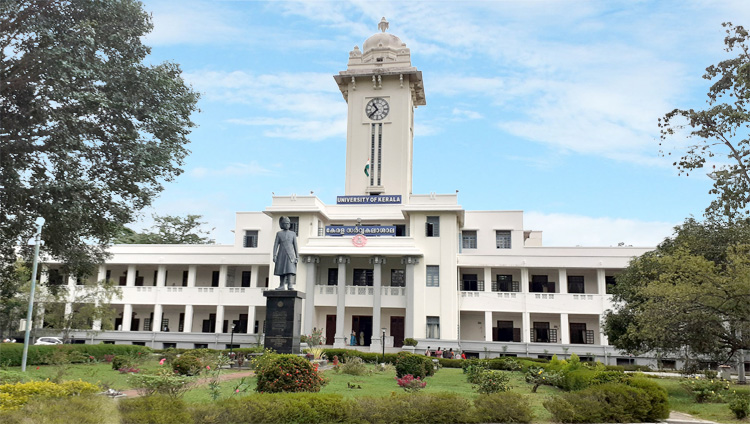
Ph.D. in Nanoscience and Technology from Kerala University: Eligibility, Entrance Exam, Fee Structure, Admission Process, Subjects, Research Areas, Syllabus, Scholarship & Career Scope
Introduction about Ph.D. in Nanoscience and Technology at Kerala University
Kerala University, renowned for its interdisciplinary research ecosystem, offers a Ph.D. in Nanoscience and Technology that blends fundamental physics, chemistry, materials science, and engineering. This program is designed for professionals who aim to become pioneers in nanomaterials, nano‑electronics, and advanced characterization techniques. With state‑of‑the‑art laboratories, collaborations with leading industries, and a vibrant academic community, the university empowers scholars to translate nanoscale discoveries into real‑world innovations.
Eligibility Criteria for Ph.D. in Nanoscience and Technology at Kerala University
- Master’s degree (M.Sc., M.Tech., M.Phil.) in Nanoscience, Physics, Chemistry, Materials Science, Electronics, or any related discipline with a minimum of 55% marks (or equivalent CGPA).
- UGC‑NET qualified candidates are exempted from the entrance examination.
- Professional experience of at least two years in research or industry (preferred but not mandatory).
- Age limit: No upper age restriction; however, candidates must meet the physical fitness standards required for laboratory work.
Entrance Exam for Ph.D. in Nanoscience and Technology at Kerala University
The university conducts a two‑stage selection process:
- Written Test – Objective and descriptive questions covering fundamentals of nanoscience, quantum mechanics, materials characterization, and research methodology.
- Interview & Presentation – Candidates present a research proposal, discuss prior work, and answer technical questions from the panel of experts.
UGC‑NET qualified candidates are directly invited for the interview stage.
Fee Structure for Ph.D. in Nanoscience and Technology at Kerala University
| Component | Annual Fee (INR) | Notes |
|---|---|---|
| Tuition & Laboratory Charges | 45,000 | Includes access to nanofabrication and microscopy facilities. |
| Registration & Administration | 8,000 | One‑time fee payable at enrollment. |
| Annual Research Grant (Mandatory) | 30,000 | Supports consumables, travel for conferences, and journal submissions. |
| Scholarship Deduction (if applicable) | -20,000 | For merit‑based university scholarships. |
| Total Approximate Cost | 63,000 | Subject to revisions each academic year. |
Admission Process for Ph.D. in Nanoscience and Technology at Kerala University
The admission cycle follows a structured timeline:
- Online Application – Submit the application form through the university portal with scanned copies of certificates.
- Document Verification – The admissions office verifies academic records, research publications, and ID proof.
- Entrance Examination – Eligible candidates are invited to appear for the written test (usually held in June).
- Interview & Proposal Presentation – Shortlisted candidates present a 15‑minute research proposal followed by a Q&A session.
- Final Selection & Admission Letter – Successful candidates receive an official admission letter and fee payment instructions.
Ph.D. Subjects and Specializations in Nanoscience and Technology at Kerala University
Students can tailor their doctoral research around one of the following specializations:
- Nanomaterials Synthesis & Characterization
- Quantum Dot and Nanoparticle Engineering
- Nanophotonic Devices
- Bio‑Nanotechnology & Nanosensors
- Nano‑electronics & Flexible Electronics
- Energy Harvesting at the Nanoscale (e.g., solar cells, fuel cells)
Research Areas in Nanoscience and Technology at Kerala University
The university’s research clusters focus on high‑impact domains such as:
| Research Cluster | Key Themes | Potential Industry Partners |
|---|---|---|
| Advanced Materials | 2‑D materials, metal‑organic frameworks, nanocomposites | ISRO, Tata Steel, Indian Institute of Science |
| Nanomedicine | Targeted drug delivery, diagnostic nanoprobes | Biocon, Dr. Reddy's Laboratories |
| Energy & Environment | Nanocatalysts for clean energy, water purification | NTPC, Kerala State Electricity Board |
| Photonics & Plasmonics | Surface‑enhanced Raman spectroscopy, plasmonic sensors | GE Healthcare, Philips |
Documents Required for Ph.D. in Nanoscience and Technology at Kerala University
| Document | Details |
|---|---|
| Completed Application Form | Online submission with a digital signature. |
| Academic Transcripts | Mark sheets & degree certificates of all qualifying exams. |
| UGC‑NET Score Card (if applicable) | Original score card or certified copy. |
| Research Proposal (2,000‑3,000 words) | Outline of intended research, objectives, methodology. |
| Curriculum Vitae (CV) | Highlighting publications, patents, and relevant experience. |
| Passport‑size Photographs | Three recent color photographs. |
| Proof of Identity & Residence | Aadhaar card, PAN card, or passport. |
Kerala University Ph.D. Syllabus for Nanoscience and Technology
The syllabus is modular, split into core and elective components:
- Core Modules – Advanced Quantum Mechanics, Nanoscale Thermodynamics, Characterization Techniques (SEM, TEM, AFM), Research Methodology & Ethics.
- Elective Modules – Choose two from Nano‑electronics, Biomaterials, Energy Materials, Photonic Nanostructures, Computational Nanoscience.
- Seminar & Publication – Mandatory presentation at the university’s research symposium and at least one peer‑reviewed paper before thesis submission.
How To Apply for Ph.D. in Nanoscience and Technology at Kerala University
- Visit the official Kerala University Ph.D. Admissions portal and create a user account.
- Fill in personal details, academic history, and upload scanned copies of the required documents.
- Pay the non‑refundable application fee (INR 2,500) through net banking or UPI.
- Submit your research proposal in PDF format (max 5 MB).
- After submission, monitor the portal for status updates, admit card for the entrance test, and interview schedule.
Need help polishing your proposal? Consider professional Thesis and Dissertation Writing Services to refine structure and language.
Career Scope and Job Opportunities After Ph.D. in Nanoscience and Technology from Kerala University
Graduates enjoy a broad spectrum of career pathways:
- Academic Careers – Lecturer, Assistant Professor, or Research Fellow in premier institutes across India and abroad.
- Industrial R&D – Positions in semiconductor fabs, nanomaterial manufacturers, biotech firms, and renewable energy companies.
- Government & Public Research Laboratories – ISRO, DRDO, BARC, and CSIR labs actively recruit nanoscientists.
- Entrepreneurship – Start‑ups focusing on nano‑sensor platforms, nano‑drug delivery, or advanced coatings.
- Consultancy & Technical Advisory – Providing expertise to policy makers, standards bodies, and industry consortiums.
According to recent placement data, Ph.D. holders command an average starting salary of INR 12–15 lakhs per annum, with rapid growth as expertise deepens.
Scholarship for Ph.D. in Nanoscience and Technology at Kerala University
Several financial assistance options are available:
- Kerala University Merit Scholarship – 50% tuition waiver for candidates with a CGPA ≥ 8.0/10.
- National Fellowship (UGC‑JRF) – Stipend of INR 31,000 per month for up to five years.
- Industry‑Sponsored Projects – Funding through collaborative research agreements with partners like Tata Steel and ISRO.
- Research Grants – Access to the Department of Science & Technology (DST) and Council of Scientific & Industrial Research (CSIR) grants.
Students can also avail of supplemental services such as <a








