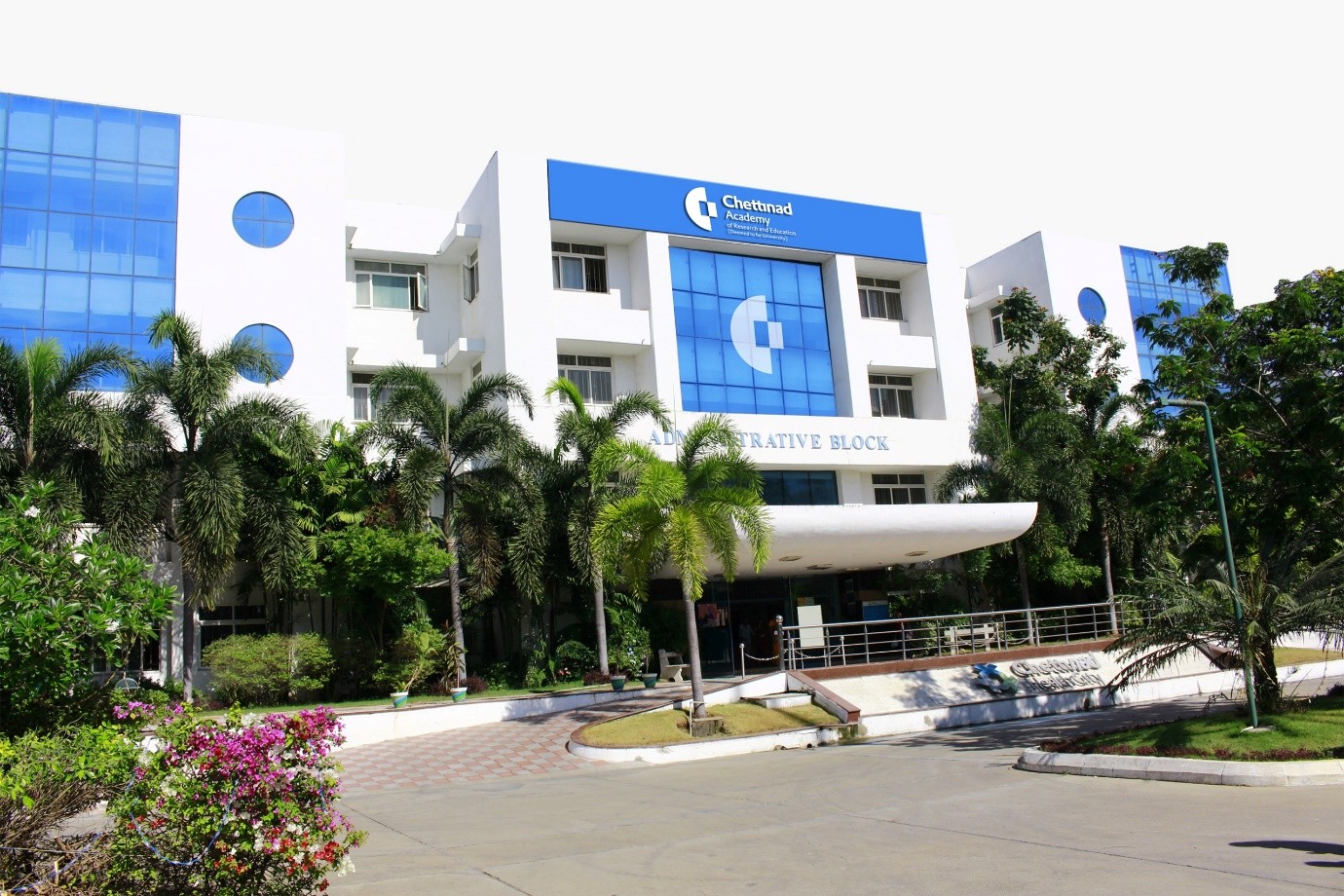
Ph.D. in Nanotechnology from Chettinad Academy of Research and Education: Eligibility, Entrance Exam, Fee Structure, Admission Process, Subjects, Research Areas, Syllabus, Scholarship & Career Scope
Embarking on a Ph.D. in Nanotechnology at Chettinad Academy of Research and Education (CARE) offers an unparalleled platform for innovators and research enthusiasts. With state?of?the?art laboratories, interdisciplinary collaborations, and industry partnerships, CARE empowers scholars to push the boundaries of nanoscience, develop cutting?edge technologies, and become leaders in the global nanotech arena.
Eligibility Criteria for Ph.D. in Nanotechnology at Chettinad Academy of Research and Education
- Master?s degree (M.Sc., M.Tech., or equivalent) in Nanotechnology, Physics, Chemistry, Materials Science, or a closely related discipline with at least 55% marks (or CGPA equivalent).
- For candidates with a Bachelor?s degree (B.Tech./B.Sc.) in a related field, a minimum of 60% marks is required.
- Qualifying the university?conducted entrance exam or having a valid national level qualification (GATE, CSIR?NET, JEST, etc.).
- English proficiency (IELTS/TOEFL) for international candidates.
Entrance Exam for Ph.D. in Nanotechnology at Chettinad Academy of Research and Education
The entrance assessment comprises two stages:
- Written Test: Objective and descriptive questions covering fundamentals of nanomaterials, quantum mechanics, surface chemistry, and research methodology.
- Personal Interview (PI): Evaluation of research aptitude, statement of purpose, and alignment with CARE?s research clusters.
Applicants with GATE/CSIR?NET scores above the qualifying threshold are exempted from the written test.
Fee Structure for Ph.D. in Nanotechnology at Chettinad Academy of Research and Education
| Category | Annual Fee (INR) | Notes |
|---|---|---|
| General Category | 85,000 | Includes tuition, lab access, and library services. |
| SC/ST/PWD | 45,000 | Scholarship eligible ? fee waiver up to 50%. |
| International Students | 120,000 | Additional tuition for specialized equipment usage. |
| Research Grant (Optional) | Variable | Based on project funding from industry or government agencies. |
Admission Process for Ph.D. in Nanotechnology at Chettinad Academy of Research and Education
- Online application submission through the CARE portal.
- Upload academic transcripts, research proposal, and proof of entrance exam qualification.
- Payment of application fee (INR 2,500).
- Shortlisting based on eligibility and entrance exam performance.
- Personal Interview & final selection.
- Issuance of admission letter and enrollment.
Ph.D. Subjects and Specializations in Nanotechnology at Chettinad Academy of Research and Education
- Nanomaterials Synthesis and Characterization
- Nanobiotechnology and Drug Delivery Systems
- Quantum Dot Technology
- Nanophotonics and Plasmonics
- Energy Harvesting Nano?devices
- Environmental Nanotechnology
Research Areas in Nanotechnology at Chettinad Academy of Research and Education
CARE?s nanotech research ecosystem focuses on:
- Advanced nanocomposites for aerospace and automotive applications.
- Carbon?based nanostructures for next?generation batteries.
- Targeted cancer therapeutics using functionalized nanoparticles.
- Smart sensors for IoT and wearable devices.
- Surface engineering for corrosion resistance.
Documents Required for Ph.D. in Nanotechnology at Chettinad Academy of Research and Education
| Document | Format | Remarks |
|---|---|---|
| Academic Transcripts (UG & PG) | PDF (scanned) | Attested copies required. |
| Entrance Exam Scorecard | GATE, CSIR?NET, JEST, or CARE written test. | |
| Research Proposal | PDF (max 5 pages) | Outline of intended research topic. |
| Identity Proof (Aadhar/Passport) | Valid government ID. | |
| Letter of Recommendation (2) | From academic supervisors. |
Chettinad Academy of Research and Education Ph.D. Syllabus for Nanotechnology
The syllabus is divided into core modules and elective clusters:
- Core Modules: Advanced Quantum Mechanics, Nanomaterials Characterization Techniques, Research Methodology & Ethics, Scientific Writing.
- Elective Clusters (choose any two): Nano?electronics, Biomaterials & Tissue Engineering, Energy Materials, Computational Nanoscience.
- Thesis Work: Original research, publications in peer?reviewed journals, and a viva?voce defense.
How To Apply for Ph.D. in Nanotechnology at Chettinad Academy of Research and Education
Follow these steps to secure your seat:
- Visit the official CARE admissions portal.
- Create an account and fill in personal details.
- Upload the required documents (see Documents Required section).
- Select ?Nanotechnology ? Ph.D.? from the program list.
- Pay the non?refundable application fee.
- Submit the application and note the reference number for future correspondence.
- Prepare for the written test / interview as per the schedule emailed by CARE.
Career Scope and Job Opportunities After Ph.D. in Nanotechnology from Chettinad Academy of Research and Education
A doctorate in nanotech opens doors to a spectrum of high?impact careers:
- Senior Research Scientist ? pharmaceutical, energy, or materials firms.
- R&D Manager ? leading multidisciplinary nanotech projects.
- Academic Faculty ? professor or post?doctoral fellow in top universities.
- Entrepreneur ? founding nanotech start?ups or consulting firms.
- Intellectual Property Specialist ? patent drafting and technology transfer.
- Policy Analyst ? shaping national nanotech strategies and regulations.
Scholarship for Ph.D. in Nanotechnology at Chettinad Academy of Research and Education
CARE offers merit?based and need?based scholarships covering up to 80% of tuition fees, along with stipends for living expenses. Additional funding is available through:
- National Science Foundation (NSF) fellowships.
- Government of India?s UGC?CSIR research fellowships.
- Industry?sponsored projects with partner corporations.
Applicants are encouraged to explore external funding portals and submit separate scholarship applications alongside the Ph.D. admission.
FAQs Regarding Ph.D. in Nanotechnology at Chettinad Academy of Research and Education
- What is the minimum duration of the Ph.D. program?
- Typically 3?4 years, subject to satisfactory progress and research outcomes.
- Can I pursue the Ph.D. part?time while working?
- Yes, CARE offers a flexible part?time mode for professionals, with extended timelines.
- Is there a provision for publishing my research during the program?
- Absolutely. CARE?s Publication Support service assists candidates in targeting high?impact journals.
- Do I need prior experience in nanofabrication?
- While not mandatory, basic laboratory skills are advantageous; training modules are provided during the first semester.
- How are dissertations evaluated?
- Through a rigorous internal review, followed by an external examiner panel and a viva?voce defense.
Editing and Proofreading Services
PhD Topic Selection and Proposal Assistance
PhD Admission Assistance
Honorary Doctorate Programs
Research Publication Support
Patent Filing and Support Services








