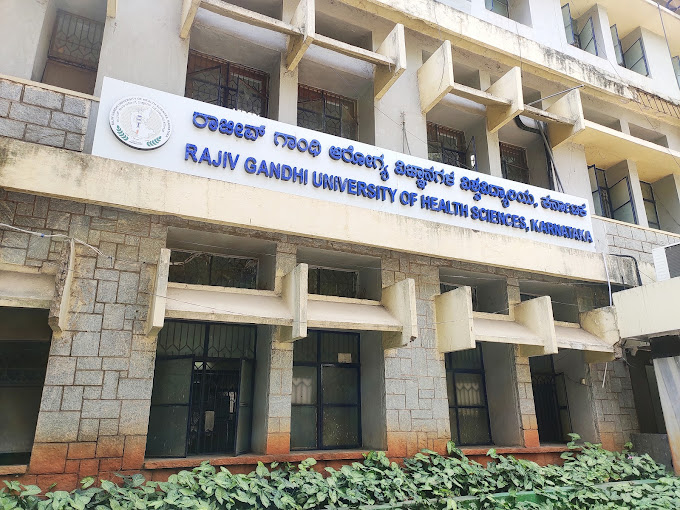
Ph.D. in Neuroscience from Rajiv Gandhi University of Health Sciences
Introduction about Ph.D. in Neuroscience at Rajiv Gandhi University of Health Sciences
Pursuing a Doctorate in Neuroscience at Rajiv Gandhi University of Health Sciences (RGUHS) opens doors to cutting‑edge research, interdisciplinary collaboration, and a career that shapes the future of brain health. The program is meticulously designed for professionals who aspire to lead in academia, clinical research, biotech, and policy making. From mapping neural circuits to developing neuro‑pharmacological breakthroughs, RGUHS equips scholars with the knowledge, resources, and mentorship needed to transform scientific curiosity into impactful discoveries.
Eligibility Criteria for Ph.D. in Neuroscience at Rajiv Gandhi University of Health Sciences
- Master’s degree in Neuroscience, Biomedical Sciences, Pharmacology, or a closely related discipline with a minimum of 55% aggregate (or equivalent CGPA).
- UGC/CSIR NET, GATE, or RGUHS Ph.D. entrance exam qualified candidates are exempted from the interview stage.
- Applicants must possess a valid GATE/NET score or clear the university‑conducted entrance test.
- Minimum of 2 years of relevant research or industry experience is highly preferred.
Entrance Exam for Ph.D. in Neuroscience at Rajiv Gandhi University of Health Sciences
The entrance examination evaluates the candidate’s grasp of fundamental neuroscience concepts, research methodology, and analytical skills. The exam pattern typically includes:
- Multiple‑choice questions (MCQs) covering Neuroanatomy, Neurophysiology, Cognitive Neuroscience, and Molecular Neuroscience.
- Short answer questions assessing research design, statistical analysis, and ethical considerations.
- Viva‑voce interview to gauge motivation, research interests, and suitability for the chosen specialization.
Fee Structure for Ph.D. in Neuroscience at Rajiv Gandhi University of Health Sciences
| Component | Annual Fee (INR) | Notes |
|---|---|---|
| Tuition & Laboratory Charges | 45,000 | Includes access to core neuroscience labs. |
| Library & e‑Resources | 5,000 | Digital subscriptions to neuroscience journals. |
| Examination & Evaluation | 3,000 | Annual internal assessment fees. |
| Miscellaneous (Student Welfare, Activities) | 2,000 | Campus events and counseling services. |
| Total Approximate Cost | 55,000 | Subject to yearly revision by the university. |
Admission Process for Ph.D. in Neuroscience at Rajiv Gandhi University of Health Sciences
- Online Application: Submit the application form through the RGUHS portal along with scanned copies of academic certificates.
- Entrance Test: Appear for the university‑conducted written test (or submit a valid NET/GATE score).
- Interview: Qualify for the viva‑voce interview where research interests and project proposals are discussed.
- Final Selection: The Selection Committee issues a provisional admission letter based on merit and interview performance.
- Registration & Fee Payment: Complete registration, pay the prescribed fees, and receive the official enrollment confirmation.
Ph.D. Subjects and Specializations in Neuroscience at Rajiv Gandhi University of Health Sciences
- Cognitive & Behavioral Neuroscience
- Neuropharmacology & Drug Development
- Neuroimaging & Computational Neuroscience
- Neurogenetics and Molecular Neuroscience
- Clinical Neurology and Translational Neuroscience
Research Areas in Neuroscience at Rajiv Gandhi University of Health Sciences
RGUHS encourages interdisciplinary projects in the following cutting‑edge domains:
- Brain‑Computer Interface (BCI) technologies.
- Neuro‑degenerative disease mechanisms (Alzheimer’s, Parkinson’s).
- Synaptic plasticity and memory consolidation.
- Neuro‑inflammation and immune‑neural interactions.
- Artificial intelligence applications in neural data analysis.
Documents Required for Ph.D. in Neuroscience at Rajiv Gandhi University of Health Sciences
| Document | Format | Remarks |
|---|---|---|
| Application Form (online) | Completed and signed. | |
| Mark sheets & Degree certificates | Scanned copies | All semesters + final degree. |
| Entrance exam scorecard (NET/GATE) | If applicable. | |
| Research proposal (2‑3 pages) | Outline of intended research. | |
| Experience certificates | Relevant research/industry work. | |
| Identity proof (Aadhaar / Passport) | Scanned copy | Valid government ID. |
Rajiv Gandhi University of Health Sciences Ph.D. Syllabus for Neuroscience
The syllabus is structured over three years, comprising core modules, elective rotations, and a dissertation:
- Year 1: Advanced Neuroanatomy, Research Methodology, Statistics for Neuroscience, Ethics in Human Research.
- Year 2: Specialized electives (e.g., Neuropharmacology, Neuroimaging), Laboratory techniques, Mid‑term thesis review.
- Year 3: Full‑scale dissertation work, Publication of research articles, Final viva‑voce defense.
How To Apply for Ph.D. in Neuroscience at Rajiv Gandhi University of Health Sciences
Follow these step‑by‑step instructions to secure your seat:
- Visit the official RGUHS website and navigate to the “Postgraduate Admissions” section.
- Register using a valid email address and create a secure password.
- Fill in the personal, academic, and professional details as per the online form.
- Upload the required documents (as listed in the Documents table).
- Pay the application fee via Netbanking, UPI, or credit card.
- Submit the application and note the generated Application ID for future correspondence.
- Prepare for the entrance examination and keep track of important dates posted on the portal.
Career Scope and Job Opportunities After Ph.D. in Neuroscience from Rajiv Gandhi University of Health Sciences
Graduates emerge as experts capable of shaping the future of brain science. Typical career pathways include:
- Assistant/Associate Professor in universities and research institutes.
- Principal Investigator in government or private neuroscience labs.
- Clinical Research Scientist in hospitals, biotech firms, and pharmaceutical companies.
- Neuro‑data analyst or AI specialist in health‑tech startups.
- Policy advisor for health ministries and international health organisations.
According to recent placement reports, 70% of RGUHS Ph.D. alumni secure research‑oriented positions within six months of graduation.
Scholarship for Ph.D. in Neuroscience at Rajiv Gandhi University of Health Sciences
RGUHS offers several financial aid options to deserving candidates:
- UGC‑CSIR Junior Research Fellowship (JRF): Up to INR 31,000 per month plus contingency.
- University Merit Scholarship: 50% fee waiver for top‑ranked candidates.
- Industry‑Sponsored Projects: Stipends for research aligned with corporate R&D goals.
- External Fellowships: Opportunities from Indian Council of Medical Research (ICMR) and National Brain Research Centre (NBRC).
FAQs Regarding Ph.D. in Neuroscience at Rajiv Gandhi University of Health Sciences
- What is the minimum duration to complete the Ph.D. program?
- The standard duration is three years, extendable up to five years based on research progress.
- Can I pursue the Ph.D. part‑time while working?
- Yes, RGUHS allows part‑time registration for working professionals, subject to approval by the Department Head.
- Is there a provision for cross‑departmental supervision?
- Inter‑departmental collaboration is encouraged; you may have co‑supervisors from Bio‑engineering, Psychology, or Pharmacology.
- How many publications are required for thesis submission?
- At least two peer‑reviewed journal articles are expected before the final viva‑voce.
- Are there any language proficiency requirements for international candidates?
- International applicants must submit TOEFL/IELTS scores if their prior education was not in English.
For personalized support throughout your doctoral journey—ranging from proposal drafting to publication and patent filing—consider leveraging professional services such as Editing and Proofreading Services, PhD Topic Selection and Proposal Assistance, PhD Admission Assistance, Honorary Doctorate Programs, Research Publication Support, and Patent Filing and Support Services.








