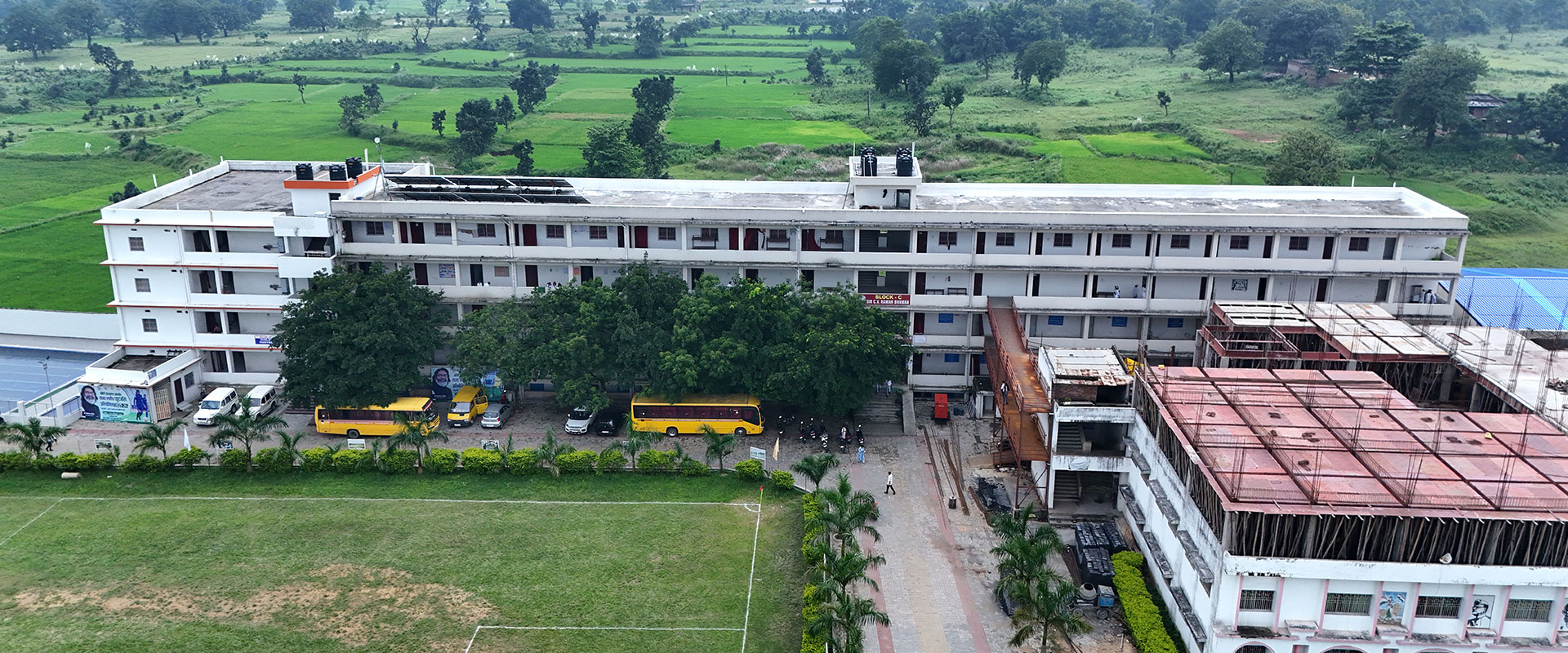
Introduction about Ph.D. in Nutrition & Dietetics at Radha Govind University
In an era where global health challenges are becoming increasingly complex, the role of nutritional science has never been more pivotal. Pursuing a Ph.D. in Nutrition & Dietetics at Radha Govind University is not just an academic milestone; it is a commitment to becoming a visionary leader in the field of wellness and disease prevention. This doctoral program is meticulously designed for professionals who aspire to transcend traditional boundaries, integrating clinical expertise with innovative research to influence public health policies and clinical practices. At Radha Govind University, we empower scholars to investigate the intricate relationship between dietary patterns and metabolic health, providing a robust platform for intellectual growth and scientific discovery. Whether you are aiming to influence global food systems or revolutionize clinical dietetics, this program offers the academic rigors and mentorship required to turn your professional aspirations into a legacy of health transformation.
Ph.D Admission 2026-2027 & Writing Support Services by Shiksha Research
Eligibility Criteria for Ph.D. in Nutrition & Dietetics at Radha Govind University
Embarking on a doctoral journey requires a solid foundation of academic excellence and a mindset geared toward critical inquiry. To ensure the highest standards of research, Radha Govind University has established specific eligibility criteria for its Ph.D. program in Nutrition & Dietetics. Candidates are expected to possess a Master?s degree (M.Sc. or M.A.) in Nutrition, Dietetics, Food Science, or a closely related discipline from a recognized university. A minimum aggregate of 55% marks (or an equivalent grade) is generally required for general category candidates, while a relaxation of 5% is granted to those belonging to SC/ST/OBC (non-creamy layer) and differently-abled categories. Beyond academic transcripts, the university values professional experience and a demonstrated passion for research, looking for individuals who are prepared to contribute original insights to the global body of nutritional knowledge.
Entrance Exam for Ph.D. in Nutrition & Dietetics at Radha Govind University
The selection process for the doctoral program is rigorous, designed to identify candidates with the highest potential for independent research. Most applicants are required to clear the Radha Govind University Entrance Test (RUET), which assesses a candidate's proficiency in research methodology, quantitative analysis, and core subject knowledge in Nutrition & Dietetics. The exam typically consists of two parts: one focusing on general research aptitude and the other on specialized subject matter. However, candidates who have successfully qualified for national-level fellowships or exams such as UGC-NET (including JRF), CSIR-NET, GATE, or SLET are often exempted from the university-specific entrance test and may proceed directly to the personal interview stage. This provides a clear pathway for high-achieving professionals to transition into advanced research roles.
Fee Structure for Ph.D. in Nutrition & Dietetics at Radha Govind University
Radha Govind University is dedicated to providing high-quality doctoral education that is accessible yet comprehensive. The fee structure for the Ph.D. in Nutrition & Dietetics is designed to cover administrative costs, research facilities, and academic guidance throughout the duration of the program. Below is a breakdown of the estimated fee components:
| Fee Component | Description | Estimated Amount (INR) |
|---|---|---|
| Registration Fee | One-time payment at the time of admission | ?10,000 - ?15,000 |
| Course Work Fee | Covers the initial six-month coursework and exams | ?20,000 - ?25,000 |
| Annual Tuition Fee | Yearly academic and research supervision fee | ?60,000 - ?80,000 |
| Thesis Submission Fee | Paid at the time of final dissertation submission | ?15,000 - ?20,000 |
| Contingency/Miscellaneous | Library, laboratory, and other facilities | ?5,000 - ?10,000 per year |
Note: The fees mentioned above are indicative and subject to change per university regulations. Students are advised to consult the official bursar's office for the latest updates.
Admission Process for Ph.D. in Nutrition & Dietetics at Radha Govind University
The admission process at Radha Govind University follows a structured and transparent pathway to ensure that the most capable researchers are selected. It begins with the submission of an online application form accompanied by a comprehensive research proposal. Following the successful completion of the entrance exam (or exemption based on national qualifications), candidates are invited for a personal interview/viva-voce. During this interview, the departmental research committee evaluates the candidate?s research interest, technical competence, and the feasibility of their proposed topic. Professional candidates often find that utilizing Research Paper Writing Services during their master's tenure helps them build a strong publication record, which can significantly enhance their admission prospects by showcasing their prior engagement with scientific literature.
Ph.D. Subjects and Specializations in Nutrition & Dietetics at Radha Govind University
The Ph.D. program is not a one-size-fits-all curriculum but a tailored experience that allows scholars to specialize in niches that align with their career goals. Key specializations offered include Clinical Nutrition, Public Health Nutrition, Sports Nutrition, Food Science and Technology, and Therapeutic Dietetics. Scholars delve deep into advanced subjects such as Nutrigenomics, Microbiome and Health, Food Toxicology, and Global Food Security. This breadth of subjects ensures that graduates are well-equipped to handle the multifaceted challenges of the modern nutrition landscape. By focusing on specialized tracks, professionals can position themselves as subject-matter experts in high-demand areas, bridging the gap between theoretical science and practical application.
Research Areas in Nutrition & Dietetics at Radha Govind University
Research is the heartbeat of the Ph.D. program at Radha Govind University. The institution encourages interdisciplinary research that addresses contemporary health issues. Major research areas include investigating the impact of dietary interventions on non-communicable diseases (like diabetes and cardiovascular conditions), maternal and child nutrition, geriatric nutrition, and the development of functional foods. Modern research often involves complex statistical modeling and data interpretation; many scholars collaborate with Research Data Analysis Services to ensure their findings are robust and mathematically sound. This commitment to research integrity ensures that the work produced by RGU scholars contributes significantly to the scientific community and informs evidence-based practice.
Documents Required for Ph.D. in Nutrition & Dietetics at Radha Govind University
To streamline the application process, candidates must ensure they have the following documents ready for verification:
- Post-Graduate Degree Certificate and Marksheets (M.Sc./M.A.)
- Under-Graduate Degree Certificate and Marksheets
- Valid National Level Entrance Exam Scorecard (if applicable)
- Detailed Research Proposal (Synopsis)
- Proof of Age (10th Standard Certificate)
- Category Certificate (SC/ST/OBC/EWS, if applicable)
- Experience Certificates (if applying based on professional tenure)
- Recent Passport-sized Photographs and Government ID Proof
- No Objection Certificate (NOC) for working professionals
Radha Govind University Ph.D. Syllabus for Nutrition & Dietetics
The syllabus for the Ph.D. course work at Radha Govind University is designed to transition students from passive learners into active creators of knowledge. The first semester typically comprises mandatory course work including Research Methodology, which covers the ethics of research and advanced statistical tools. Students often master Questionnaire Design and Development as part of their field-study preparation. Subsequent semesters focus on elective subjects tailored to the scholar?s research interest, seminars, and progress reports. The core objective of the syllabus is to provide the technical and theoretical foundation necessary for the scholar to eventually engage with Thesis and Dissertation Writing Services or independent writing with a high degree of confidence and academic rigor.
How To Apply for Ph.D. in Nutrition & Dietetics at Radha Govind University
The application journey for Radha Govind University is straightforward but requires attention to detail. Interested candidates should visit the official university website and navigate to the "Admissions" or "Ph.D. Portal." There, they must register their profile and fill out the application form with accurate academic and professional details. After uploading the required documents and paying the application fee through the secure online gateway, candidates should submit their preliminary research synopsis. It is recommended to keep a printed copy of the application form and payment receipt for future reference. The university will subsequently notify shortlisted candidates regarding the schedule for the entrance exam and subsequent interviews through email and the official portal.
Career Scope and Job Opportunities After Ph.D. in Nutrition & Dietetics from Radha Govind University
Obtaining a Ph.D. in Nutrition & Dietetics opens a myriad of prestigious career pathways for professionals. In the academic sector, graduates are highly sought after as Professors and Research Scientists in universities and medical colleges. In the healthcare industry, they serve as Chief Dietitians or Nutritional Consultants in multi-specialty hospitals and wellness centers. The corporate world offers roles in Research & Development (R&D) for food and pharmaceutical companies, where they lead the creation of new health products and supplements. Furthermore, many Ph.D. holders work as policy advisors for international organizations like the WHO or UNICEF, influencing nutritional standards on a global scale. The degree not only enhances your credibility but also signifies your authority in the field, making you a top choice for leadership roles in both public and private sectors.
Scholarship for Ph.D. in Nutrition & Dietetics at Radha Govind University
Radha Govind University is committed to ensuring that financial constraints do not hinder the progress of talented researchers. Various scholarship opportunities are available to doctoral candidates. Those who have qualified for the JRF (Junior Research Fellowship) receive monthly stipends as per government norms. Additionally, the university offers institutional fellowships to meritorious full-time scholars based on their performance in the entrance exam and interview. There are also state-specific scholarships for students belonging to marginalized communities or economically weaker sections. Scholars are encouraged to apply for external funding from agencies like ICMR, DST, and DBT, which often provide substantial financial support for high-impact research projects in the field of nutritional sciences.
FAQs Regarding Ph.D. in Nutrition & Dietetics at Radha Govind University
Q1: What is the duration of the Ph.D. program in Nutrition & Dietetics?
A: The program typically lasts between 3 to 6 years, depending on the research progress and whether the candidate is enrolled full-time or part-time.
Q2: Can I pursue this Ph.D. while working?
A: Yes, Radha Govind University offers a part-time Ph.D. option for working professionals, provided they can fulfill the residency requirements for course work and maintain regular contact with their supervisors.
Q3: Is the degree recognized for international career opportunities?
A: Absolutely. Radha Govind University is a recognized institution, and a Ph.D. degree from here provides a solid credential for global research fellowships, academic positions, and clinical roles abroad.
Q4: Do I need to have a co-supervisor?
A: While a primary supervisor is mandatory, the university allows for a co-supervisor, especially for interdisciplinary research that requires expertise from different domains like food technology or public health.
Q5: How often do I need to present my research progress?
A: Scholars are typically required to present their progress every six months before the Research Advisory Committee (RAC) to ensure their project is on track for timely completion.








