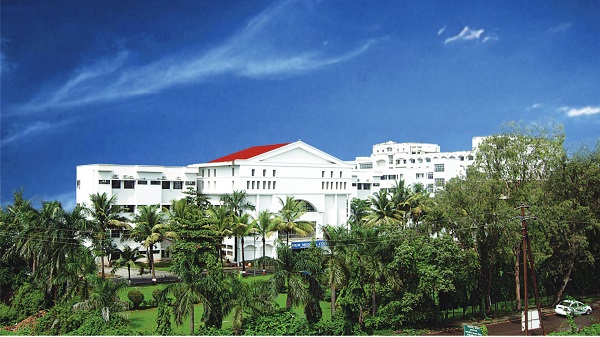
Ph.D. in Ophthalmology from MGM Institute of Health Sciences: Eligibility, Entrance Exam, Fee Structure, Admission Process, Subjects, Research Areas, Syllabus, Scholarship & Career Scope
Introduction about Ph.D. in Ophthalmology at MGM Institute of Health Sciences
The MGM Institute of Health Sciences (MGM IHS) stands as a beacon of advanced medical education in India. Its Ph.D. in Ophthalmology program is crafted for visionary clinicians, researchers, and academicians who aspire to lead groundbreaking investigations in ocular health, disease mechanisms, and innovative therapeutics. With state‑of‑the‑art laboratories, collaborative research hubs, and mentorship from internationally recognized faculty, this doctorate empowers candidates to transform vision science and improve patient outcomes worldwide.
Eligibility Criteria for Ph.D. in Ophthalmology at MGM Institute of Health Sciences
- Master’s degree (M.S., M.D., or equivalent) in Ophthalmology or a related biomedical discipline with a minimum aggregate of 55% (or 5.0 CGPA on a 10‑point scale).
- Valid registration with the Medical Council of India (MCI) or equivalent authority.
- Candidates must have completed a recognized residency or fellowship program in ophthalmology.
- For foreign nationals, equivalence of qualifications must be verified by the Association of Indian Universities (AIU).
- Applicants should possess a demonstrable research aptitude, evidenced by publications, conference presentations, or prior project experience.
Entrance Exam for Ph.D. in Ophthalmology at MGM Institute of Health Sciences
MGM IHS conducts a comprehensive entrance assessment to evaluate scholarly potential and subject‑specific knowledge. The exam comprises:
- Written Test (100 marks): Multiple‑choice questions covering ocular anatomy, physiology, pathology, clinical ophthalmology, and research methodology.
- Viva‑Voce (50 marks): An interview panel assesses the candidate’s research proposal, analytical skills, and alignment with the institute’s research priorities.
Preparation resources include the institute’s recommended reading list, previous year question papers, and Research Paper Writing Services for honing scholarly writing.
Fee Structure for Ph.D. in Ophthalmology at MGM Institute of Health Sciences
| Component | Amount (INR) | Notes |
|---|---|---|
| Application Processing Fee | 5,000 | Non‑refundable, payable at time of submission |
| Annual Tuition & Laboratory Charges | 85,000 | Includes access to all research facilities |
| Library & Digital Resources | 7,500 | Annual subscription to journals and e‑books |
| Miscellaneous (Uniform, ID Card, etc.) | 3,000 | One‑time fee |
| Total Approximate Cost (3‑Year Program) | 285,000 | Excluding scholarships and external funding |
Admission Process for Ph.D. in Ophthalmology at MGM Institute of Health Sciences
The admission journey is streamlined into clear milestones:
- Online Application: Fill the web‑based form, upload scanned documents, and pay the processing fee.
- Document Verification: The admissions office validates academic certificates, registration proof, and research credentials.
- Entrance Examination: Eligible candidates are invited to sit for the written test followed by the viva‑voce.
- Selection & Offer Letter: Successful candidates receive a formal admission offer with program commencement details.
- Enrollment & Orientation: Pay the first year’s tuition, attend the orientation workshop, and receive a research supervisor assignment.
Ph.D. Subjects and Specializations in Ophthalmology at MGM Institute of Health Sciences
Students may tailor their doctoral studies to one of the following high‑impact specializations:
- Retinal Diseases and Gene Therapy
- Glaucoma Pathophysiology and Surgical Innovations
- Corneal Regeneration and Tissue Engineering
- Neuro‑ophthalmology and Visual Processing
- Pediatric Ophthalmology and Congenital Disorders
- Ocular Oncology and Immunotherapy
Research Areas in Ophthalmology at MGM Institute of Health Sciences
Guided by cutting‑edge research clusters, Ph.D. scholars can contribute to:
- Advanced imaging techniques for early detection of macular degeneration.
- CRISPR‑based gene editing for inherited retinal dystrophies.
- Smart drug‑delivery systems for sustained intra‑ocular pressure control.
- Artificial intelligence algorithms for automated diagnosis of diabetic retinopathy.
- Stem‑cell sourced corneal grafts and bio‑printed ocular tissues.
- Epidemiological studies on vision loss in underserved populations.
To support data‑intensive projects, candidates often rely on Research Data Analysis Services for robust statistical insights.
Documents Required for Ph.D. in Ophthalmology at MGM Institute of Health Sciences
| Document | Format | Remarks |
|---|---|---|
| Application Form (online) | PDF/Online | Completed and submitted electronically |
| Academic Transcripts & Degree Certificates | Scanned PDFs | All pages, attested |
| Registration Certificate (MCI) | Scanned PDF | Valid at the time of application |
| Curriculum Vitae (CV) | Include publications and conference presentations | |
| Research Proposal (max 1500 words) | Aligned with institute’s research clusters | |
| Two Letters of Recommendation | From senior academicians or clinicians | |
| Passport‑size Photograph | JPEG | 2.5 cm × 2.5 cm, white background |
MGM Institute of Health Sciences Ph.D. Syllabus for Ophthalmology
The curriculum blends rigorous coursework with immersive research, divided into three phases:
- Phase I – Core Foundations (6 months): Advanced ocular anatomy, clinical ophthalmology, research methodology, biostatistics, and ethics.
- Phase II – Specialized Modules (12 months): Electives based on chosen specialization, laboratory techniques, data analysis, and manuscript preparation.
- Phase III – Thesis Research (18‑24 months): Original investigation, regular progress seminars, manuscript submission, and defense.
How To Apply for Ph.D. in Ophthalmology at MGM Institute of Health Sciences
Follow this step‑by‑step guide to submit a successful application:
- Visit the official MGM IHS admissions portal and create a user account.
- Complete the online application, ensuring all mandatory fields are filled accurately.
- Upload the required documents (refer to the Documents Required table).
- Pay the non‑refundable processing fee via net banking or credit card.
- Submit the research proposal and await an email invitation for the entrance exam.
- Prepare for the written test using recommended textbooks and online mock exams.
- Attend the viva‑voce, articulate your research vision, and respond to faculty queries.
- Upon selection, accept the offer, remit the first year’s tuition, and register for the orientation program.
Applicants seeking assistance with proposal drafting or manuscript refinement can explore Thesis and Dissertation Writing Services.
Career Scope and Job Opportunities After Ph.D. in Ophthalmology from MGM Institute of Health Sciences
Graduates emerge as leaders in academia, industry, and clinical research. Potential career trajectories include:
- Assistant/Associate Professor in medical colleges and universities.
- Principal Investigator in national and international research consortia.
- Senior Scientist at pharmaceutical or biotech firms focusing on ocular therapeutics.
- Clinical trial manager for ophthalmic drug development.
- Consultant for healthcare policy and vision‑care programs.
- Founder of start‑ups specializing in AI‑driven eye‑diagnostics.
Scholarship for Ph.D. in Ophthalmology at MGM Institute of Health Sciences
MGM IHS offers merit‑based and need‑based scholarships to support deserving scholars:
- Institute Merit Scholarship: 50% tuition waiver for top 10% of candidates based on








