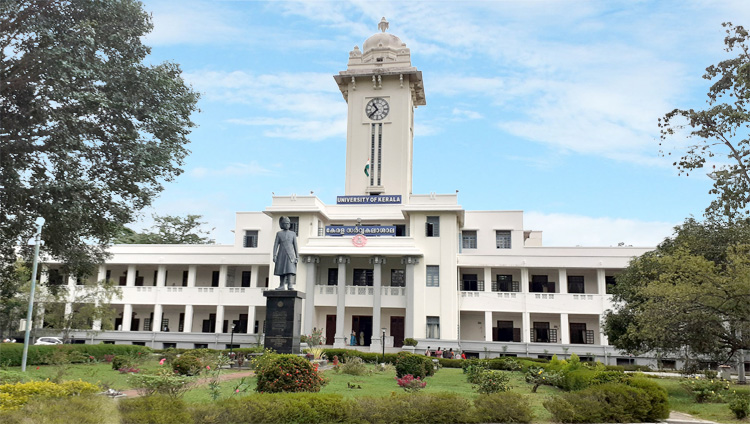
Ph.D. in Optoelectronics at Kerala University
Introduction about Ph.D. in Optoelectronics at Kerala University
Kerala University stands at the forefront of interdisciplinary research, offering a rigorous Ph.D. in Optoelectronics that blends photonics, nanotechnology, and electronic engineering. Designed for seasoned professionals and academicians, the program empowers scholars to pioneer innovative solutions in communication, imaging, and sensing technologies. With state‑of‑the‑art laboratories, collaborative industry links, and a vibrant research community, this doctorate paves the way for transformative careers in both academia and high‑tech sectors.
Eligibility Criteria for Ph.D. in Optoelectronics at Kerala University
- Master’s degree (M.Sc., M.Tech., M.E.) in Optoelectronics, Physics, Electrical Engineering, or a closely related field with a minimum of 55% aggregate (or CGPA 6.0/10).
- Qualified candidates must have a valid GATE or CSIR‑UGC NET score; however, candidates without these scores can appear for the university’s entrance test.
- Professional experience of at least two years in research or industry is highly desirable.
- Applicants must demonstrate proficiency in English (IELTS 6.0 or equivalent) if their prior education was not in English.
Entrance Exam for Ph.D. in Optoelectronics at Kerala University
The university conducts a comprehensive written test followed by a personal interview. The written exam evaluates:
- Fundamentals of Optoelectronics, Photonics, and Semiconductor Physics.
- Advanced mathematics, signal processing, and research methodology.
- Analytical reasoning and problem‑solving abilities.
Successful candidates are then invited for a panel interview where they present a research proposal, discuss previous work, and outline future objectives.
Fee Structure for Ph.D. in Optoelectronics at Kerala University
| Category | Annual Fee (INR) | Notes |
|---|---|---|
| General Category | 30,000 | Includes tuition, lab usage, and library access. |
| SC/ST/PwD | 15,000 | Half‑fee concession as per government policy. |
| Sponsored/Industry‑Funded | 0 | Full fee waiver with project sponsorship. |
| Additional Charges | 5,000 (per semester) | For conference travel, manuscript processing, and specialized software. |
Admission Process for Ph.D. in Optoelectronics at Kerala University
- Online Application: Submit the application through the university portal along with scanned copies of academic certificates.
- Entrance Examination: Appear for the written test (or submit a valid GATE/NET score).
- Interview & Proposal Review: Present a concise research proposal and undergo a personal interview.
- Document Verification: Provide original documents for verification at the admission office.
- Enrollment & Fee Payment: Complete the enrollment formalities and pay the prescribed fees.
Ph.D. Subjects and Specializations in Optoelectronics at Kerala University
Students can tailor their doctorate around any of the following specializations:
- Fiber Optic Communication Systems
- Laser Physics & Applications
- Quantum Dot and Nanophotonic Devices
- Optical Sensors & Biosensing
- Non‑linear Optics and Photonic Crystals
- Integrated Photonic Circuits
Research Areas in Optoelectronics at Kerala University
The university’s research ecosystem focuses on high‑impact domains such as:
- Ultra‑high‑speed optical data transmission for 6G networks.
- Development of low‑cost, high‑efficiency solar cells using perovskite materials.
- Biomedical imaging using multiphoton microscopy.
- Photon‑based quantum computing platforms.
- Environmental monitoring through opto‑chemical sensor arrays.
Documents Required for Ph.D. in Optoelectronics at Kerala University
| Document | Format | Remarks |
|---|---|---|
| Completed Application Form | PDF (online upload) | Signed digitally. |
| Academic Transcripts & Degree Certificates | Scanned PDF (color) | All years of higher education. |
| GATE/NET Scorecard (if applicable) | Valid for the current academic year. | |
| Research Proposal (3‑5 pages) | Include objectives, methodology, and expected outcomes. | |
| Curriculum Vitae | Highlight publications, patents, and projects. | |
| Experience Certificates (if any) | Relevant industry or research positions. | |
| Identity Proof (Aadhaar/Passport) | Government‑issued photo ID. |
Kerala University Ph.D. Syllabus for Optoelectronics
The syllabus is structured into core modules, elective topics, and research components:
- Core Modules: Advanced Photonics, Semiconductor Device Physics, Optical Materials, Research Methodology.
- Electives (choose any two): Non‑linear Optics, Integrated Photonics, Quantum Optics, Optical Metrology, Laser Engineering.
- Research Component: Original dissertation (minimum 100 pages) + at least two peer‑reviewed journal publications before submission.
How To Apply for Ph.D. in Optoelectronics at Kerala University
Follow these steps to submit a successful application:
- Visit the official Kerala University Ph.D. admissions portal and create a user account.
- Fill in personal details, academic background, and select “Optoelectronics” as the desired discipline.
- Upload all required documents as per the checklist above.
- Pay the application fee (INR 2,000) via online payment gateway.
- Submit the application and note the registration number for future reference.
Career Scope and Job Opportunities After Ph.D. in Optoeelectronics from Kerala University
Graduates emerge as subject‑matter experts, ready to take on senior roles such as:
- Senior Research Scientist – National labs, DRDO, ISRO.
- Principal Engineer – Leading telecom firms (e.g., Nokia, Ericsson).
- Head of Photonics Division – Semiconductor manufacturers (e.g., Intel, Texas Instruments).
- Assistant/Associate Professor – Universities and research institutes.
- Technology Entrepreneur – Founders of start‑ups in optical sensing, LiDAR, or quantum communication.
Industry demand for optoelectronic expertise is projected to grow at a CAGR of 9% over the next decade, making this doctorate a strategic investment for ambitious professionals.
Scholarship for Ph.D. in Optoelectronics at Kerala University
Multiple funding avenues are available:
- University Merit Scholarship: Up to 75% tuition waiver for candidates with a CGPA above 8.5.
- UGC Junior Research Fellowship (JRF): Annual stipend of INR 31,000 plus contingency.
- Industry‑Sponsored Projects: Full fee waiver plus research allowances.
- External Grants: ISRO, DRDO, and DST project funding for specific research themes.
Applicants are encouraged to explore PhD Admission Assistance for guidance on securing scholarships and sponsorships.
FAQs Regarding Ph.D. in Optoelectronics at Kerala University
- What is the minimum duration to complete the Ph.D.?
- The program is designed for a minimum of 3 years and a maximum of 5 years, contingent on research progress.
- Can I pursue the doctorate part‑time while working?
- Yes, Kerala University offers a part‑time option with flexible coursework and periodic project reviews.
- Is there any provision for publishing my work?
- Definitely. The university collaborates with high‑impact journals and provides Research Publication Support to assist with manuscript preparation and submission.
- Are patents encouraged during the Ph.D.?
- Innovative findings can be patented. The institution offers Patent Filing and Support Services to help candidates navigate intellectual property protection.
- Do I need to submit a proposal before admission?
- A preliminary research proposal (3‑5 pages) is required for the interview stage. Detailed proposals are refined after enrollment.
- How can I improve my proposal?
- Professional guidance is available through PhD Topic Selection and Proposal Assistance, which helps refine scope, objectives, and methodology.
- What editing services are available for my thesis?
- The university partners with experts offering Editing and Proofreading Services to ensure academic standards are met.








