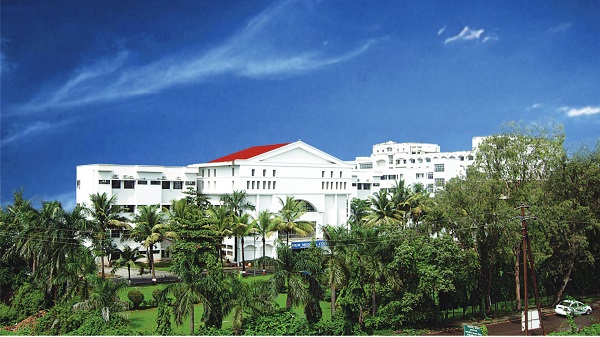
Ph.D. in Optometry at MGM Institute of Health Sciences
Introduction about Ph.D. in Optometry at MGM Institute of Health Sciences
The Ph.D. in Optometry offered by MGM Institute of Health Sciences is a premier research‑driven program designed for vision‑care professionals who aspire to become thought leaders, academicians, and innovators in the field of eye health. With state‑of‑the‑art laboratories, interdisciplinary collaborations, and a faculty of internationally recognized scholars, the program empowers candidates to explore cutting‑edge topics ranging from retinal imaging to low‑vision rehabilitation. This inspirational journey not only enhances clinical expertise but also equips scholars with robust research methodology skills essential for addressing global ocular challenges.
Eligibility Criteria for Ph.D. in Optometry at MGM Institute of Health Sciences
- Master’s degree (M.Sc., M.Optom, or equivalent) in Optometry, Vision Science, or a related discipline with a minimum of 55% aggregate marks (or CGPA ≥ 6.5/10).
- For candidates holding a B.Sc. (Optometry) + M.Sc. (Optometry) combination, a minimum of 60% aggregate is required.
- Valid GATE/UPSC/State‑level entrance score in a relevant science stream is preferred but not mandatory.
- Proficiency in English (IELTS ≥ 6.0 or TOEFL ≥ 80) for international applicants.
- Applicants must have a valid score in a recognized research aptitude test (e.g., JRF or institute‑specific test).
Entrance Exam for Ph.D. in Optometry at MGM Institute of Health Sciences
MGM Institute conducts its own entrance test called the MGM Research Aptitude Test (MGM‑RAT). The exam evaluates:
- Fundamental concepts in optics, ocular anatomy, and visual physiology.
- Research methodology, statistics, and scientific writing.
- Critical reasoning and analytical abilities.
The test is held twice a year (June and December). Candidates who have qualified national-level exams like GATE may receive exemption or direct interview calls.
Fee Structure for Ph.D. in Optometry at MGM Institute of Health Sciences
| Fee Component | Indian Nationals (INR) | International Students (USD) |
|---|---|---|
| Application Processing Fee | ₹ 2,500 | $ 40 |
| Annual Tuition & Lab Fees | ₹ 85,000 per year | $ 1,200 per year |
| Research Project Grant (mandatory) | ₹ 30,000 (one‑time) | $ 450 (one‑time) |
| Library & Resource Access | ₹ 5,000 per year | $ 70 per year |
| Miscellaneous (Health, Sports, etc.) | ₹ 10,000 per year | $ 150 per year |
| Total Estimated Cost (3‑year program) | ₹ 336,500 | $ 4,860 |
Admission Process for Ph.D. in Optometry at MGM Institute of Health Sciences
- Online Application: Submit the application through the institute’s portal with scanned copies of academic certificates.
- Entrance Examination: Appear for MGM‑RAT or submit a valid GATE/UPSC score.
- Personal Interview: Short‑listed candidates are invited for a panel interview to assess research interests and communication skills.
- Document Verification: Physical verification of originals at the campus office.
- Admission Offer: Successful candidates receive an official offer letter and enrollment instructions.
- Fee Payment & Registration: Pay the first year’s tuition to activate the student account.
Ph.D. Subjects and Specializations in Optometry at MGM Institute of Health Sciences
The program offers a flexible curriculum allowing candidates to specialize in one or more of the following domains:
- Clinical Optometry & Vision Therapy
- Ocular Imaging & Diagnostic Technologies
- Low‑Vision Rehabilitation & Assistive Devices
- Contact Lens Design & Materials Science
- Public Health Optometry & Epidemiology
- Neuro‑Optometry & Visual Neuroscience
- Artificial Intelligence in Vision Care
Research Areas in Optometry at MGM Institute of Health Sciences
Faculty expertise and institute collaborations span a broad spectrum of research interests:
- Retinal disease biomarkers using OCT‑Angiography.
- Myopia control strategies and orthokeratology.
- Smart contact lenses integrating biosensors.
- Digital therapeutics for amblyopia.
- Vision‑related quality of life assessments in rural populations.
- Machine‑learning models for automated refraction.
- Age‑related macular degeneration (AMD) preventive protocols.
Students are encouraged to collaborate with the institute’s Center for Vision Research and partner hospitals, accessing cutting‑edge equipment such as wavefront aberrometers and adaptive optics.
Documents Required for Ph.D. in Optometry at MGM Institute of Health Sciences
| Document | Original/Copy | Notes |
|---|---|---|
| Academic Transcripts (M.Sc./M.Optom) | Original + Photocopy | Must be attested by the issuing university. |
| Score Card of Entrance Test (MGM‑RAT/GATE) | Copy | Valid for the admission year. |
| Research Proposal (2,000‑word abstract) | Copy | Submitted online with the application. |
| Letters of Recommendation (2) | Original sealed envelopes | From academic supervisors or senior clinicians. |
| Proof of Identity (Passport/ AADHAR) | Copy | For both Indian and foreign candidates. |
| English Proficiency Certificate (if applicable) | Copy | IELTS/TOEFL scores. |
MGM Institute of Health Sciences Ph.D. Syllabus for Optometry
The syllabus is structured over three semesters, each balancing coursework, seminars, and research milestones:
- Semester 1 – Foundations: Advanced Ocular Anatomy, Optometric Pharmacology, Research Methodology, Biostatistics, Ethics in Clinical Research.
- Semester 2 – Specialized Modules: Imaging Techniques, Vision Science Analytics, Clinical Trials Design, Intellectual Property Rights for Medical Devices.
- Semester 3 – Dissertation & Publication: Data Collection, Manuscript Preparation, Thesis Defense, Publication in peer‑reviewed journals.
Throughout the program, candidates receive mentorship from faculty and are encouraged to publish in high‑impact journals. For those seeking additional support, the institute offers Thesis and Dissertation Writing Services to refine academic writing skills.
How To Apply for Ph.D. in Optometry at MGM Institute of Health Sciences
Follow these step‑by‑step instructions:
- Visit the official admissions portal and create a user account.
- Fill in personal details, academic history, and upload scanned documents.
- Pay the non‑refundable application fee (₹ 2,500 / $ 40).
- Choose your preferred research area and optional supervisor.
- Submit the research proposal and, if applicable, upload G








