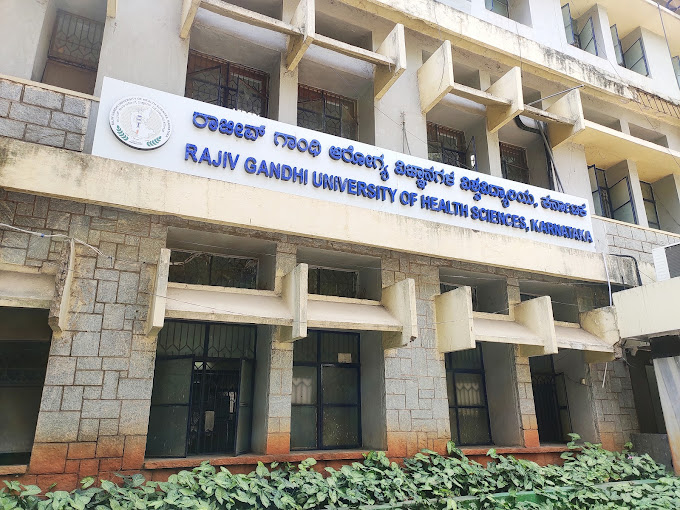
Ph.D. in Optometry from Rajiv Gandhi University of Health Sciences: Eligibility, Entrance Exam, Fee Structure, Admission Process, Subjects, Research Areas, Syllabus, Scholarship & Career Scope
Introduction about Ph.D. in Optometry at Rajiv Gandhi University of Health Sciences
Embarking on a Ph.D. in Optometry at Rajiv Gandhi University of Health Sciences (RGUHS) opens a gateway to cutting‑edge vision science, advanced clinical research, and leadership in ocular health. The program is designed for dedicated professionals who aspire to become innovators, educators, and policy makers in the field of optometry. With state‑of‑the‑art laboratories, a vibrant research ecosystem, and collaborations with leading eye care institutions, RGUHS offers an inspirational environment to transform your passion for eye health into a distinguished academic career.
Eligibility Criteria for Ph.D. in Optometry at Rajiv Gandhi University of Health Sciences
- Master’s degree (M.Optometry, M.Sc. Vision Science, or equivalent) with a minimum of 55% aggregate marks.
- Valid GATE/NET score in a related discipline (Optometry, Vision Science, Biomedical Engineering, etc.) is highly preferred.
- Candidates must possess a strong academic record and demonstrable research aptitude.
- Non‑resident Indian (NRI) candidates must provide equivalence certificates from the Ministry of Education.
Entrance Exam for Ph.D. in Optometry at Rajiv Gandhi University of Health Sciences
The entrance assessment comprises two stages: a written test followed by a personal interview. The written test evaluates:
- Fundamentals of optometric science.
- Research methodology and statistics.
- Current trends in ocular health and visual rehabilitation.
The interview panel, consisting of senior faculty and industry experts, probes the candidate’s research proposal, motivation, and long‑term vision.
Fee Structure for Ph.D. in Optometry at Rajiv Gandhi University of Health Sciences
| Component | Amount (INR) | Notes |
|---|---|---|
| Registration Fee | 5,000 | One‑time payment at the time of admission. |
| Annual Tuition Fee | 30,000 | Payable at the beginning of each academic year. |
| Laboratory & Equipment Charges | 10,000 | Covers access to optical labs, imaging suites, and software licenses. |
| Thesis Submission Fee | 7,500 | Applicable upon successful completion of the dissertation. |
| Miscellaneous (Library, Sports, etc.) | 5,000 | Estimated per year. |
| Total Approximate Cost (3‑Year Program) | 132,500 | Excluding scholarships and external funding. |
Admission Process for Ph.D. in Optometry at Rajiv Gandhi University of Health Sciences
- Online Application: Submit the application form through the official RGUHS portal.
- Document Upload: Attach scanned copies of academic certificates, GATE/NET scorecard, and ID proof.
- Entrance Examination: Appear for the written test at designated test centers.
- Interview & Proposal Review: Qualify for the interview, present your research proposal, and receive feedback.
- Final Selection: Receive the admission offer letter, pay the registration fee, and enroll.
Ph.D. Subjects and Specializations in Optometry at Rajiv Gandhi University of Health Sciences
While the core program is centered on Optometry, students can tailor their research to one of the following specializations:
- Clinical Optometry & Vision Therapy
- Low Vision Rehabilitation
- Ocular Imaging & Biomechanics
- Contact Lens Design & Materials
- Public Health Optometry & Epidemiology
- Neuro‑Optometry & Visual Neuroscience
Research Areas in Optometry at Rajiv Gandhi University of Health Sciences
RGUHS encourages interdisciplinary research that bridges clinical practice with technological innovation. Prominent research domains include:
- Advanced retinal imaging for early detection of diabetic retinopathy.
- Artificial intelligence algorithms for automated refractive error analysis.
- Development of smart contact lenses with drug‑delivery capabilities.
- Impact of digital device usage on pediatric visual development.
- Community‑based vision screening programs in rural Karnataka.
- Genetic markers associated with myopia progression.
Documents Required for Ph.D. in Optometry at Rajiv Gandhi University of Health Sciences
| Document | Specification |
|---|---|
| Academic Transcripts | Original certificates of Master’s degree (M.Optometry/M.Sc.) with attested copies. |
| GATE/NET Scorecard | Valid scorecard in relevant discipline (if available). |
| Research Proposal | 500‑word summary outlining objectives, methodology, and expected outcomes. |
| Identity Proof | Aadhaar card / Passport (for Indian and NRI candidates). |
| Experience Letters (Optional) | Letters from clinical or research positions supporting professional experience. |
Rajiv Gandhi University of Health Sciences Ph.D. Syllabus for Optometry
The syllabus is structured into three progressive phases:
- Foundation Modules (Year 1): Advanced Ocular Anatomy, Vision Science, Research Methodology, Biostatistics, Ethics in Research.
- Core Specialization (Year 2): Choose a specialization track; complete coursework, lab rotations, and start data collection.
- Dissertation Phase (Year 3): Conduct original research, publish at least two peer‑reviewed articles, and submit the thesis for viva‑voce.
How To Apply for Ph.D. in Optometry at Rajiv Gandhi University of Health Sciences
Follow these steps to submit a successful application:
- Visit the official RGUHS admissions portal and register with a valid email address.
- Complete the online form, ensuring all mandatory fields are filled accurately.
- Upload the required documents in PDF format (maximum size 2 MB each).
- Pay the non‑refundable application fee via net banking or credit card.
- Schedule the entrance examination date and keep track of the notification email.
- Prepare for the interview by reviewing recent optometric literature and refining your research proposal.
Career Scope and Job Opportunities After Ph.D. in Optometry from Rajiv Gandhi University of Health Sciences
A doctorate in Optometry unlocks diverse pathways:
- Academic Positions: Lecturer, Assistant Professor, Head of Department in universities and colleges.
- Research Scientist: Lead investigator in ocular research labs, pharmaceutical companies, and vision technology startups.
- Clinical Leadership: Director of clinical services, chief optometrist, or consultant for eye hospitals.
- Policy & Public Health: Advisory roles in government health departments, NGOs, and global vision initiatives.
- Entrepreneurship: Founder of optical device firms, tele‑optometry platforms, or vision‑care NGOs.
Scholarship for Ph.D. in Optometry at Rajiv Gandhi University of Health Sciences
RGUHS offers merit‑based and need‑based scholarships to support doctoral candidates. Key schemes include:
- RGUHS Merit Scholarship: Covers 50 % of tuition for students with a CGPA ≥ 8.5.
- UGC‑CSIR JRF: National fellowship providing a monthly stipend and research allowance.
- State Government Assistants: Financial aid for candidates from economically weaker sections.
Applicants are advised to submit a separate scholarship application along with their admission documents.
FAQs Regarding Ph.D. in Optometry at Rajiv Gandhi University of Health Sciences
- 1. What is the minimum duration to complete the Ph.D. in Optometry?
- The program is designed for three academic years, but extensions up to two additional years are permitted for research completion.
- 2. Can I pursue the Ph.D. part‑time while working?
- Yes, RGUHS offers a part‑time mode for qualified professionals; the fee structure remains the same, but the duration extends to five years.
- 3. Is there any provision for foreign students?
- International candidates are welcomed and must meet the same academic criteria, supplemented by an equivalence








