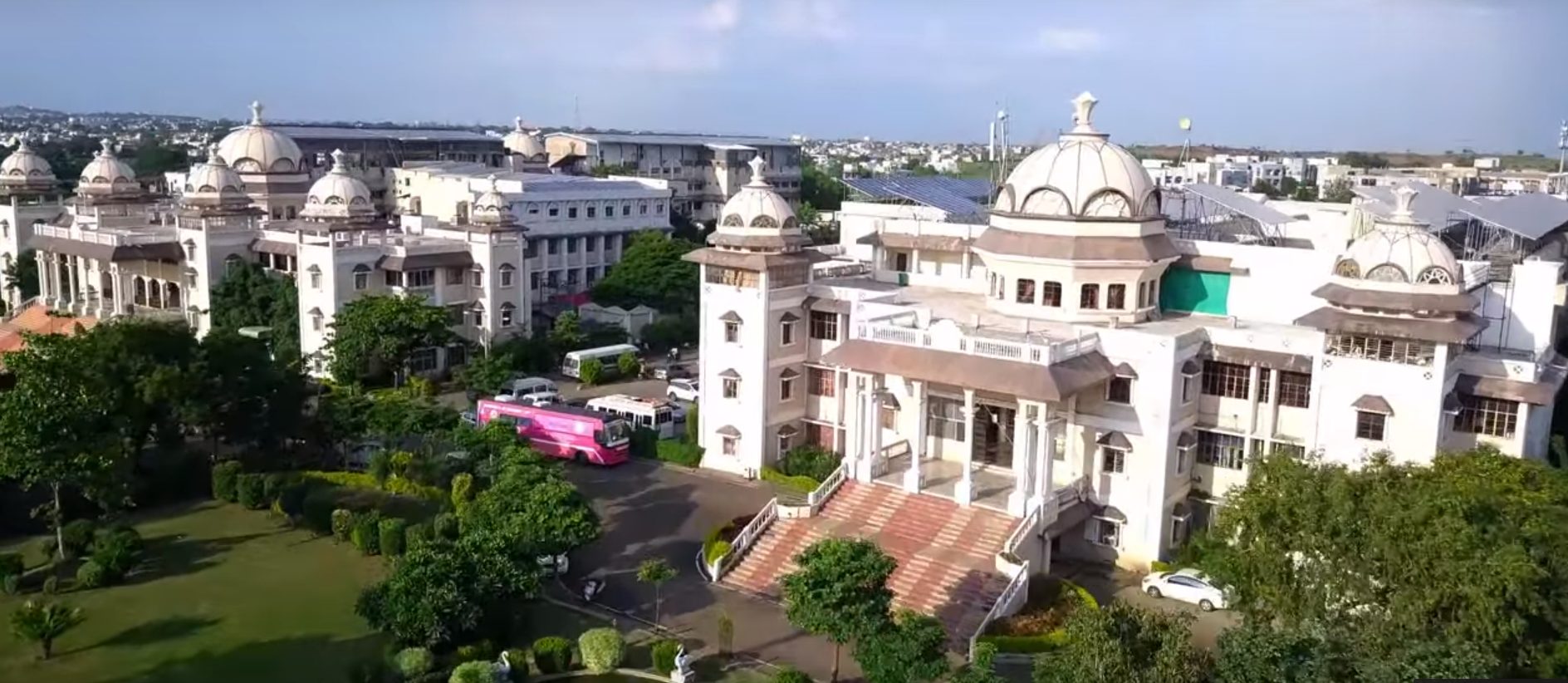
Ph.D. in Orthopaedics from Datta Meghe Institute of Medical Sciences
Introduction about Ph.D. in Orthopaedics at Datta Meghe Institute of Medical Sciences
The Ph.D. in Orthopaedics at Datta Meghe Institute of Medical Sciences (DMIMS) stands as a beacon for aspiring researchers who wish to advance orthopaedic science, improve patient outcomes, and contribute to cutting‑edge innovations. Nestled in the vibrant academic hub of Maharashtra, DMIMS offers state‑of‑the‑art laboratories, collaborative research environments, and mentorship from nationally recognised orthopaedic surgeons and scientists. This programme is meticulously designed to blend rigorous scientific inquiry with clinical relevance, preparing scholars for leadership roles in academia, research institutions, and industry.
Eligibility Criteria for Ph.D. in Orthopaedics at Datta Meghe Institute of Medical Sciences
Prospective candidates must fulfil the following eligibility conditions:
- Possession of a Master’s degree (M.Sc., M.D., or M.B.B.S. with specialization) in Orthopaedics, Anatomy, Physiology, Biochemistry, or a related biomedical discipline with a minimum aggregate of 55% (or 5.5 CGPA) from a recognised university.
- Graduates with a Bachelor’s degree in Orthopaedics (B.Sc.) are eligible if they have secured a minimum of 60% and have completed a relevant research project.
- Candidates must have a valid GATE or NET score in a relevant subject. In the absence of a qualifying score, DMIMS conducts its own entrance test.
- Professional experience of at least two years in a clinical or research setting is desirable but not mandatory.
Entrance Exam for Ph.D. in Orthopaedics at Datta Meghe Institute of Medical Sciences
DMIMS follows a two‑stage selection process:
- Written Examination: A 100‑question test covering Anatomy, Physiology, Pathology, Orthopaedic biomechanics, research methodology, and statistics. The exam is conducted online and evaluated on a 100‑point scale.
- Interview & Presentation: Shortlisted candidates present a research proposal and undergo a viva‑voce with the department’s faculty panel. The interview assesses depth of knowledge, analytical skills, and research potential.
Successful candidates receive a Merit‑Based Fellowship that may cover tuition and provide a monthly stipend.
Fee Structure for Ph.D. in Orthopaedics at Datta Meghe Institute of Medical Sciences
The fee structure is transparent and designed to support research excellence. All amounts are in Indian Rupees (INR).
| Category | Fee (INR) | Comments |
|---|---|---|
| Application Fee | 2,500 | One‑time, non‑refundable |
| Tuition Fee (Annual) | 45,000 | Payable in two installments |
| Lab & Equipment Charges | 10,000 | Includes access to orthopaedic simulators |
| Library & Resource Access | 5,000 | Digital and print resources |
| Miscellaneous (Student Services) | 3,000 | Student welfare & activities |
| Total (First Year) | 65,500 |
Scholarships, research grants, and teaching assistantships can significantly offset these costs.
Admission Process for Ph.D. in Orthopaedics at Datta Meghe Institute of Medical Sciences
The admission journey comprises the following steps:
- Online Application: Fill the web‑based form, upload academic certificates, and pay the application fee.
- Document Verification: The admissions office validates authenticity of degrees, scorecards, and experience letters.
- Entrance Examination: Candidates receive an admit card and appear for the written test at designated centres.
- Interview & Proposal Review: Successful test‑takers submit a 2‑page research proposal and attend a panel interview.
- Final Selection & Offer Letter: Admission offers are dispatched via email with details of fee payment and enrollment.
- Enrollment & Orientation: New scholars attend a week‑long orientation covering campus facilities, research ethics, and safety protocols.
Ph.D. Subjects and Specializations in Orthopaedics at Datta Meghe Institute of Medical Sciences
Students can tailor their doctoral research across a spectrum of specializations, such as:
- Joint Reconstruction and Arthroplasty
- Spine Surgery and Biomechanics
- Pediatric Orthopaedics
- Sports Medicine and Rehabilitation
- Orthopaedic Oncology
- Trauma Management and Fracture Fixation
- Regenerative Medicine & Tissue Engineering
- Biomechanical Modelling and Implant Design
Research Areas in Orthopaedics at Datta Meghe Institute of Medical Sciences
DMIMS encourages interdisciplinary research that bridges basic science, clinical practice, and technology. Prominent research themes include:
- 3D‑Printed Orthopaedic Implants and Custom Prosthetics
- Genomic and Molecular Pathways in Bone Healing
- Wearable Sensors for Gait Analysis and Post‑operative Monitoring
- Nanomaterial‑Based Drug Delivery for Osteoarthritis
- Artificial Intelligence in Diagnostic Imaging and Surgical Planning
- Outcome Studies on Minimally Invasive Orthopaedic Procedures
- Cost‑Effectiveness Analyses of Orthopaedic Interventions in Rural Settings
Documents Required for Ph.D. in Orthopaedics at Datta Meghe Institute of Medical Sciences
Applicants must submit the following documents in PDF format:
| Document | Details | Notes |
|---|---|---|
| Application Form | Completed online form | Include Application ID |
| Academic Transcripts | Mark sheets & degree certificates (M.Sc./M.D.) | Attested copies required |
| GATE/NET Scorecard | Valid for the current admission cycle | If applicable |
| Research Proposal | Maximum 2,500 words | Follow DMIMS format guidelines |
| Curriculum Vitae (CV) | Chronological, highlighting research experience | Include publications, if any |
| Letter of Recommendation | Two academic references | Preferably from orthopaedic faculty |
| Identity Proof | Aadhaar / Passport | Scanned copy |
Datta Meghe Institute of Medical Sciences Ph.D. Syllabus for Orthopaedics
The syllabus is structured into three phases, each lasting 12 months:
- Core Coursework (Year 1): Advanced anatomy, biomechanics, research methodology, statistics, ethics, and specialised orthopaedic modules.
- Laboratory & Clinical Rotations (Year 2): Hands‑on training in surgical techniques, imaging, and biomaterials, complemented by data collection for the thesis.
- Thesis Writing & Defense (Year 3): Independent research, manuscript preparation, and final viva‑voce before a panel of experts.
Comprehensive reading lists, online modules, and workshop series are provided to support each phase.
How To Apply for Ph.D. in Orthopaedics at Datta Meghe Institute of Medical Sciences
Follow the step‑by‑step guide below:
- Visit the official DMIMS admissions portal and create a new user account.
- Complete the online application form, ensuring all fields are accurately filled.
- Upload scanned








