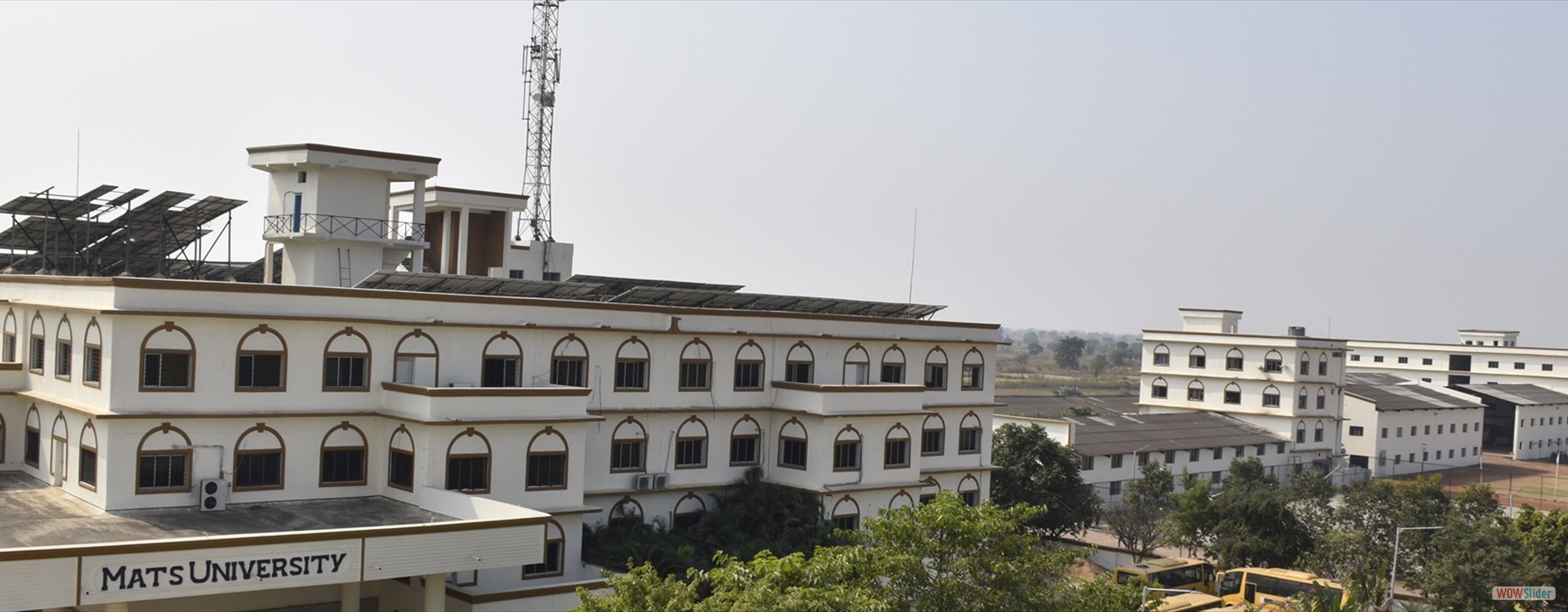
Ph.D. in Paramedical Sciences at MATS University
Embarking on a doctoral journey in Paramedical Sciences at MATS University opens doors to cutting‑edge research, academic leadership, and transformative impact on healthcare delivery. This program is meticulously crafted for professionals who aspire to advance scientific knowledge, influence policy, and spearhead innovation in emergency medical services, diagnostic technologies, and allied health disciplines.
Eligibility Criteria for Ph.D. in Paramedical Sciences at MATS University
Prospective candidates must satisfy the following academic prerequisites:
- Master’s degree (M.Sc., M.Pharma, M.Physio, etc.) in Paramedical Sciences or a closely related field with a minimum aggregate of 55% (or equivalent CGPA of 5.5/10).
- Valid GATE/NET/UGC‑JRF scores are advantageous but not mandatory.
- Professional experience of at least two years in clinical, research, or teaching roles is highly regarded.
- English proficiency (IELTS/TOEFL) for international applicants.
Entrance Exam for Ph.D. in Paramedical Sciences at MATS University
The university conducts a comprehensive written test followed by a personal interview. The written exam evaluates:
- Fundamental concepts of Paramedical Sciences.
- Research methodology and statistical analysis.
- Critical thinking and problem‑solving abilities.
Successful candidates are shortlisted for an interview where research aptitude, communication skills, and alignment with faculty interests are assessed.
Fee Structure for Ph.D. in Paramedical Sciences at MATS University
| Component | Annual Fee (INR) | One‑Time Charges |
|---|---|---|
| Tuition Fee | 85,000 | — |
| Laboratory & Equipment Fee | 15,000 | — |
| Library & Resource Centre | 5,000 | — |
| Registration & Administration | — | 12,000 |
| Technology & Data Services* (optional) | — | 8,000 |
*For candidates opting for advanced Research Data Analysis Services to enhance their dissertation work.
Admission Process for Ph.D. in Paramedical Sciences at MATS University
The streamlined admission workflow comprises the following steps:
- Online Application: Submit the digital application form along with scanned copies of academic transcripts.
- Document Verification: Upload certificates, ID proof, and experience letters.
- Entrance Examination: Appear for the university‑conducted test (or submit valid GATE/NET scores).
- Interview: Attend a face‑to‑face or virtual interview with the department panel.
- Final Offer Letter: Receive the admission letter and payment instructions.
Ph.D. Subjects and Specializations in Paramedical Sciences at MATS University
Students can choose from a diverse range of research domains, including:
- Emergency Medical Services Management
- Diagnostic Imaging and Radiology
- Clinical Biochemistry and Laboratory Sciences
- Rehabilitation and Physiotherapy Innovations
- Health Informatics and Tele‑medicine
- Pharmacovigilance and Drug Safety
Research Areas in Paramedical Sciences at MATS University
Faculty expertise and state‑of‑the‑art facilities support investigations in:
- Rapid point‑of‑care testing technologies.
- Artificial intelligence applications in emergency response.
- Biomarker discovery for traumatic injuries.
- Community‑based health intervention models.
- Simulation‑based training for paramedical staff.
Documents Required for Ph.D. in Paramedical Sciences at MATS University
| Document | Format | Remarks |
|---|---|---|
| Academic Transcripts (Master’s) | PDF, scanned copy | Attested by issuing university |
| Research Proposal (Brief) | PDF, 2‑3 pages | Highlights objectives and methodology |
| Identity Proof (Aadhaar/Passport) | PDF, scanned copy | Valid and current |
| Experience Certificate(s) | PDF, scanned copy | Relevant clinical/research experience |
| GATE/NET Scorecard (if applicable) | Optional but beneficial |
MATS University Ph.D. Syllabus for Paramedical Sciences
The curriculum balances core coursework with extensive research work:
- Year 1: Advanced research methodology, biostatistics, ethics in health research, and elective modules aligned with chosen specialization.
- Year 2: Comprehensive literature review, proposal development, and commencement of experimental work.
- Year 3: Data collection, analysis (leveraging Research Paper Writing Services for manuscript preparation), and thesis writing.
- Year 4: Thesis submission, viva voce, and publication of findings in peer‑reviewed journals.
How To Apply for Ph.D. in Paramedical Sciences at MATS University
Follow this concise roadmap:
- Visit the official MATS University admissions portal.
- Register using a valid email address and create a secure password.
- Complete the application form, selecting “Ph.D. – Paramedical Sciences.”
- Upload the required documents (refer to the Documents Required table).
- Pay the non‑refundable application fee of INR 2,500 via the online gateway.
- Submit the form and note the application reference number for future correspondence.
- Prepare for the entrance examination by reviewing past papers and attending the university’s pre‑test webinars.
Career Scope and Job Opportunities After Ph.D. in Paramedical Sciences from MATS University
Graduates emerge as leaders in both academia and industry. Prominent career avenues include:
- Assistant/Associate Professor & Research Faculty in universities and medical colleges.
- Senior Research Scientist in government laboratories (e.g., ICMR, CSIR).
- Clinical Trial Manager or Pharmacovigilance Lead in pharmaceutical firms.
- Director of Emergency Medical Services for hospitals or municipal corporations.
- Consultant for health‑tech startups focusing on AI‑driven diagnostics.
According to recent industry surveys, the demand for doctorate‑qualified professionals in paramedical research is projected to grow at an annual rate of 12% over the next five years.
Scholarship for Ph.D. in Paramedical Sciences at MATS University
MATS University offers merit‑based and need‑based scholarships covering up to 75% of tuition fees. Additionally, candidates may apply for:
- UGC‑CSIR Junior Research Fellowship (JRF).
- University-sponsored research grants linked to collaborative projects.
- External fellowships from health ministries and international bodies.
Applicants are encouraged to explore the Questionnaire Design and Development service to craft effective survey instruments for grant proposals.
FAQs Regarding Ph.D. in Paramedical Sciences at MATS University
- What is the minimum duration to complete the Ph.D. program?
- The standard duration is four years, with a possible extension of one year for research contingencies.
- Can I pursue the Ph.D. part‑time while working?
- Yes, MATS University offers a flexible part‑time mode for eligible working professionals.
- Is there a provision for publishing my research in international journals?
- Absolutely. The university provides support through its Thesis and Dissertation Writing Services and funds open‑access fees for high‑impact publications.
- How many publications are required before thesis submission?
- At least two peer‑reviewed articles are recommended, though the exact number may vary by supervisor guidance.
- Are there opportunities for interdisciplinary collaboration?
- Yes, MATS University encourages joint projects with engineering, IT, and public health departments.








