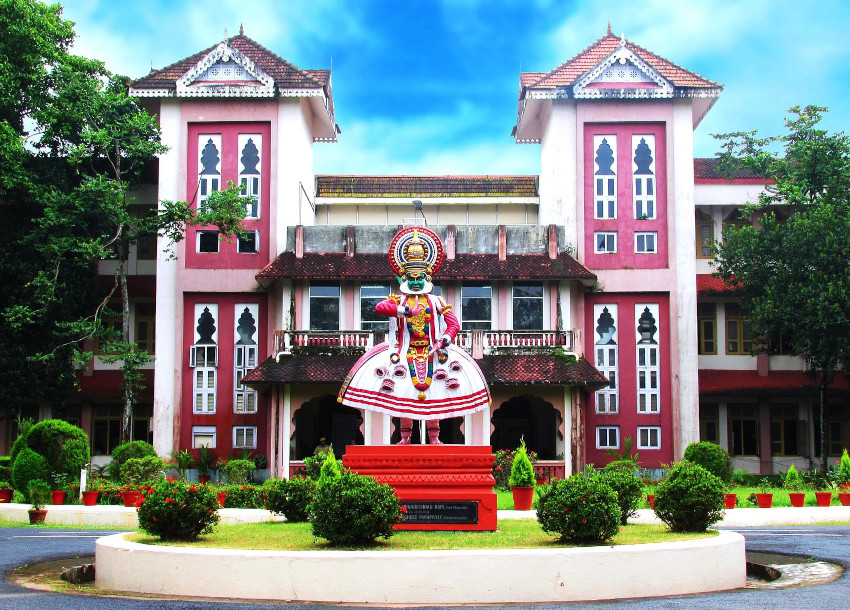
Ph.D. in Photonics Physics from Cochin University of Science & Technology: Eligibility, Entrance Exam, Fee Structure, Admission Process, Subjects, Research Areas, Syllabus, Scholarship & Career Scope
Introduction about Ph.D. in Photonics Physics at Cochin University of Science & Technology
The Ph.D. in Photonics Physics at Cochin University of Science & Technology (CUSAT) is a premier research program designed for professionals who aspire to become innovators in optical science, laser technology, and quantum photonics. The curriculum blends rigorous theoretical foundations with cutting‑edge laboratory work, empowering scholars to contribute to national and global advancements in telecommunications, biomedical imaging, renewable energy, and defense applications. CUSAT’s state‑of‑the‑art photonics labs, collaborative industry linkages, and interdisciplinary faculty provide an inspiring ecosystem that fuels breakthrough discoveries.
Ph.D Admission 2026-2027 & Writing Support Services by Shiksha Research
Eligibility Criteria for Ph.D. in Photonics Physics at Cochin University of Science & Technology
- Master’s degree (M.Sc., M.Tech., M.Pharm., or equivalent) in Physics, Electrical Engineering, Optical Engineering, or a closely related discipline with a minimum of 55% aggregate (or CGPA 6.0/10).
- Candidates with a Bachelor’s degree (B.Sc. or B.E.) followed by a recognized research master’s (M.Phil.) are also eligible.
- Applicants must have a valid GATE score (Physics or Electronics & Communication) or a university‑conducted entrance test.
- Non‑resident Indian (NRI) and foreign candidates must meet the same academic standards and provide proof of English proficiency (IELTS/TOEFL, if required).
Entrance Exam for Ph.D. in Photonics Physics at Cochin University of Science & Technology
CUSAT conducts a two‑stage entrance process:
- Written Test: Objective and descriptive questions covering advanced optics, quantum mechanics, solid‑state physics, and mathematical methods.
- Viva‑Voce Interview: Assessment of research aptitude, conceptual clarity, and alignment with faculty expertise.
Applicants with a qualifying GATE score are exempted from the written test but must appear for the interview.
Fee Structure for Ph.D. in Photonics Physics at Cochin University of Science & Technology
| Component | Annual Fee (INR) | Notes |
|---|---|---|
| Tuition & Examination Fee | 45,000 | Inclusive of lab access and library services. |
| Research Project Grant (mandatory) | 1,20,000 | Provided by the university for equipment and consumables. |
| Hostel & Mess (Optional) | 30,000 | Varies with accommodation type. |
| Administrative Charges | 5,000 | One‑time registration fee. |
| Total Approximate Annual Cost | 2,00,000 |
Scholarships, teaching assistantships, and industry‑sponsored projects can significantly offset these costs.
Admission Process for Ph.D. in Photonics Physics at Cochin University of Science & Technology
- Online Application: Submit the application form through the CUSAT admission portal with scanned copies of transcripts, GATE score, and research proposal.
- Document Verification: The university verifies academic credentials and eligibility.
- Entrance Test & Interview: Appear for the written exam (if required) followed by the viva‑voce.
- Selection & Offer Letter: Successful candidates receive a formal offer letter with fee details and registration deadlines.
- Enrollment: Pay the admission fee, submit the signed agreement, and register for the semester.
Ph.D. Subjects and Specializations in Photonics Physics at Cochin University of Science & Technology
The program offers a flexible structure that allows candidates to specialize in one or more of the following areas:
- Non‑linear Optics and Ultrafast Laser Dynamics
- Photonics Materials and Nanostructures
- Quantum Optics and Information Processing
- Optoelectronic Devices and Integrated Photonic Circuits
- Biomedical Imaging and Optical Sensing
- Free‑Space Optical Communication and Lidar Systems
Research Areas in Photonics Physics at Cochin University of Science & Technology
CUSAT’s research labs focus on high‑impact domains that align with industry and defense priorities:
- Metamaterials and Plasmonics: Designing sub‑wavelength structures for super‑resolution imaging.
- Fiber‑Optic Networks: Enhancing bandwidth and reducing latency for next‑generation telecom.
- Solar Photovoltaic Integration: Developing light‑trapping techniques to improve solar cell efficiency.
- Quantum Cryptography: Secure communication protocols based on entangled photons.
- Optical Biosensors: Real‑time detection of pathogens and biomarkers.
Documents Required for Ph.D. in Photonics Physics at Cochin University of Science & Technology
| Document | Format | Remarks |
|---|---|---|
| Academic Transcripts (M.Sc./M.Tech.) | PDF, signed copy | Must show minimum 55% aggregate. |
| GATE Score Card (if applicable) | Valid for the year of admission. | |
| Research Proposal (2‑3 pages) | DOCX or PDF | Should align with faculty interests. |
| Curriculum Vitae | Include publications, patents, and project experience. | |
| Proof of Identity (Aadhaar/Passport) | Scanned copy | For domestic candidates; passport for NRI/foreign. |
Cochin University of Science & Technology Ph.D. Syllabus for Photonics Physics
The syllabus is divided into core coursework, elective modules, and research milestones:
- Core Courses (Year 1): Advanced Electromagnetics, Quantum Theory of Light, Nonlinear Optics, Optical Materials, and Statistical Methods for Photonics.
- Electives (Year 2): Choose any two from Photonic Integrated Circuits, Ultrafast Spectroscopy, Optical Metrology, or Computational Photonics.
- Research Milestones: Literature Review, Proposal Defense, Mid‑term Review, Thesis Submission, and Final Viva.
How To Apply for Ph.D. in Photonics Physics at Cochin University of Science & Technology
- Visit the official CUSAT admissions portal and create a user account.
- Fill in personal and academic details, upload the required documents, and pay the application fee (₹2,500).
- Submit your research proposal and select a potential faculty supervisor from the department’s faculty list.
- Track the status of your application through the portal; you will receive email notifications for each stage.
- Prepare for the entrance test and interview; consult the downloadable program syllabus PDF for study guidance.
Career Scope and Job Opportunities After Ph.D. in Photonics Physics from Cochin University of Science & Technology
Graduates enjoy a diverse portfolio of career paths:
- Research Scientist: Positions in DRDO, ISRO, CSIR labs, and international research institutes.
- Academic Faculty: Lecturer/Assistant Professor roles in leading engineering and science colleges.
- Industry R&D: Senior roles in optical communications, semiconductor manufacturing, and biomedical device firms such as Philips, Samsung, and Bosch.
- Entrepreneurship: Launching startups focused on photonic sensors, laser machining, or quantum communication platforms.
- Consultancy: Providing expertise for government projects, defense contracts, and technology transfer initiatives.
To enhance employability, students often collaborate with professional services like Thesis and Dissertation Writing Services for polishing their dissertation, or engage Research Data Analysis Services for complex data modeling.
Scholarship for Ph.D. in Photonics Physics at Cochin University of Science & Technology
CUSAT offers several financial aid schemes:
- University Merit Scholarship: Up to 100% tuition waiver for candidates with a GATE score above 650.
- UGC Junior Research Fellowship (JRF): Monthly stipend of ₹31,000 plus contingency grant.
- Industry Sponsored Fellowship: Companies like Telecom India Ltd. fund projects that align with their R&D objectives.
- External Grants: Applications for CSIR, DST, and AICTE funded research projects.
Applicants are encouraged to explore additional help such as Research Paper Writing Services and Questionnaire Design and Development to strengthen grant proposals.








